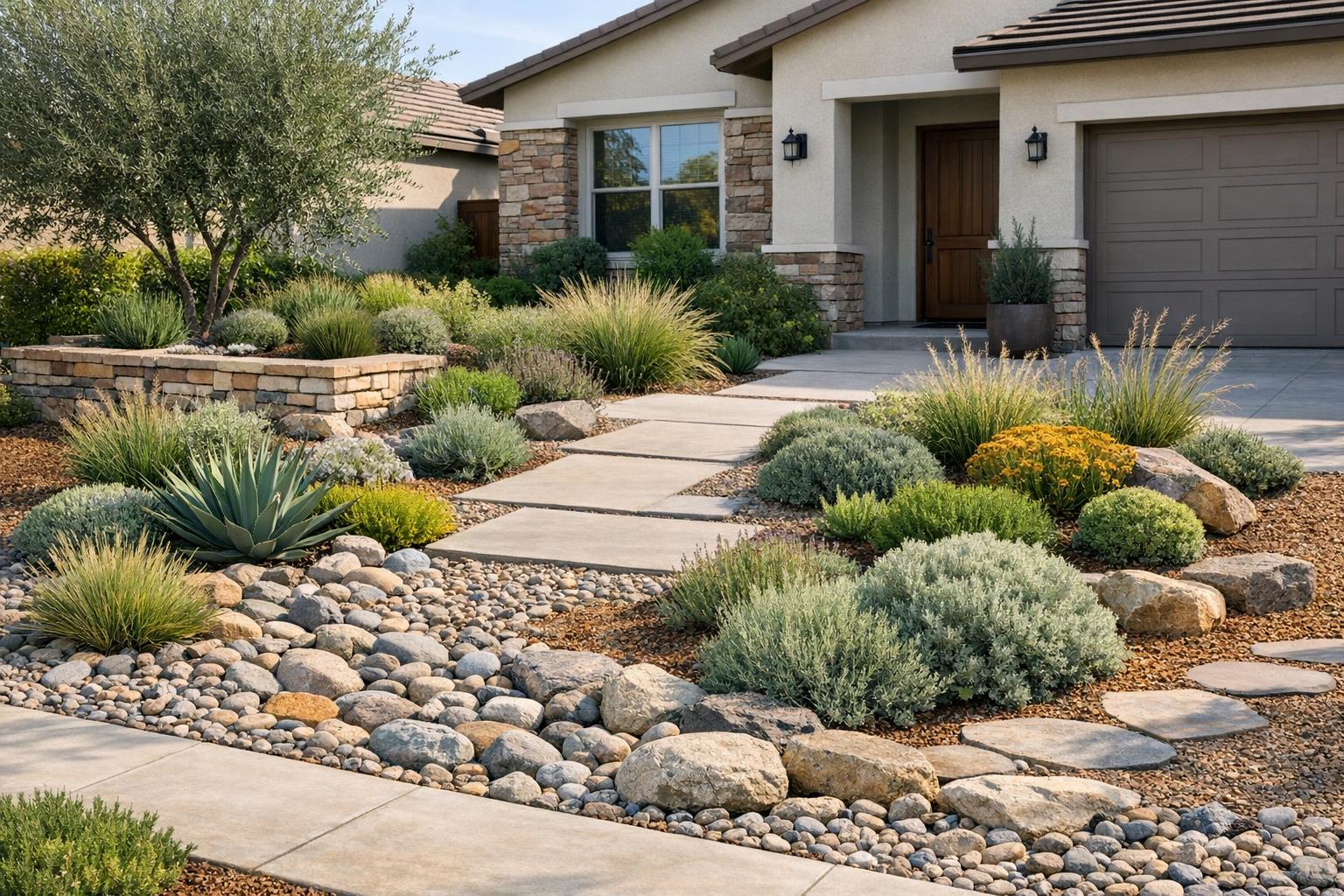
Low-water yards are often misunderstood as a simple swap from lawn to rock, but the most successful projects usually use a more balanced material strategy. Mulch, decorative stone, hardscape, planting density, and irrigation layout all work together to determine how water-efficient and comfortable the space actually feels.
A yard can use less water and still feel intentional, layered, and livable if the materials are chosen as part of one plan.

Ground-cover choices affect water use and heat
Mulch, decorative rock, and mixed ground-cover approaches each have different strengths. Some help moderate soil temperature better. Some create a cleaner, more structural look. Some may increase reflected heat or require different maintenance approaches.

Hardscape can reduce water use but still needs balance
Patios, walkways, and other hardscape surfaces can reduce irrigated square footage, but too much surface without shade, planting, or comfortable transitions can make a yard feel harsh. The overall composition matters.
Material choice should follow the irrigation plan
The low-water landscaping guide, materials cost guide, and low-maintenance plant guide all help connect product selection to the bigger yard strategy.
Leave a Reply