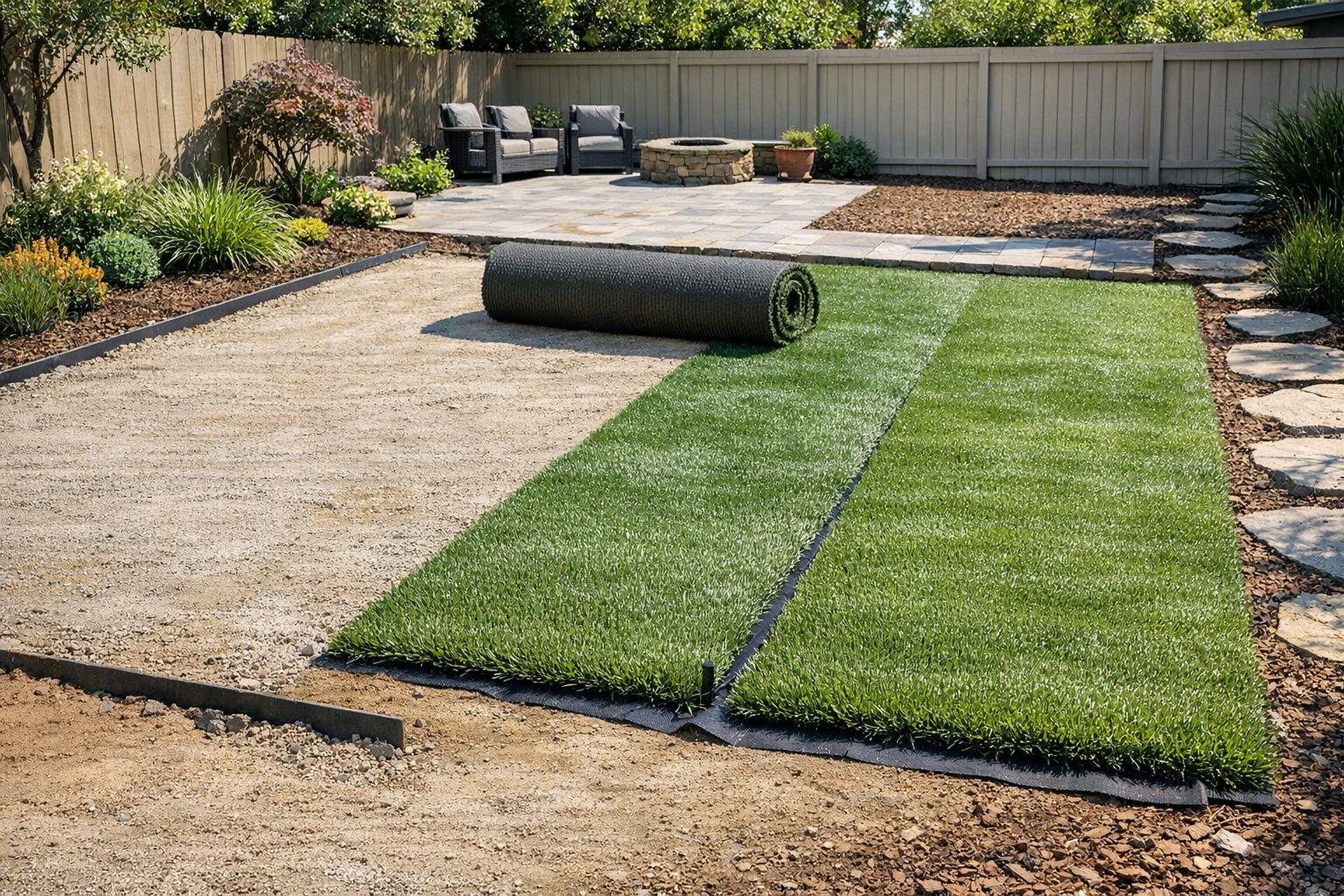
Artificial turf projects often disappoint homeowners when the planning focuses too heavily on the finished green surface and not enough on what happens underneath. Drainage, grade correction, base depth, seam placement, infill, and edge detail all affect how the yard performs. Weak choices early in the project can create odor, drainage issues, movement, or a less convincing finished look.
The most expensive mistakes usually come from oversimplifying the system instead of treating it like a real installation assembly.

Drainage and base prep are often underestimated
Homeowners sometimes compare turf options without asking enough about drainage, removal scope, compaction, and grade correction. Those elements often matter more than the visible product specification.
Seams, edges, and maintenance expectations get glossed over
Seam lines, transitions into patios or planting beds, pet use, heat expectations, and the actual maintenance routine should all be discussed before installation. Skipping those conversations leads to preventable frustration later.

Use scope and timeline guides to pressure-test the plan
The artificial turf quote guide, artificial turf timeline guide, and artificial turf expectations guide help homeowners catch these mistakes before work begins.
Leave a Reply