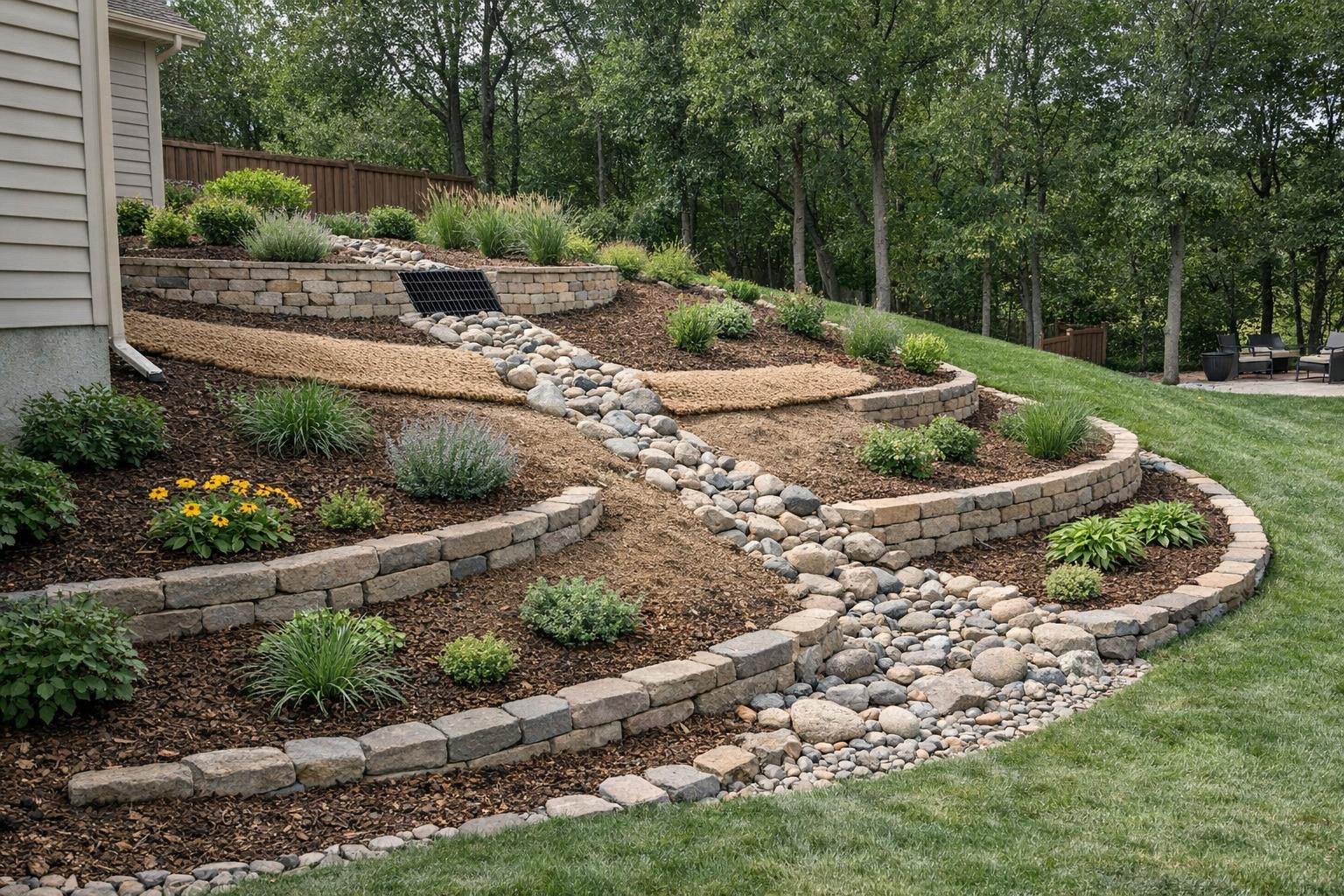
Erosion control projects often need ongoing observation after installation because the first heavy rain, irrigation cycle, or seasonal shift can reveal how well the treatment is actually performing. That does not mean the project is failing. It means homeowners should expect to monitor runoff, planted material, slope condition, and drainage features for a while after the initial work is done.
The best maintenance approach is usually steady observation and early correction, not waiting until visible damage becomes severe again.

Runoff patterns should be watched after storms and seasonal shifts
Water flow, exposed soil, rock movement, settling, or drainage overflow can all signal that part of the treatment needs attention. These changes are easier to address while they are still small.
Planting and stabilization materials need follow-up
Mulch, matting, planted areas, drainage outlets, and other stabilization elements may shift or struggle if conditions change. Monitoring them helps homeowners understand whether the system is establishing properly.

Good monitoring starts with a realistic treatment plan
The erosion control expectations guide, erosion control planning mistakes guide, and erosion control guide help homeowners understand what they should be monitoring over time.
Leave a Reply