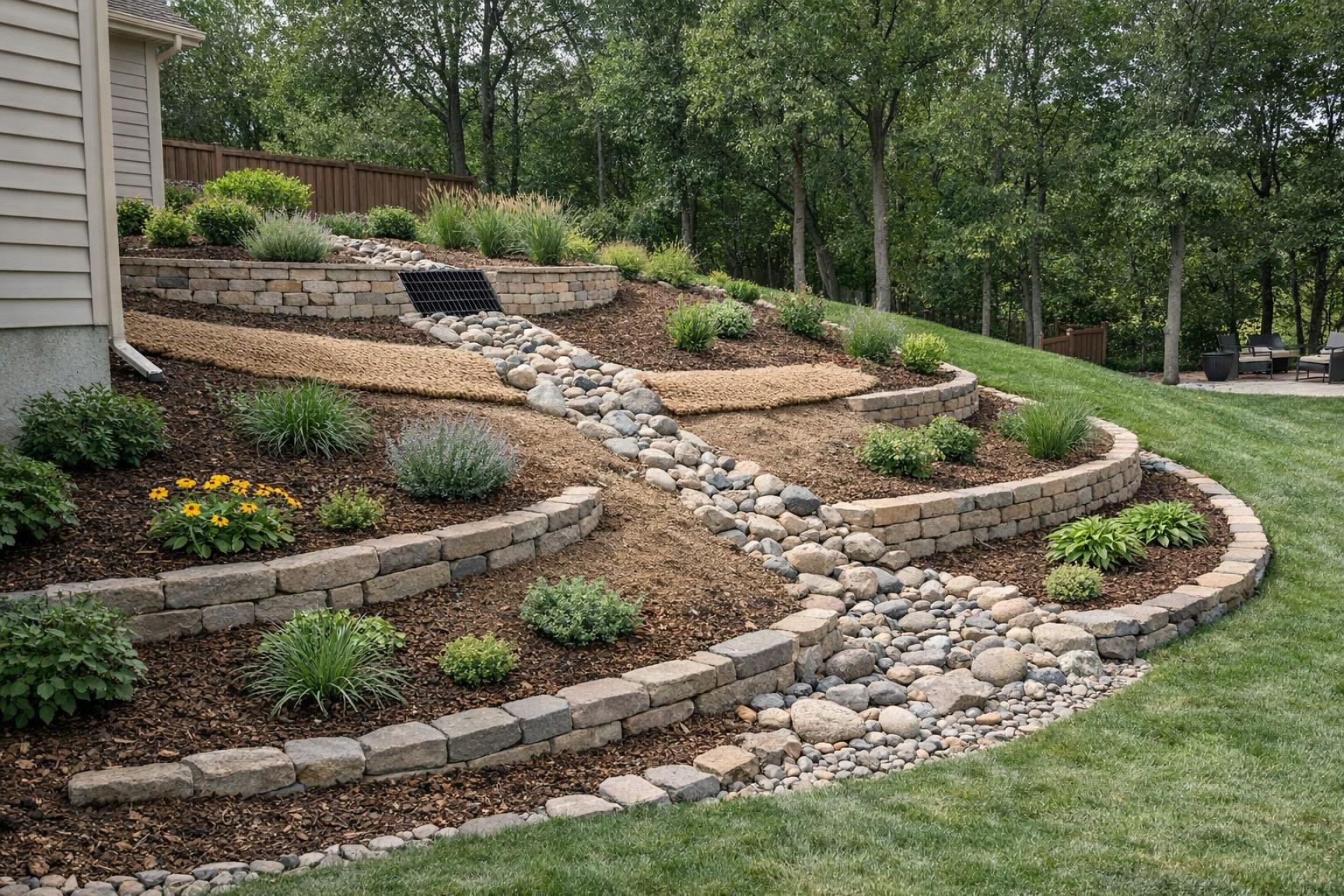
Erosion control work rarely announces trouble all at once. More often, homeowners start noticing small changes after storms or seasonal shifts: a little exposed soil, runoff moving differently, drainage outlets acting strangely, planted areas struggling, or parts of the slope looking less stable than before. These are often early signs that the treatment area needs attention.
Catching those changes early is usually much easier than waiting until the slope looks obviously damaged again.

Water movement tells an important story
New runoff paths, overflow, pooling, exposed soil, rock movement, and washed-out material can all indicate that the treatment is under stress or that conditions around it have changed since installation.

Planting and stabilization elements should be watched together
If planted areas fail, matting shifts, drainage outlets clog, or the slope begins to settle unevenly, the whole control plan may need review. The issue is often the interaction between several elements, not one product alone.
Use monitoring and planning guides to judge urgency
The erosion control maintenance guide, erosion control quote guide, and erosion control planning mistakes guide help homeowners decide whether the treatment needs small corrections or a deeper review.
Leave a Reply