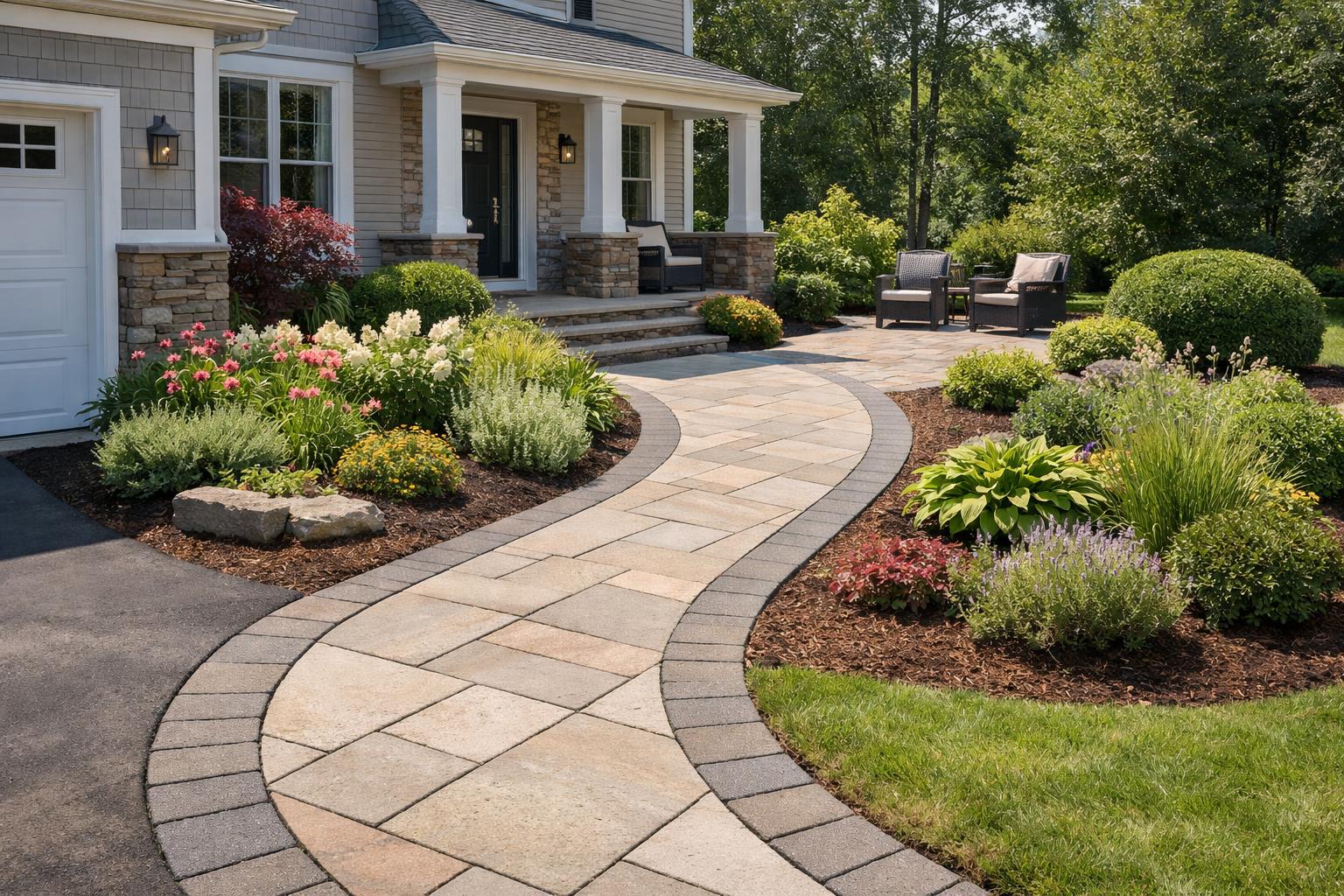
Walkways and pathways usually hold up better when homeowners give them occasional attention instead of waiting until the surface feels loose, uneven, or neglected. Leaves, weeds, staining, joint loss, edge movement, and small settling issues can all change the look and safety of a path over time.
Routine upkeep is usually simpler than a later repair, especially when the first signs of movement are still small.

Surface cleaning and joint care help preserve the path
Debris, joint washout, weeds, and moisture exposure can all affect how clean and stable the walkway feels. Light maintenance often helps the surface look better and perform more predictably.

Edges and settling deserve attention early
If edges shift, transitions dip, or a section starts settling, the problem is easier to address while it is still minor. These issues often show up before homeowners think of the walkway as needing repair.
Maintenance works best when you understand the original build
The walkway expectations guide, walkway timeline guide, and walkway service guide help homeowners understand which changes are normal and which need more attention.
Leave a Reply