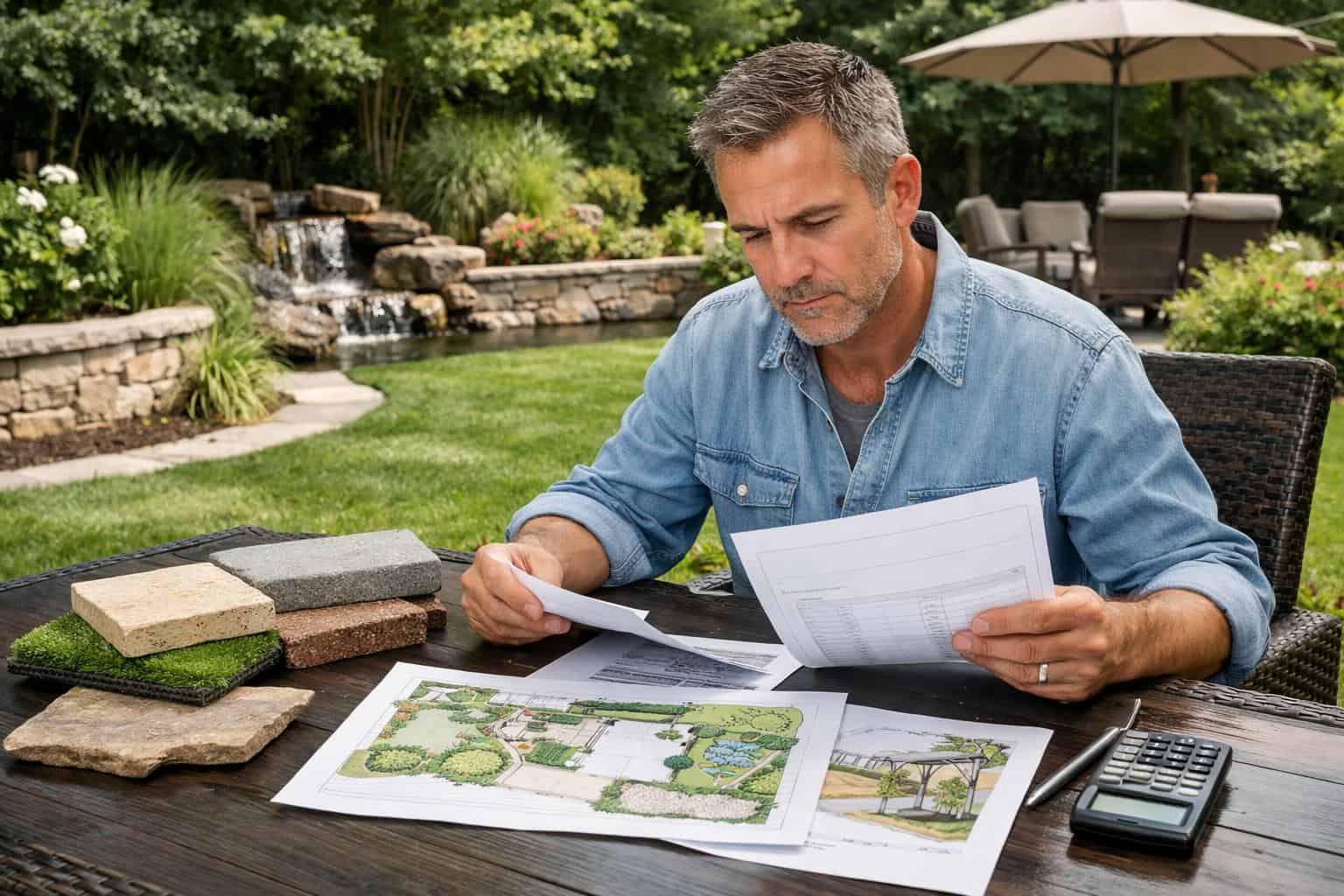
Costs and Expectations

Cost and expectation guides focused on budgeting, lifespan, replacement decisions, and the real factors that shape landscaping quotes.

  • Landscaping Costs Explained for Homeowners

    Landscaping Costs Explained for Homeowners

    Landscaping costs are hard to judge when all you have is a rough idea, a few inspiration photos, and wildly different quotes from contractors. Many homeowners start by asking, “How much does landscaping cost?” The more useful question is, “What drives the cost of my project, and what kind of scope am I really pricing?”

    That distinction matters because landscaping is not one product. A cleanup and mulch refresh is different from a full backyard renovation. A new walkway is different from drainage reconstruction and retaining walls. Costs vary because the work, materials, access, and long-term performance requirements vary.

    Why landscaping prices vary so much

    The biggest reason price ranges feel inconsistent is that estimates often cover very different scopes. One contractor may include demolition, drainage corrections, soil preparation, cleanup, haul-off, and better materials. Another may bid only the visible installation with minimal prep assumptions. Both numbers may look like they are pricing the same project when they are not.

    That is why homeowners get the best value from cost education when they look beyond the total. Understanding the pieces of the budget helps you compare bids more intelligently and spot missing scope before work begins.

    The main cost drivers homeowners should know

    • Project size: More square footage usually means more labor, materials, disposal, and setup time.
    • Site access: Tight side yards, stairs, limited equipment access, and urban sites usually cost more.
    • Excavation and prep: Removal, grading, compaction, drainage correction, and base work often shape the real budget.
    • Material choice: Standard concrete, decorative concrete, pavers, natural stone, premium plant material, and custom lighting all change the budget quickly.
    • Complexity: Curves, elevation changes, retaining work, custom patterns, and irrigation integration add labor and coordination.
    • Phasing: Breaking a project into stages can help with budget planning, but it may also increase mobilization and repeat setup costs.

    Hardscape work usually sets the budget floor

    Patios, walkways, retaining walls, driveways, stairs, and structural landscape features tend to be the most expensive parts of a project because they involve excavation, base preparation, material delivery, skilled installation, and often drainage planning. These are not just decorative choices. They are performance-related installations.

    For example, a concrete driveway quote is shaped not only by square footage, but also by slab thickness, reinforcement, finish choice, demolition needs, and how well the base is rebuilt. That is why our guides on driveway thickness, finish choice, and replacement versus new installation can all change the way a homeowner reads a bid.

    Softscape and planting costs depend on density and expectations

    Planting projects can look affordable at first, but totals rise quickly when the design includes large specimen plants, privacy screening, extensive bed preparation, irrigation updates, edging, mulch, decorative rock, or seasonal color. Maintenance expectations also matter. A lower-maintenance planting palette may cost more upfront but reduce long-term labor.

    Homeowners should ask whether the bid includes soil amendments, irrigation adjustments, mulch depth, staking, cleanup, and plant replacement policy. Those details often separate a quick install from a more durable planting job.

    Drainage and irrigation are easy to underestimate

    Water management can increase a budget quickly, but it also prevents costly problems later. If water is pooling near the house, washing out beds, undermining flatwork, or collecting where people walk, that issue usually belongs in the project budget from day one.

    Irrigation and drainage work often feels invisible compared with new paving or planting, yet it may be the upgrade that protects everything else you install. Skipping it to save money can create expensive rework later.

    How to compare quotes without oversimplifying

    A smart comparison starts by asking each contractor to spell out the scope in writing. If one bid includes demolition and disposal while another does not, they are not directly comparable. If one contractor prices premium materials and another assumes entry-level materials, the total alone will not tell you much.

    • Look for prep assumptions and not just finish materials.
    • Check whether drainage, base work, and cleanup are included.
    • Ask how allowances or unit prices are handled if conditions change.
    • Notice how clearly the timeline, exclusions, and communication process are described.

    Our guide on questions to ask before hiring a landscaper can help you compare proposals beyond the top-line number.

    Budgeting in phases can be smart

    Many homeowners do not need to complete everything at once. Phasing a landscape project can be a practical way to solve the most important issues first while keeping a broader plan in mind.

    • Phase 1: drainage, grading, access, and structural issues
    • Phase 2: patios, walkways, driveways, walls, and other hardscape elements
    • Phase 3: planting, lawn areas, decorative upgrades, lighting, and finishing touches

    The key is to phase the work in a way that avoids redoing earlier steps. That means planning ahead even if you are not funding the entire transformation right away.

    What homeowners should remember

    The most expensive landscaping project is often the one that has to be partially rebuilt. When you compare costs, look for value in planning, prep work, durability, and communication, not just the cheapest visible finish.

    If you are still mapping out the job, start with our landscaping services guide and our project expectations guide. Those two pages make it much easier to understand what you are actually pricing before you request bids.

    Related guide: Timing can affect bids, material availability, and phasing. The Best Time of Year to Start a Landscaping Project Guide explains how season changes the decision process.
  • Replacing an Old Driveway vs Pouring New Concrete

    Replacing an Old Driveway vs Pouring New Concrete

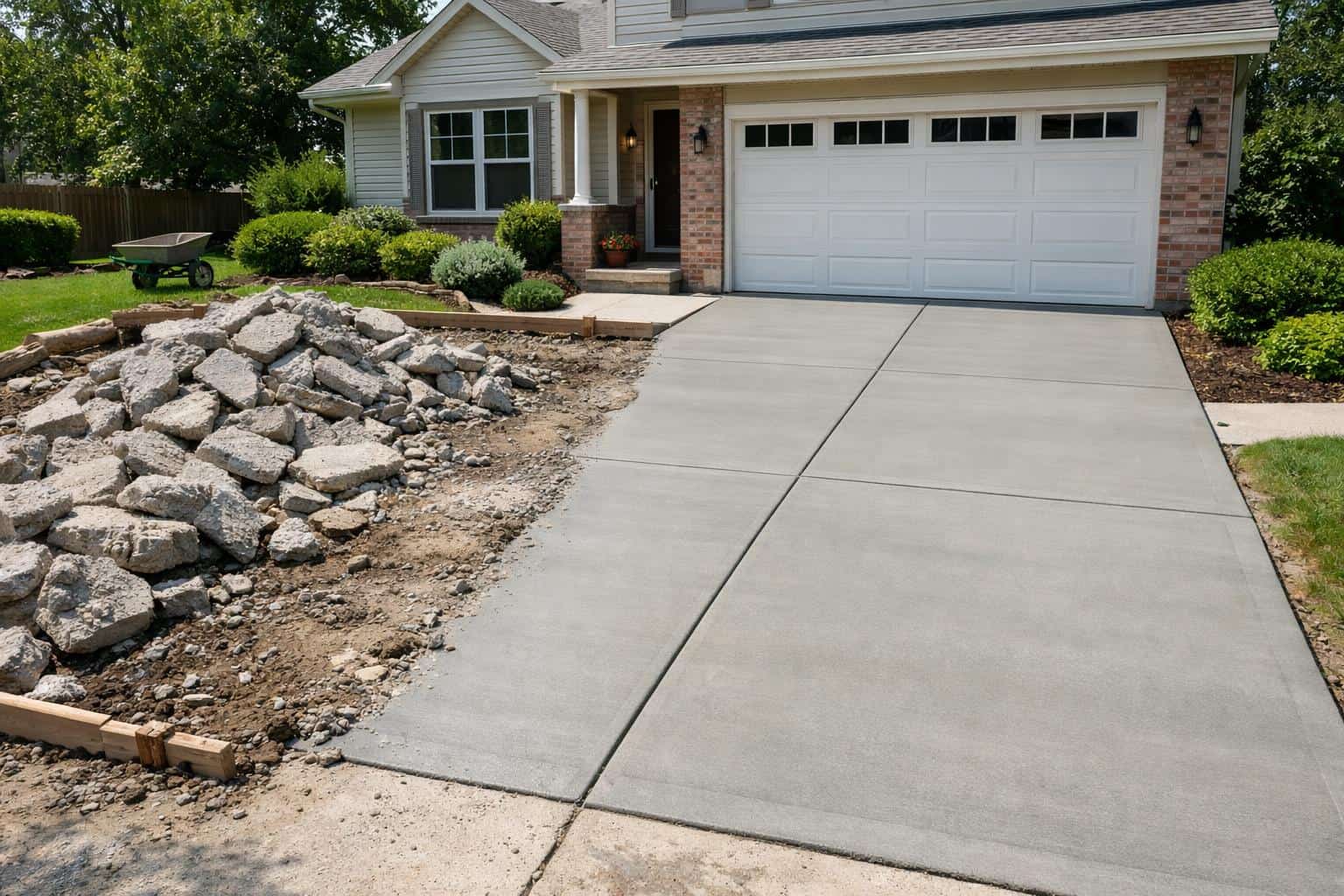
    Homeowners often use the phrases driveway replacement and new concrete driveway installation as if they mean the same thing, but they usually describe two different situations. Replacement means an existing driveway has reached the point where patching no longer solves the real problem. New construction means a driveway is being added where there was not one before, or the layout is being expanded in a meaningful way.

    The difference matters because the prep work, demolition needs, budget range, and contractor questions can change quickly from one type of project to the other. If you are still deciding which category your project falls into, it helps to think about the condition of the base, drainage, and how much of the current slab can realistically be saved.

    When driveway replacement makes more sense

    Replacement is usually the right move when the visible surface problems point to deeper structural issues. A few hairline cracks alone do not automatically mean the slab is finished, but widespread cracking, sinking sections, drainage failure, or repeated patching often tell a different story.

    • Large sections are settling or rocking under vehicle weight.
    • Water collects against the garage, sidewalk, or foundation.
    • Old repairs keep failing because the base underneath is unstable.
    • The slab was poured too thin for the vehicles using it.
    • The layout or slope no longer works for the property.

    In those cases, replacement gives a contractor the chance to remove the old slab, rebuild the base correctly, improve drainage, and pour the concrete at the right thickness instead of covering the same problems with another cosmetic repair.

    When new concrete construction applies

    New construction is more common on new homes, major additions, or properties where parking needs have changed. Homeowners may be adding a driveway for the first time, extending an existing one, or creating space for extra vehicles, RV parking, or a wider approach.

    The main advantage of new construction is that the entire project can be planned around the intended use from the start. Access, slope, reinforcement, joint placement, and finish can all be chosen as part of one design instead of being constrained by an aging slab.

    How the budget can change between the two

    Replacement often costs more than homeowners expect because demolition and haul-off are only the beginning. If the old driveway failed because of poor compaction or drainage, the contractor may need to rebuild the subgrade, import new base rock, or correct the slope before any concrete is poured. Those steps add cost, but they are also what make the new driveway last.

    New construction can be simpler in some cases, but it is not automatically cheaper. Extending utilities, grading raw ground, or creating a new approach can add labor and permit complexity. The real cost difference usually comes from site conditions, access, thickness, finish choice, and how much excavation is required.

    Questions to ask before choosing a direction

    • Is the current slab failing only on the surface, or is the base also compromised?
    • Will drainage improve if the driveway is rebuilt, or will water still move the wrong way?
    • Does the current width, thickness, and layout still match how the driveway is used today?
    • Would a full replacement cost more upfront but save repeated repair spending later?

    If you are unsure, a contractor should be able to explain why a repair, replacement, or new pour makes the most sense based on the condition of the property rather than on a generic sales pitch. Our related guide on choosing the right contractor for a concrete driveway is a good next step if you are comparing bids.

    What homeowners should remember

    Replacement is about correcting failure. New construction is about building the right slab for a new need. The more a contractor explains base preparation, drainage, thickness, and traffic demands, the more confidence you can have that the recommendation is based on performance instead of guesswork. If you also want to understand the build sequence itself, read our step-by-step concrete driveway installation guide.

    Plan the Bigger Project

    Concrete work is often just one part of a broader exterior upgrade. If you are still mapping out the full project, also read our landscaping services guide, questions to ask before hiring a landscaper, what to expect during a landscaping project, and our landscaping costs guide for homeowners.


  • How Long Does a Concrete Driveway Last?

    How Long Does a Concrete Driveway Last?

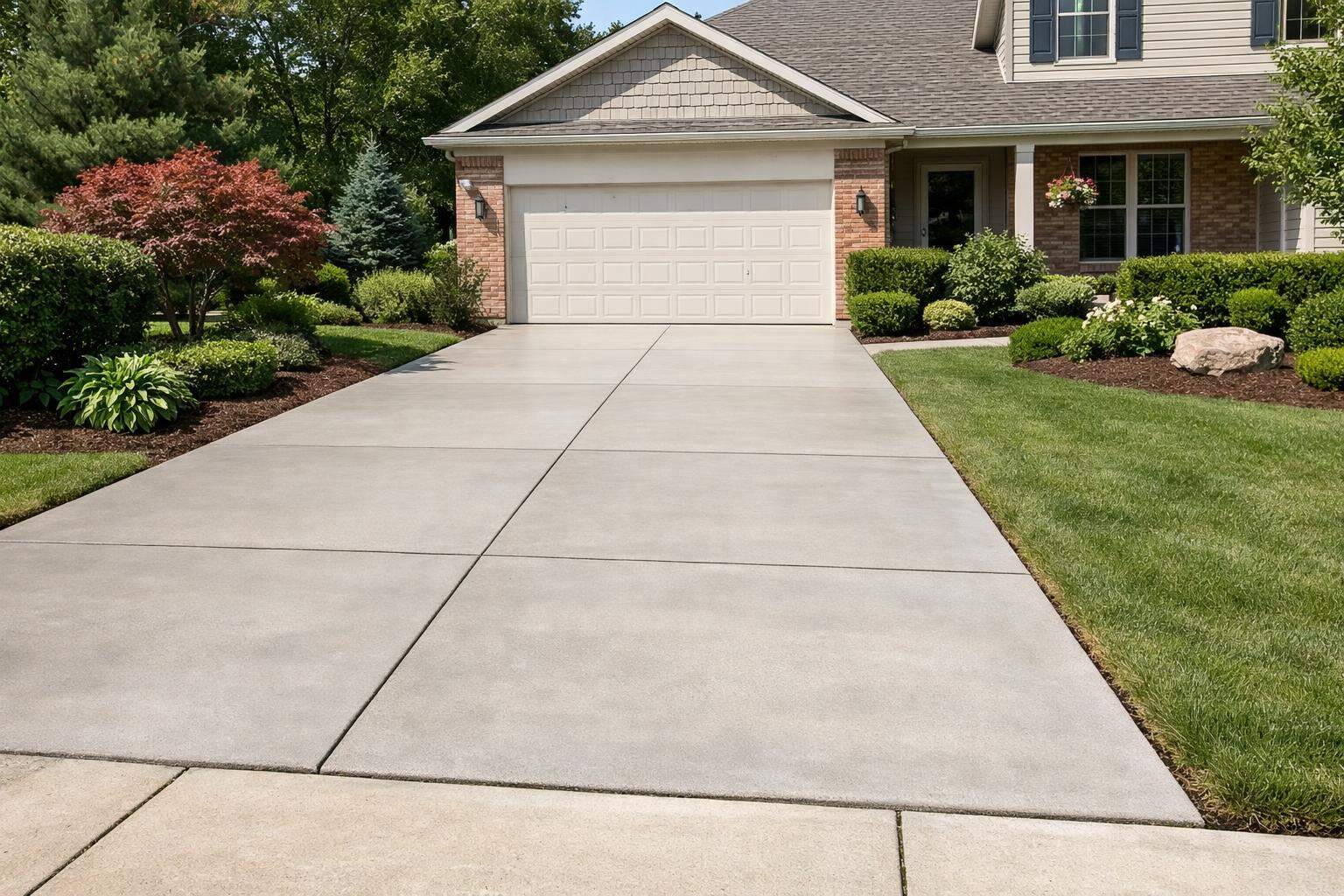
    A well-built concrete driveway can last decades, but the real answer depends less on the calendar and more on how the slab was built, how the property drains, and how the driveway is used. Homeowners often hear numbers like 30 or 40 years, which are reasonable benchmarks for good work, but only when the base, thickness, jointing, and curing were handled correctly.

    The biggest mistake is assuming concrete lifespan is decided by the concrete mix alone. In reality, many early failures trace back to thin slabs, weak subgrade preparation, poor drainage, or traffic loads the driveway was never designed to handle.

    What helps a driveway last longer

    • Proper excavation and a stable, compacted base.
    • The right slab thickness for the expected vehicle load.
    • Good drainage so water does not sit under or against the slab.
    • Control joints placed correctly to manage cracking.
    • Reasonable maintenance over the life of the driveway.

    When those pieces are in place, concrete performs as a durable structural surface, not just a decorative one. That is why homeowners should focus as much on the contractor’s process as on the price per square foot.

    What shortens concrete driveway life

    Premature failure usually starts below the surface. If the soil moves, the base was not compacted well, or water repeatedly saturates the area, the slab can crack, settle, and lose support long before homeowners expect it to. Surface-level sealing products cannot compensate for those problems.

    • Repeated heavy vehicle loads on a thin driveway.
    • Water draining toward the slab or beneath it.
    • Freeze-thaw stress in vulnerable climates.
    • Tree roots or unstable soil conditions.
    • Deferred maintenance after stains, joint breakdown, or early cracking appear.

    Longevity is tied to installation quality

    Two driveways can look similar on day one and perform very differently ten years later. That is why it helps to understand the build sequence before you hire. Base preparation, forms, reinforcement decisions, and curing discipline all affect how the slab handles everyday traffic over time.

    If you want to see what should happen before the truck arrives, review the full driveway installation process step by step. That guide makes it easier to judge whether a bid reflects durable work or a shortcut-prone approach.

    How homeowners should evaluate lifespan claims

    When a contractor promises a very long service life, ask what that promise is based on. Good questions include:

    • How thick will the driveway be?
    • What base material and compaction process will be used?
    • How will drainage be managed?
    • What vehicle loads is the driveway being designed for?
    • What kind of cracking should be considered normal versus concerning?

    Those answers are more meaningful than a single lifespan number. They show whether the contractor is thinking about performance over decades or simply trying to close the sale.

    Bottom line

    A concrete driveway can last a very long time when it is built on a solid base, poured at the right thickness, and supported by good drainage and basic upkeep. Homeowners who want the longest service life should pay close attention to planning and contractor selection, not just surface appearance. If you are still comparing companies, start with our guide to choosing the right driveway contractor.

    Plan the Bigger Project

    Concrete work is often just one part of a broader exterior upgrade. If you are still mapping out the full project, also read our landscaping services guide, questions to ask before hiring a landscaper, what to expect during a landscaping project, and our landscaping costs guide for homeowners.