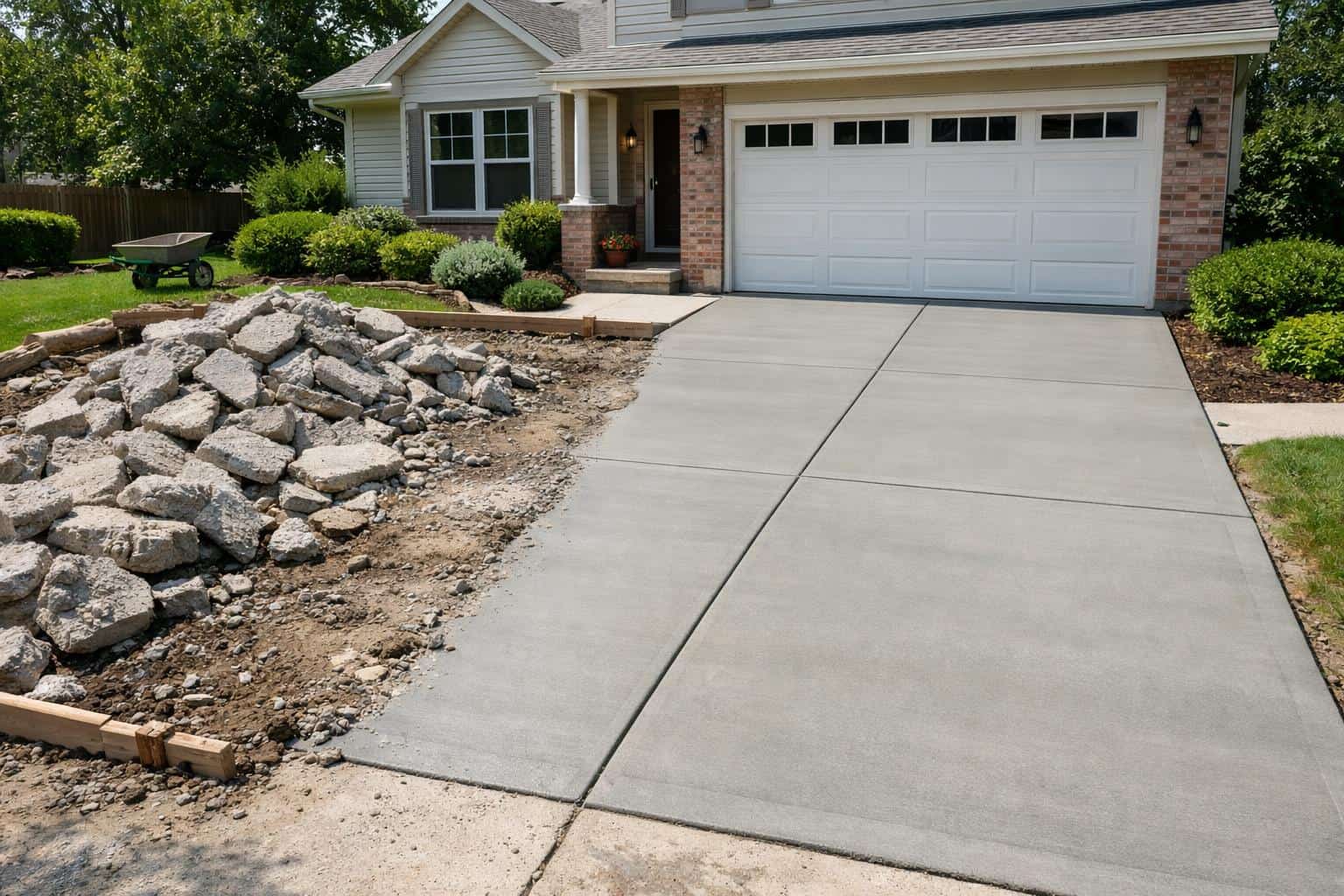
Homeowners often use the phrases driveway replacement and new concrete driveway installation as if they mean the same thing, but they usually describe two different situations. Replacement means an existing driveway has reached the point where patching no longer solves the real problem. New construction means a driveway is being added where there was not one before, or the layout is being expanded in a meaningful way.
Part of our Complete Driveway Guide: types, costs, installation, repair and hiring in one place.
The difference matters because the prep work, demolition needs, budget range, and contractor questions can change quickly from one type of project to the other. If you are still deciding which category your project falls into, it helps to think about the condition of the base, drainage, and how much of the current slab can realistically be saved.
When driveway replacement makes more sense
Replacement is usually the right move when the visible surface problems point to deeper structural issues. A few hairline cracks alone do not automatically mean the slab is finished, but widespread cracking, sinking sections, drainage failure, or repeated patching often tell a different story.
In those cases, replacement gives a contractor the chance to remove the old slab, rebuild the base correctly, improve drainage, and pour the concrete at the right thickness instead of covering the same problems with another cosmetic repair.
- Large sections are settling or rocking under vehicle weight.
- Water collects against the garage, sidewalk, or foundation.
- Old repairs keep failing because the base underneath is unstable.
- The slab was poured too thin for the vehicles using it.
- The layout or slope no longer works for the property.

When new concrete construction applies
New construction is more common on new homes, major additions, or properties where parking needs have changed. Homeowners may be adding a driveway for the first time, extending an existing one, or creating space for extra vehicles, RV parking, or a wider approach.
The main advantage of new construction is that the entire project can be planned around the intended use from the start. Access, slope, reinforcement, joint placement, and finish can all be chosen as part of one design instead of being constrained by an aging slab.

How the budget can change between the two
Replacement often costs more than homeowners expect because demolition and haul-off are only the beginning. If the old driveway failed because of poor compaction or drainage, the contractor may need to rebuild the subgrade, import new base rock, or correct the slope before any concrete is poured. Those steps add cost, but they are also what make the new driveway last.
New construction can be simpler in some cases, but it is not automatically cheaper. Extending utilities, grading raw ground, or creating a new approach can add labor and permit complexity. The real cost difference usually comes from site conditions, access, thickness, finish choice, and how much excavation is required.
Questions to ask before choosing a direction
- Is the current slab failing only on the surface, or is the base also compromised?
- Will drainage improve if the driveway is rebuilt, or will water still move the wrong way?
- Does the current width, thickness, and layout still match how the driveway is used today?
- Would a full replacement cost more upfront but save repeated repair spending later?
If you are unsure, a contractor should be able to explain why a repair, replacement, or new pour makes the most sense based on the condition of the property rather than on a generic sales pitch. Our related guide on choosing the right contractor for a concrete driveway is a good next step if you are comparing bids.

What homeowners should remember
Replacement is about correcting failure. New construction is about building the right slab for a new need. The more a contractor explains base preparation, drainage, thickness, and traffic demands, the more confidence you can have that the recommendation is based on performance instead of guesswork. If you also want to understand the build sequence itself, read our step-by-step concrete driveway installation guide.
Plan the Bigger Project
Concrete work is often just one part of a broader exterior upgrade. If you are still mapping out the full project, also read our landscaping services guide, questions to ask before hiring a landscaper, what to expect during a landscaping project, and our landscaping costs guide for homeowners.