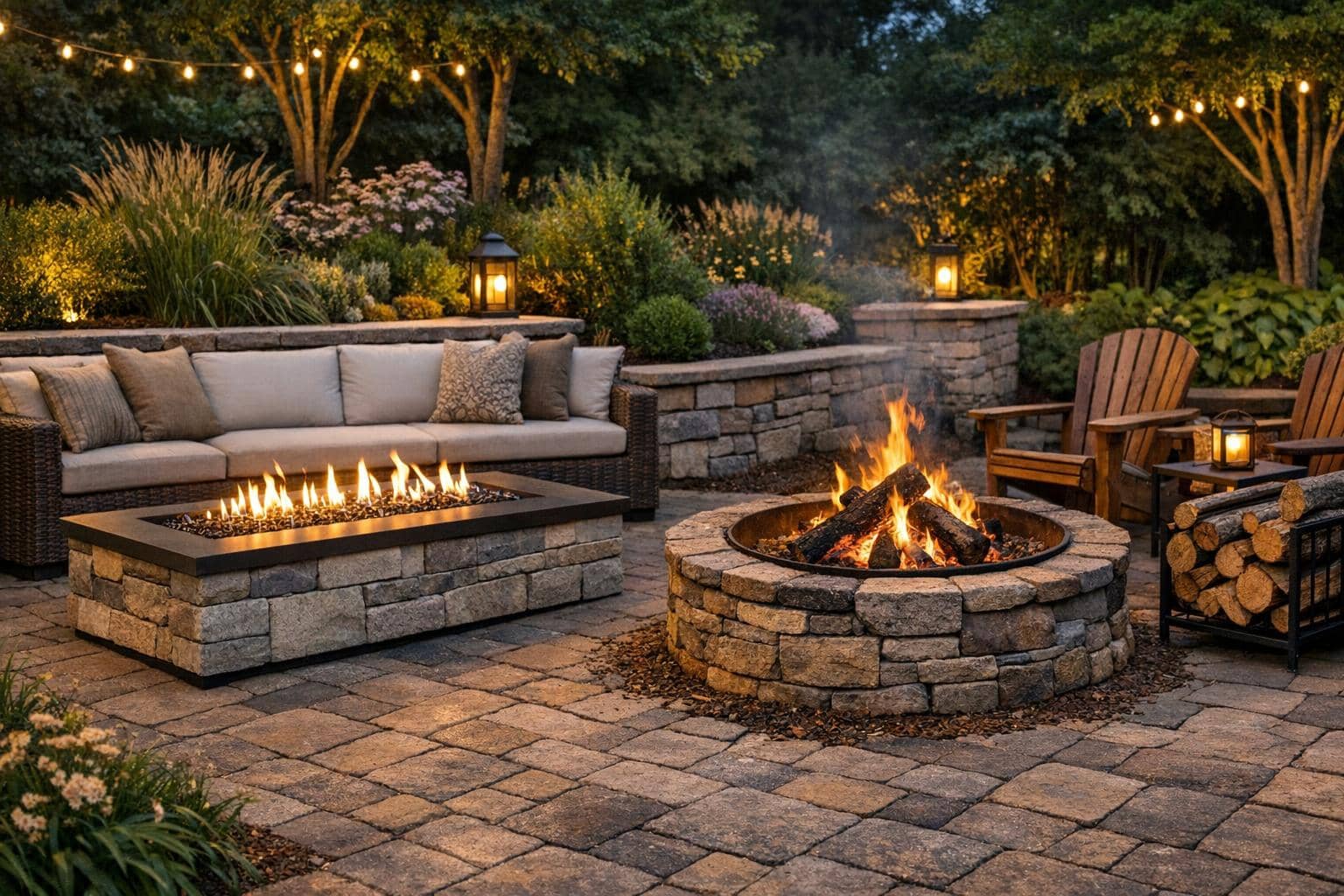
Gas and wood fire pits can both create a strong backyard focal point, but they deliver very different day-to-day experiences. Some homeowners want instant ambiance with clean ignition and simple shutdown. Others care more about the sound, smell, and ritual of a real wood fire. The right choice depends on how the space will be used, how much maintenance you want, and how the fire feature fits into the larger yard plan.
This is one of the best decisions to make before final design starts. Once the patio, seating layout, and utility path are planned around one type of fire feature, switching later can become more expensive and less convenient.
Why homeowners choose gas fire pits
Gas fire pits are popular because they are easy to use. Many can be turned on quickly, deliver steady flame with less smoke, and shut off with minimal cleanup. That convenience makes them attractive for homeowners who want to use the feature often, especially on patios close to the house or in entertaining spaces where people want a clean, predictable setup.
Gas units often pair naturally with more polished outdoor-living builds. If the fire area is being planned alongside an outdoor kitchen or upgraded lighting, gas may fit the same low-friction design direction.
Why homeowners choose wood fire pits
Wood fire pits appeal to homeowners who want the traditional feel of a live fire. The smell, crackle, and stronger campfire atmosphere can be hard to replicate. In the right backyard, that experience can feel more casual, social, and memorable than a gas feature.
The tradeoff is that wood typically means more smoke, more cleanup, more storage, and more attention during and after use. That is not necessarily a drawback for every household, but it should be an intentional choice rather than a surprise after installation.
Convenience, cleanup, and maintenance
Gas usually wins on convenience. There is no wood stack to maintain, no ash to remove, and less mess around the seating area. Wood requires more routine cleanup and may affect nearby cushions, surfaces, or planting if smoke exposure is frequent. For homeowners who want easier upkeep across the whole yard, the low-maintenance landscaping guide aligns more naturally with gas-style convenience.
Cost considerations
The right cost comparison is not just the unit itself. Gas may require utility work, trenching, and coordination with licensed trades. Wood may avoid that infrastructure, but it can still involve material, construction, and ongoing fuel handling. If the fire pit is part of a larger project, it helps to compare complete scope in the broader landscaping costs guide.
Safety and backyard fit
Both options need smart placement, proper clearances, and good materials around the feature. Gas can feel easier to manage in tighter entertaining spaces. Wood may need more attention to smoke direction, nearby structures, and surface protection. Homeowners should also think about whether the surrounding patio, seating, and planting plan support the way the feature will actually be used.
For the full project-side view, the fire pit installation guide covers design and construction expectations in more detail.
Leave a Reply