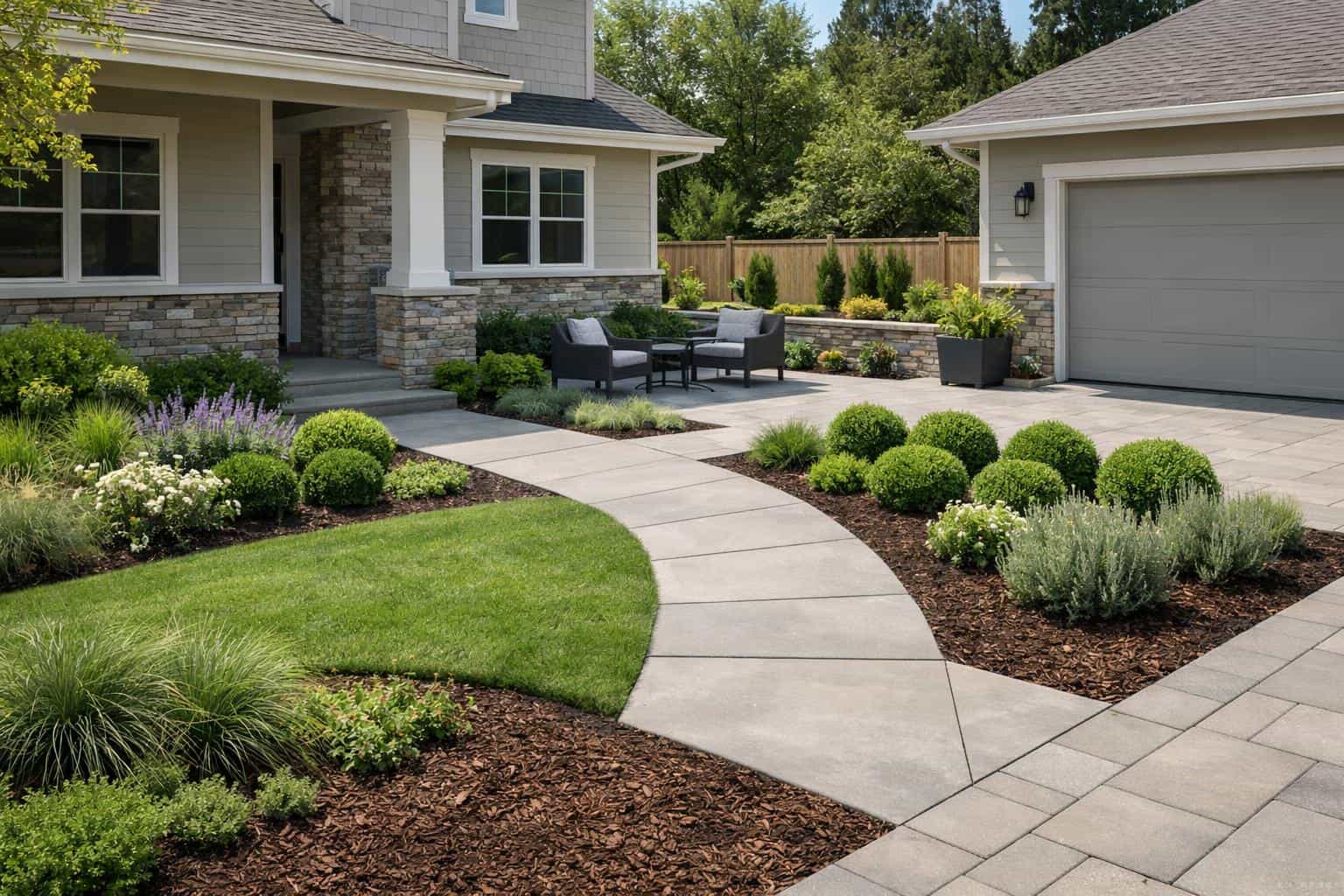
Low-maintenance landscaping is one of the most common goals homeowners bring to a project, but it does not mean zero work and it does not mean the same thing on every property. For some households, it means reducing lawn area. For others, it means simplifying planting choices, improving irrigation efficiency, and using materials that age gracefully with less intervention.
This guide explains what low-maintenance landscaping really involves and how to plan it realistically.
What low-maintenance usually means
- simpler planting palettes with fewer fussy species
- better spacing and structure in garden beds
- less lawn to mow and irrigate
- hardscape that organizes use areas clearly
- watering and maintenance plans that fit real homeowner habits
How to build a lower-maintenance yard
Many low-maintenance landscapes rely on smart combinations of planting, hardscape, irrigation, and mulch or stone coverage. The goal is not to strip the yard of character. It is to create an outdoor space that still looks intentional without demanding constant catch-up work.
Related reading includes our guides on planting installation, irrigation, and maintenance plans.
What homeowners should remember
A low-maintenance yard is usually the result of good planning, not just fewer plants. The best solutions match the climate, the way the property is used, and the amount of care the homeowner can realistically provide over time.
Related comparison: Ground-cover choices shape maintenance as much as plant selection. The Mulch vs Rock Landscaping Guide for Homeowners helps compare two common bed-finishing options.
Related guide: Homeowners aiming for simpler upkeep and reduced water use may also want the Low-Water Landscaping Guide for Homeowners.
Leave a Reply