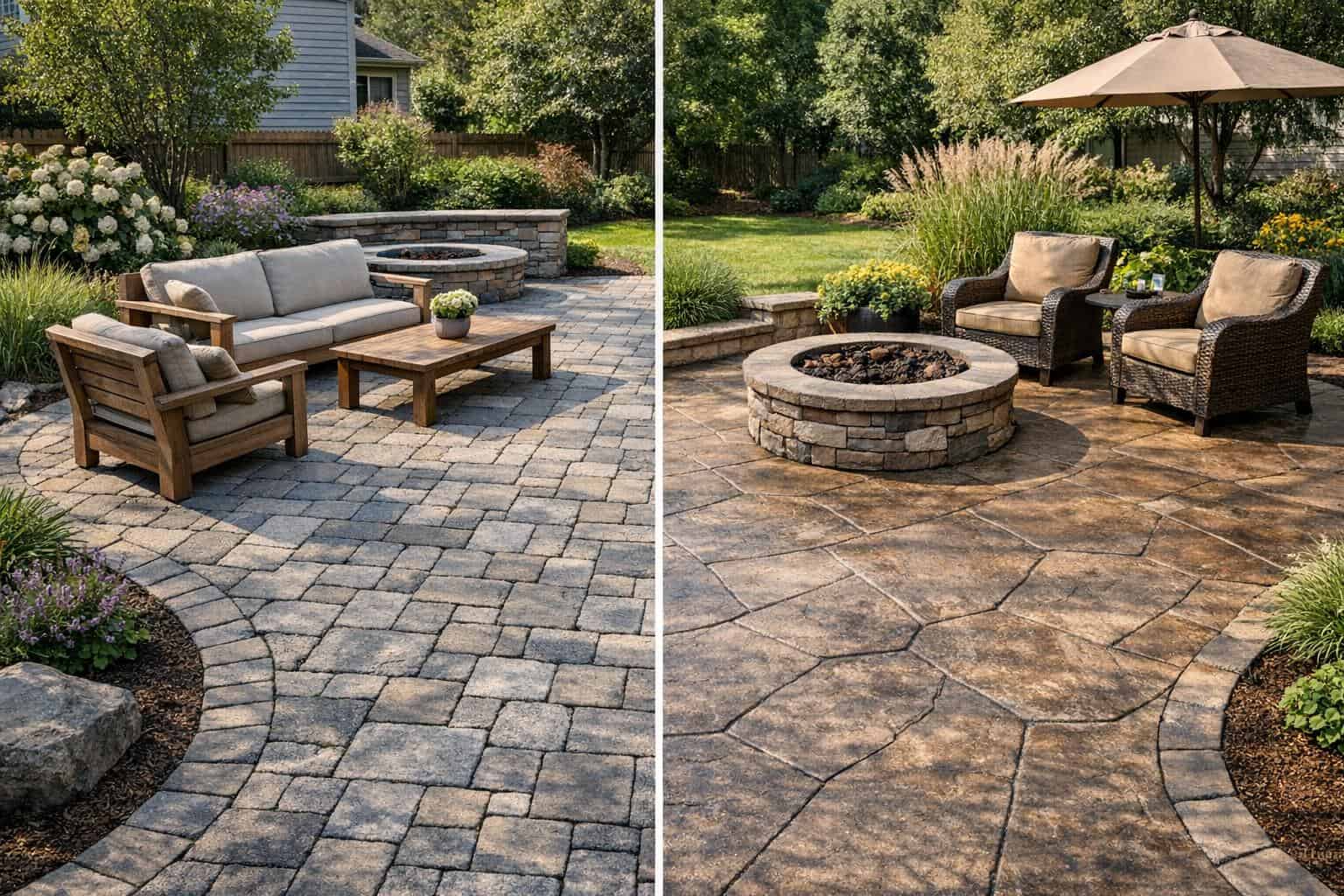
Paver patios and stamped concrete patios can both create attractive outdoor living space, but they perform differently over time. Homeowners usually compare them on appearance first, yet the more useful questions are about maintenance, repair, movement, drainage, and how the surface fits the style of the yard.
Because patios often become the center of backyard use, the material decision has an outsized effect on long-term satisfaction. It is worth slowing down here before choosing a finish based only on a sample board.
Why homeowners choose pavers
Pavers are popular because they offer strong visual flexibility and can be easier to repair in sections if an area settles or needs adjustment. They can work in classic, rustic, or more modern landscapes depending on the pattern and material selected. For homeowners who value detail and repairability, pavers often feel like the safer long-term choice.
The full construction side is covered in the patio installation guide, which explains why base prep and drainage matter no matter which finish is chosen.
Why stamped concrete appeals to some homeowners
Stamped concrete can create a broad, unified surface with decorative pattern and color. Some homeowners like the cleaner continuous look, and in the right design it can feel sleek and cost-effective. It can also suit spaces where fewer joints are visually preferred.
The tradeoff is that repairs and cracking behavior are different from pavers. If issues develop, the fix may be less seamless than replacing individual units in a paver system.
Maintenance and repair differences
Paver patios may need occasional re-leveling, joint maintenance, or weed attention depending on the system and environment. Stamped concrete may need sealing and can show wear or cracking differently over time. Neither option is maintenance-free, but the type of maintenance is not the same.
Appearance and design fit
Pavers usually offer more texture and pattern variation. Stamped concrete can create a more continuous field with decorative imprint. The best fit depends on the house style, surrounding planting, and whether the patio connects to retaining walls, walkways, or other hardscape. If you are also deciding between outdoor gathering formats, the patio vs deck guide is worth comparing too.
Cost and site conditions
Cost depends on pattern choice, site prep, access, drainage needs, border detail, and installation complexity. Homeowners should compare complete scope rather than headline material price. A less expensive surface can still be the wrong choice if the site is more prone to movement or if repairability matters later.
The best patio choice is the one that fits the whole yard plan, not just the showroom sample. Homeowners who compare base prep, maintenance expectations, and style together usually make the most durable decision.
Materials guide: Homeowners comparing finishes can also review the Patio and Walkway Materials Guide for a broader surface-choice breakdown.
Leave a Reply