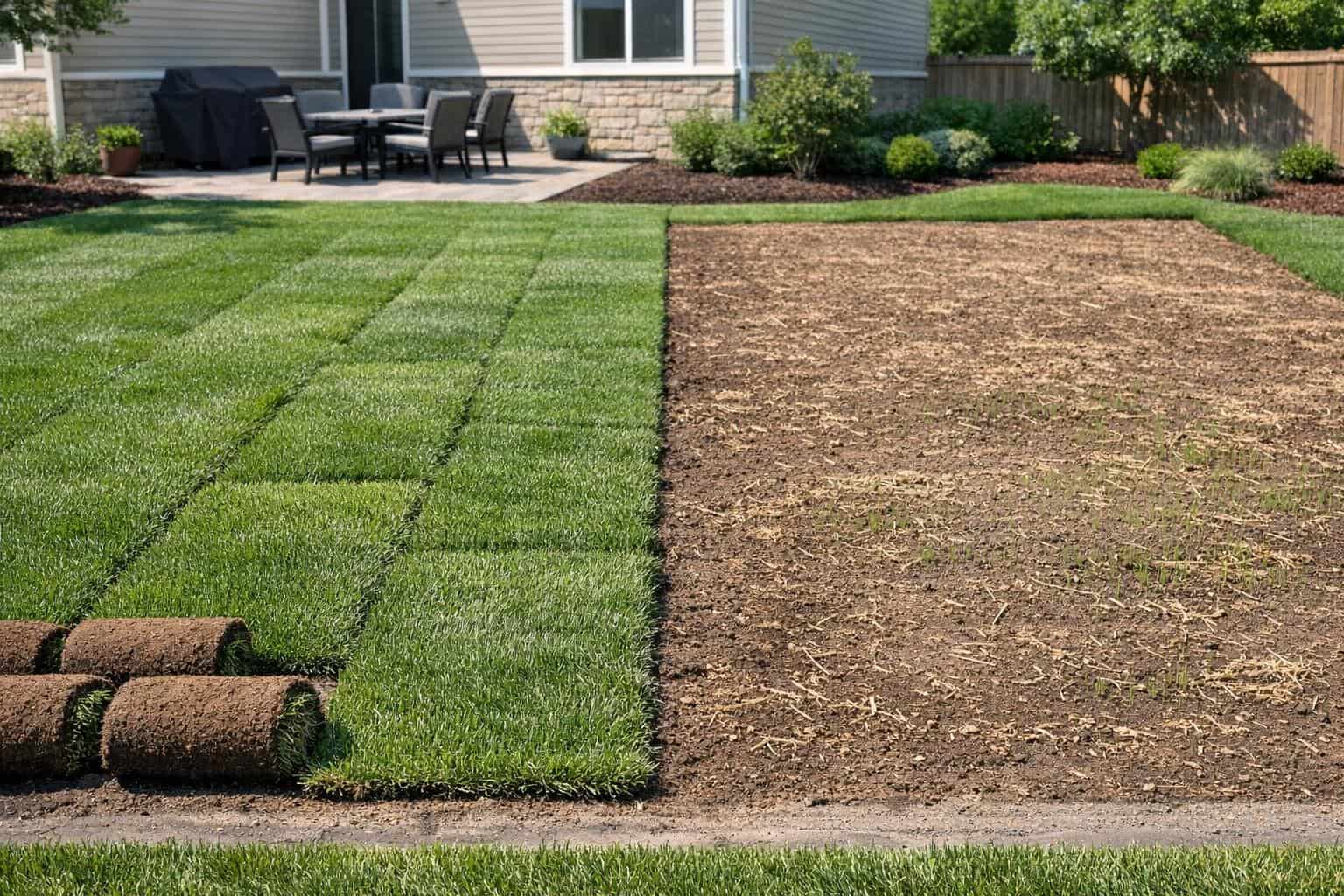
Sod and seed can both create a healthy lawn, but they ask different things from a homeowner. Some households want a faster finished look and are willing to invest more upfront. Others are comfortable with a longer establishment process if it helps control cost. The better choice depends on budget, timing, watering discipline, yard conditions, and how quickly the space needs to be usable.
This is especially important on new builds or major yard renovations where irrigation, grading, and drainage may all affect lawn success.
Why homeowners choose sod
Sod gives a lawn an immediate finished appearance, which is one of its biggest advantages. It can make a newly built or renovated yard feel complete much faster than seed. In many cases it also helps control surface soil movement while the lawn establishes, which can be useful after grading work.
That faster visual result is why sod often pairs well with the broader sod and lawn installation guide for homeowners who want a quick transformation.
Why some homeowners prefer seed
Seed can cost less upfront and may make sense when the project area is large, the budget is tighter, or the timeline is flexible. It can also be a reasonable path when homeowners are prepared to follow watering and establishment requirements carefully. The tradeoff is that the lawn takes longer to fill in, and results can be more sensitive to weather and care during the early stages.
Watering and establishment differences
Both sod and seed need attentive watering early on, but the pattern and risk are different. Sod needs moisture to root in successfully, while seed needs the surface conditions to stay supportive long enough for germination and young growth. In either case, poor irrigation planning can undercut the result. That is why lawn-installation decisions often connect directly to the irrigation system guide.
Durability, timing, and use
If the yard needs to look finished sooner or handle activity earlier, sod is often the stronger fit. Seed usually requires more patience before the lawn looks complete and more caution before heavy use. Timing within the season also matters, since weather can help or hurt establishment.
Cost tradeoffs
Sod usually costs more upfront because homeowners are paying for a ready-grown product plus installation. Seed may lower initial cost, but it can demand more time, follow-up attention, and sometimes patching if establishment is uneven. The most useful cost comparison is not just material price, but the level of risk and time each path carries in your yard.
Homeowners should also compare this decision with the broader artificial turf vs natural grass guide if they are still deciding whether a natural lawn is the right long-term direction in the first place.
Leave a Reply