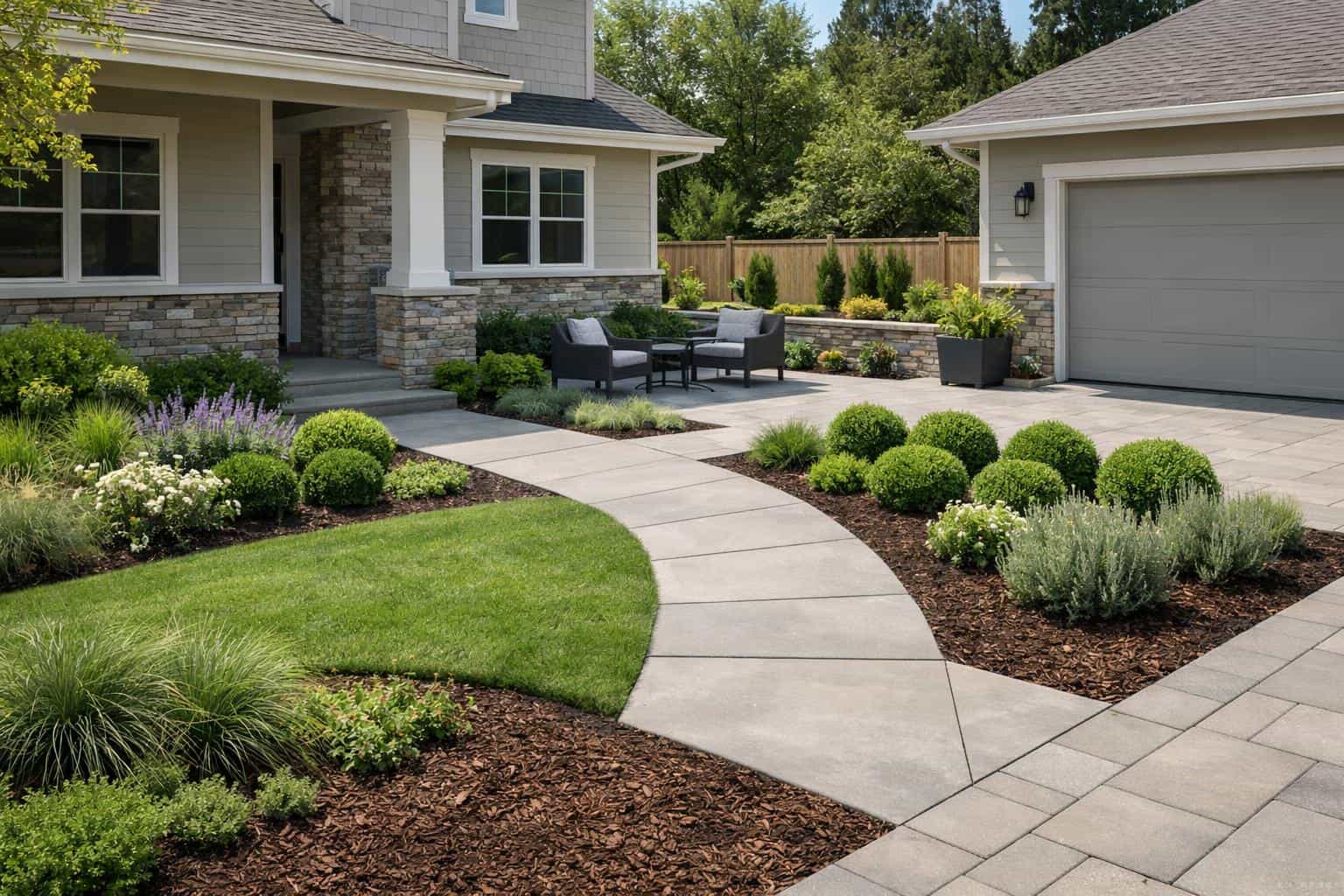
If a low-maintenance yard is starting to feel like regular cleanup, constant trimming, or repeated replacement, the design may need adjustments rather than more effort from you.
Common signs something is off
When low-maintenance landscaping stops working well, the warning signs usually show up before total failure. Paying attention early gives you more options and usually lowers repair cost.

- You are still spending more time than expected watering, trimming, sweeping, or replacing materials
- Plants are overgrowing their spaces or creating visibility and access problems
- Decorative rock, mulch, or turf is shifting, thinning, or looking patchy
- Runoff, overspray, or drainage issues are undermining the low-maintenance goal
- The yard looks neat only right after major cleanup instead of staying stable between visits
What to check first
Look for the recurring task that keeps returning. That usually points to the design decision that needs correction.
- Track where your cleanup time actually goes each month
- Inspect edges, slopes, and irrigation zones for movement or oversaturation
- Look for plantings that are forcing frequent pruning or replacement
When to call a pro
If you are seeing repeated problems, safety issues, drainage changes, cracking, movement, dead materials, or loss of function, it is worth getting a professional opinion instead of guessing.

- Materials washing out or migrating after irrigation or storms
- Plants that clearly do not match the site or available maintenance level
- Persistent drainage or runoff problems affecting the simplified design
Bottom line
The earlier you respond to trouble signs in low-maintenance landscaping, the better your odds of fixing the problem with a smaller scope and lower cost.
For the full service background, go back to the main Low-Maintenance Landscaping Guide for Homeowners.
Leave a Reply