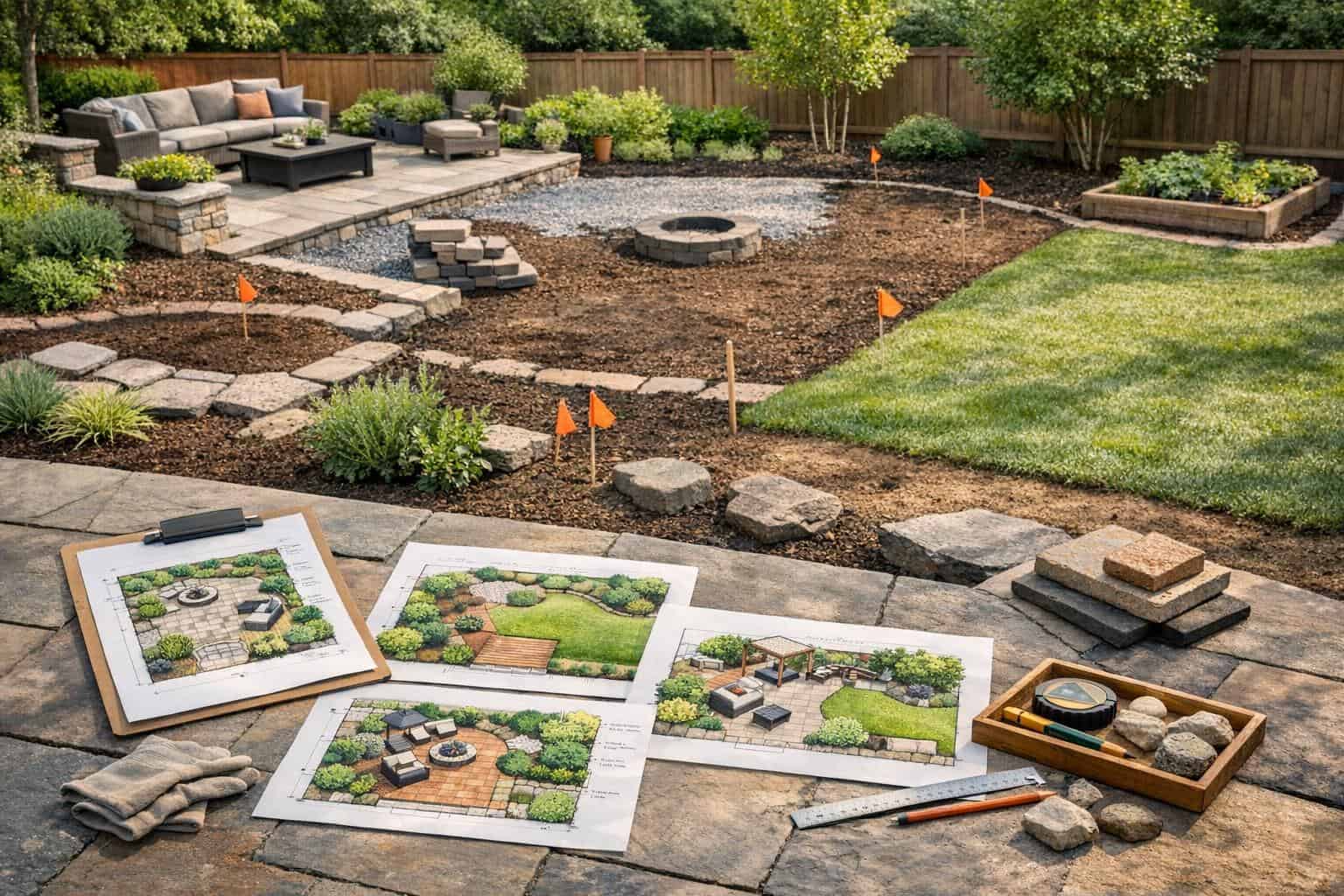
One of the hardest parts of phased landscaping is avoiding a yard that looks pieced together. Cohesion comes from carrying the same planning logic through every phase, even when years separate the work.
What creates cohesion across phases
- A clear layout plan that already shows where future zones will connect
- Consistent material families, edge details, and plant language
- Infrastructure planning that supports later additions without awkward patching
- A realistic sense of scale so each phase feels like part of the same property story
How homeowners lose cohesion
Cohesion usually breaks when each phase is designed in isolation or when homeowners chase a different look every time a new project starts.

- Changing materials or styles too aggressively from one phase to the next
- Ignoring sightlines and how one area relates to another
- Adding features without checking how they affect circulation and maintenance
Ways to protect the bigger vision
- Keep a master plan, even if the schedule is phased
- Save material notes, plant palettes, and finish decisions from earlier work
- Ask new contractors to work from the long-term plan rather than only the current phase scope
Bottom line
Phased landscaping works best when every stage is treated like part of one yard, not six unrelated projects.

If you want more context, continue with the main How to Phase a Landscaping Project Guide.
Leave a Reply