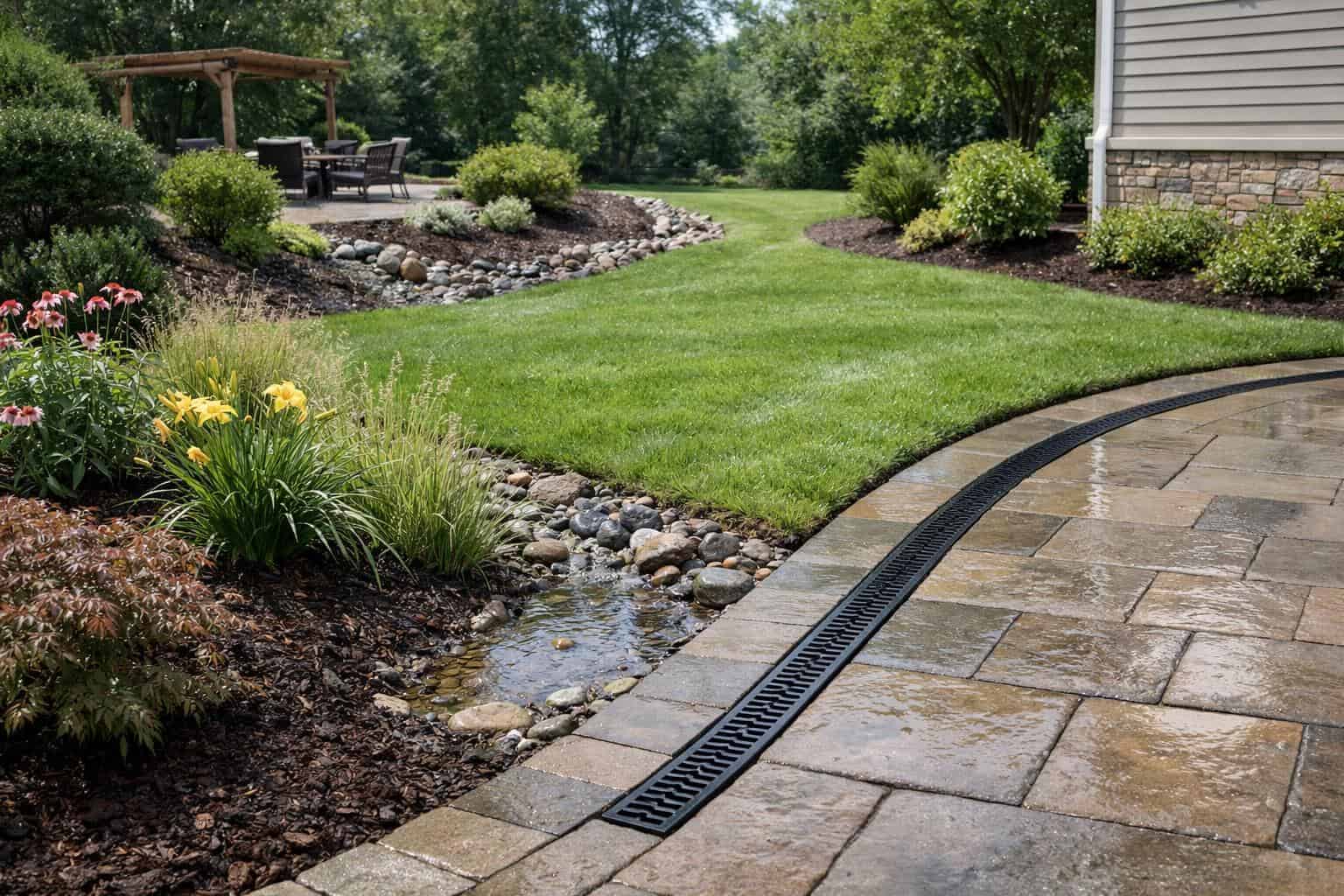
The right drainage plan usually combines diagnosis, route planning, and realistic expectations about where water can safely go after it is collected.
What a good plan starts with
- Understanding runoff sources, low points, and failure points around the yard.
- Knowing what structures or finished areas need the most protection.
- Confirming where collected water can discharge effectively.
What weak plans usually miss
- They treat symptoms without tracing the full water path.
- They install one product without checking if the rest of the yard still sends water back into trouble spots.
- They ignore restoration and how drainage affects the finished landscape.
How to choose well
- Ask what the plan assumes about rainfall, grade, and outlet conditions.
- Make sure every major water source is accounted for.
- Choose a plan that works with the rest of the landscape, not against it.
Bottom line
The best drainage plan solves the water problem as a system, not as a one-piece guess.
For the broader overview, continue with Drainage Solutions Guide for Homeowners.
Leave a Reply