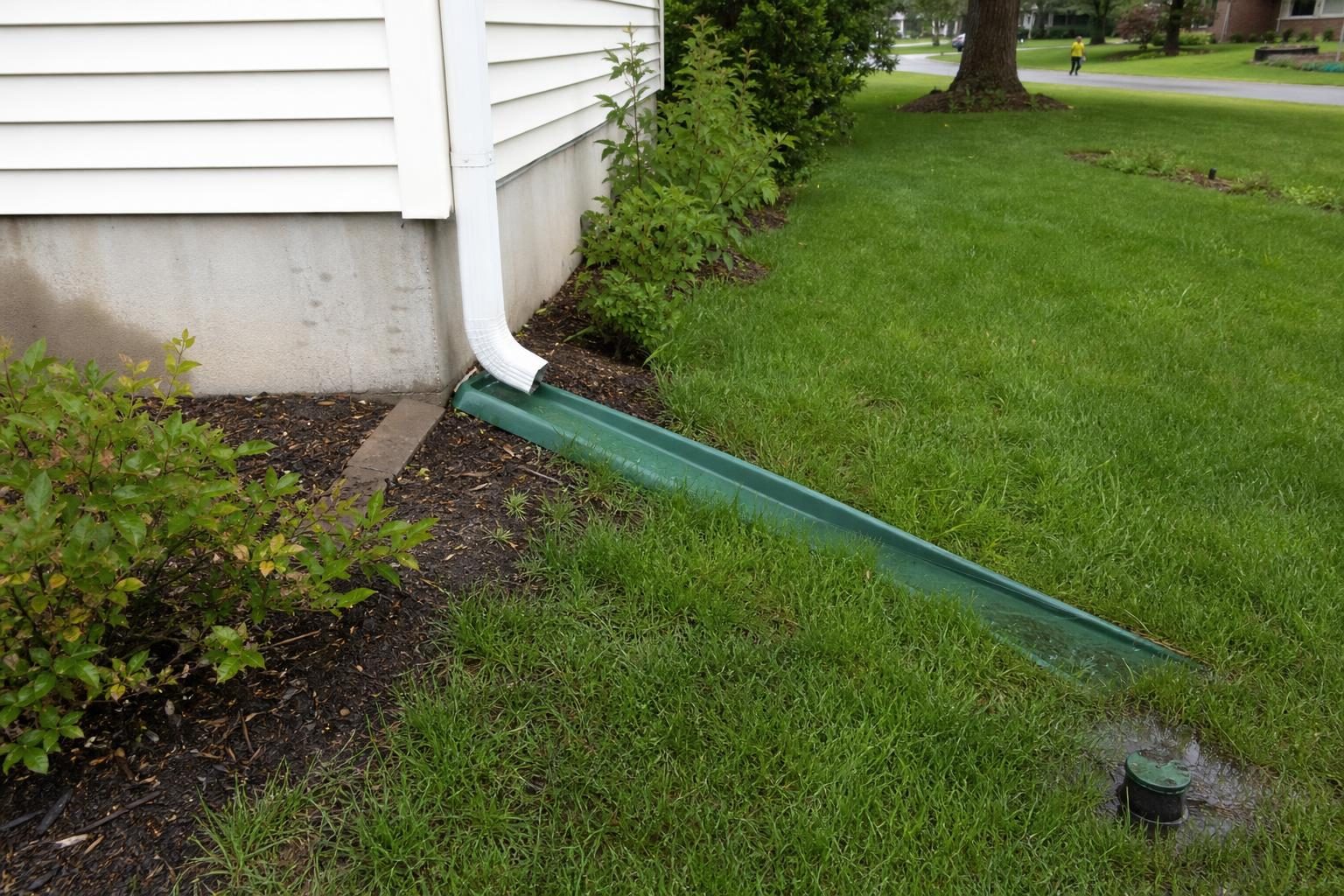
Drainage work is usually worth the cost when water is reaching your foundation, basement, crawl space, slab or retaining walls, because the damage it causes there tends to cost far more to repair than the drainage fix itself. It is less clear-cut when the only problem is a soggy patch of lawn far from the house. The key is matching the size of the fix to the real risk.
Part of our Complete Yard Drainage Guide: diagnosing water, drains and swales, costs and repairs in one place.

What poor drainage can damage
Water in the wrong place rarely stays a landscaping problem. Over time it can lead to:
- Foundation and basement issues: Saturated soil next to the house adds pressure on walls and can contribute to leaks, damp basements and, in some soils, movement and cracking.
- Crawl space moisture: Standing water can raise humidity, encourage mold and damage framing and insulation.
- Hardscape failure: Patios, walkways and driveways settle or heave when the base stays wet, especially in freeze-thaw climates.
- Retaining wall pressure: Walls without proper drainage behind them can lean, bulge or fail.
- Erosion: Concentrated runoff cuts channels, washes out mulch and soil, and undermines slopes.
- Lawn and plant loss: Waterlogged roots suffocate, and mosquitoes breed in standing water.
Typical drainage costs
Costs vary widely by region, soil, access, length of run and how much restoration is needed. These ranges are rough and meant for planning.
| Fix | Typical cost range | Best for |
|---|---|---|
| Downspout extensions or splash blocks | $20–$200 per downspout | Roof water dumping at the foundation |
| Buried downspout lines to daylight or pop-up | $500–$2,500+ | Moving roof water well away from the house |
| Regrading near the foundation | $500–$3,000+ | Soil sloping toward the house |
| Swale or dry creek bed | $1,000–$5,000+ | Surface runoff across a yard |
| Catch basins and channel drains | $1,000–$4,000+ | Low spots, patios, driveway edges |
| French drain | $25–$75+ per linear foot | Subsurface water and saturated soil |
| Dry well | $1,500–$5,000+ | Where water has no outlet to daylight |
For comparison, repairing a basement leak, foundation crack, failed retaining wall or rebuilt patio can easily run into the thousands or tens of thousands, plus disruption. That is the main reason targeted drainage spending often pays off.
How to decide if your problem is worth fixing

High priority: fix soon
- Water pooling against the foundation or entering the basement or crawl space.
- Soil sloping toward the house.
- Downspouts discharging right at the foundation.
- Retaining walls leaning, weeping heavily or showing cracks.
- Hardscape settling or cracking near water paths.
Medium priority: plan and budget
- Lawn areas that stay soggy for days after rain.
- Erosion channels or exposed roots on slopes.
- Water crossing walkways and freezing in winter.
Low priority: monitor
- Brief puddles that clear within a day, well away from structures.
- Minor wet spots in naturally low parts of the yard that you can plant with water-tolerant species.
If you are unsure what you are seeing, our guide to signs you need regrading walks through the common symptoms.

Start with the cheapest effective fix
Many drainage problems are solved without large projects. A sensible order:
- Clean and check gutters. Overflowing gutters dump water at the foundation.
- Extend downspouts so water discharges several feet from the house, or connect them to buried lines.
- Restore grade next to the house. Soil should slope away from the foundation; a commonly cited target is roughly six inches of fall over the first ten feet, where space allows.
- Add surface solutions such as swales or catch basins where runoff crosses the yard.
- Use subsurface drains like French drains only when surface fixes are not enough or groundwater is the problem.
For a side-by-side look at two common options, see French drain vs surface drain, and drainage vs regrading if the ground itself may be the issue.
Diagnose before you spend
The best money you can spend on drainage is often the time it takes to watch the yard during a real storm. Put on a raincoat and walk the property while it is pouring. Note where water comes off the roof, where it collects, which direction it flows across the lawn, and whether any runs in from a neighbor’s yard or the street.
Take photos and short videos, and mark the trouble spots on a simple sketch. Bring that record to contractor visits. It helps them design for what actually happens rather than guessing on a dry day, and it makes it easier to tell whether a proposed fix targets the real source. If the problem is groundwater rather than surface runoff, you may notice soggy soil even days after rain stops, which points toward subsurface solutions.

Mistakes that waste drainage money
- Treating the symptom, not the source. Draining a puddle without addressing the downspout or slope feeding it.
- No outlet. A drain that has nowhere to go just moves the puddle. Every system needs a safe discharge point.
- Sending water to a neighbor. Redirecting runoff onto adjacent property can create legal and neighbor problems; many areas have rules about it.
- Undersizing. Pipes, basins and dry wells must handle real storm volumes, not light rain.
- Ignoring maintenance. Catch basins, grates and pop-up emitters clog with leaves and sediment.
- Skipping restoration in the budget. Trenching through lawn and beds requires repair afterward.
What to ask a drainage contractor
- Where is the water coming from, and how did you determine that?
- Where will the water discharge, and is that allowed locally?
- What pipe type, size, slope and fabric or gravel will you use?
- Will there be cleanouts or access points for future maintenance?
- What restoration of lawn, beds or hardscape is included?
- What warranty do you offer, and what would void it?
Our guide to what a drainage estimate should include helps you compare bids line by line.
Estimate drainage cost before weighing property risk
Use this drainage calculator to compare rough treatment ranges with the potential cost of leaving water problems unresolved.
Drainage Cost Calculator
Estimate drainage project pricing for swales, French drains, and catch basin style systems.
Drainage cost estimate
- Estimated treatment length
- –
- Low estimate
- –
- Mid estimate
- –
- High estimate
- –
- Estimated range per linear ft
- –
Frequently asked questions
Does fixing drainage add home value?
It is rarely a visible selling feature, but water problems are a common inspection concern. Solving them can prevent price negotiations or failed inspections later.
Can I fix drainage myself?
Gutter cleaning, downspout extensions and small grade corrections are often DIY-friendly. Buried systems, regrading near foundations and work near utilities usually benefit from a professional.
Is a French drain always the best solution?
No. French drains handle subsurface water. Many problems are surface runoff that a swale, catch basin or regrading solves more simply and cheaply.
How do I know the drainage work succeeded?
Check the area during and after the next few heavy rains. Water should move to the outlet, and pooling near the house should stop.