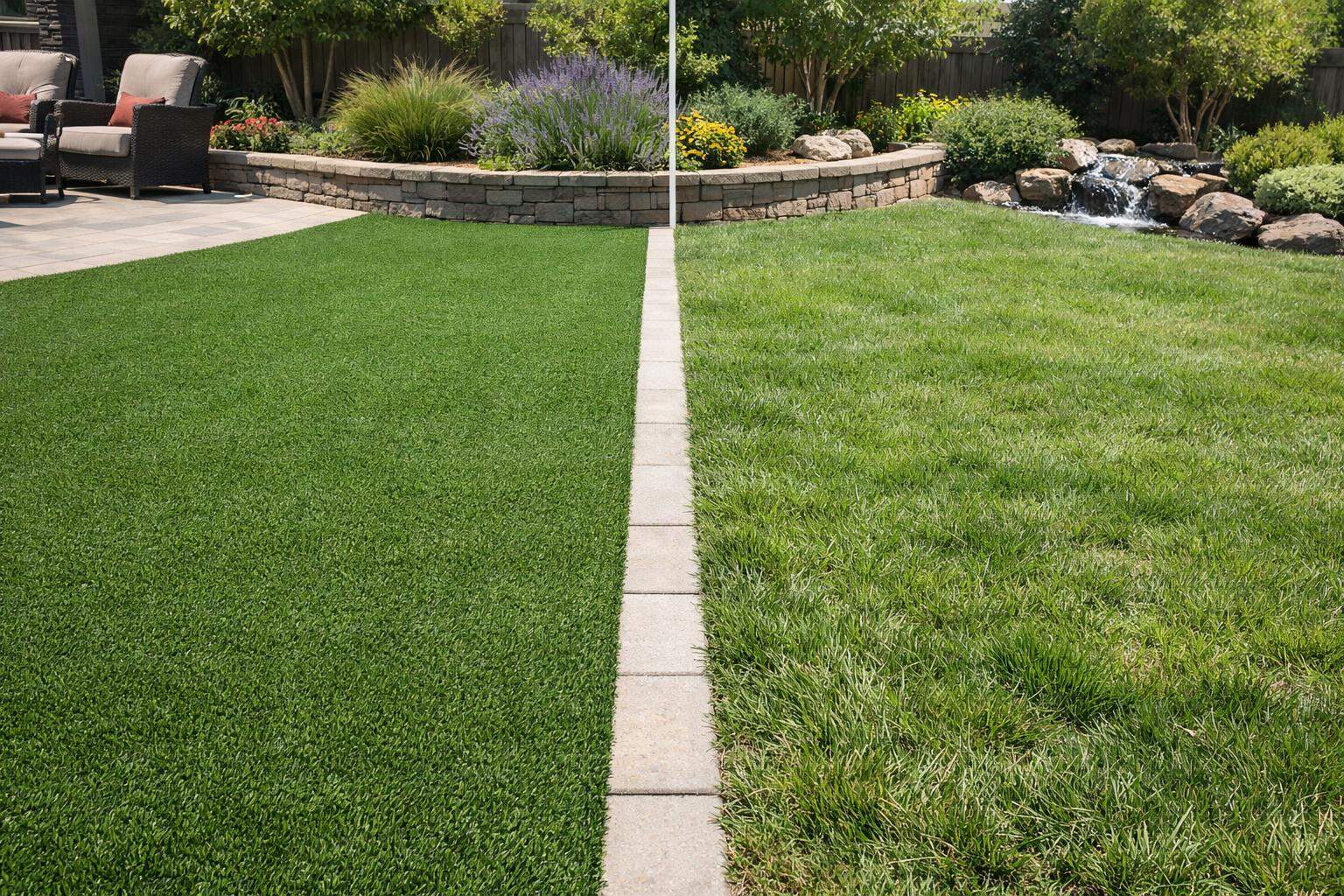
Homeowners comparing artificial turf and natural grass are usually trying to solve a mix of issues at once: maintenance, water use, appearance, mud, patchiness, and how much time they want to spend caring for the yard. Both options can make sense, but they come with different tradeoffs in cost, feel, drainage behavior, and long-term expectations.
Part of our Complete Lawn Guide: seed vs sod, grass types, costs, care calendar and hiring in one place.
This guide breaks that decision into practical homeowner terms.
How artificial turf and natural grass differ
- Artificial turf: reduces mowing and day-to-day lawn care, but has a higher installation cost and a more constructed feel.
- Natural grass: offers a classic living surface and often a lower upfront installation cost, but needs irrigation, seasonal care, and ongoing maintenance.
- Key tradeoff: turf can reduce routine work, while natural grass offers a softer living landscape experience if you are willing to maintain it.

Upfront cost versus long-term upkeep
Artificial turf usually costs more to install than sod or seed, especially when the base, drainage, edging, and finish details are handled properly. Natural grass often costs less upfront but carries recurring maintenance, irrigation, fertilization, and repair costs over time.
If you are also weighing lawn establishment, our sod and lawn installation guide is useful alongside this page.
Drainage, heat, and feel underfoot
These differences matter more than many homeowners expect. Artificial turf behaves differently with heat and surface feel, and its drainage depends heavily on the base and installation quality. Natural grass changes seasonally and can become muddy or patchy when drainage or irrigation is poor. That is why this decision often connects to broader water-management planning.

Questions to ask before choosing
- What is the real problem I am trying to solve: water use, maintenance, mud, durability, or appearance?
- How much seasonal lawn care am I realistically willing to keep up with?
- How will drainage be handled with this option?
- How will the surface feel and look in the climate where I live?
- What will long-term upkeep actually look like for this choice?

What homeowners should remember
The best choice is usually the one that matches how you actually want to live with the yard. Some properties benefit from real grass, some benefit from artificial turf, and some benefit from reducing lawn area altogether. If you want that broader perspective, read our low-maintenance landscaping guide too.
Service guide: The Artificial Turf Installation Guide explains how base prep, drainage, and edge detail shape the finished result.