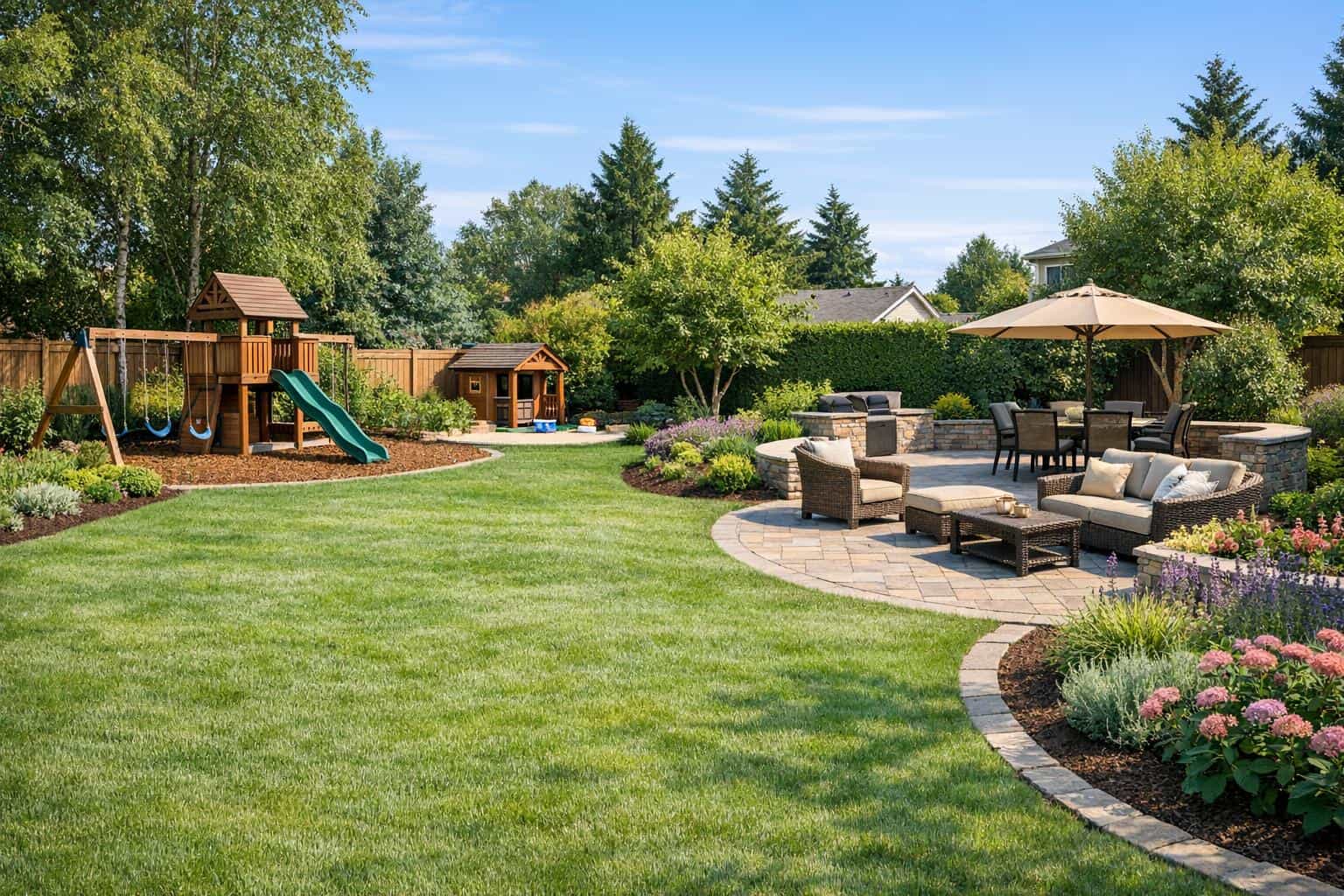
A kid-friendly backyard should make family life easier, not more complicated. That usually means balancing open play space, adult seating, visibility, durable surfaces, and a layout that works for more than one kind of activity at a time. Some families need lawn space for running and play. Others need a patio that lets adults supervise comfortably while still keeping the yard attractive and easy to maintain.
Part of our Complete Yard Design and Planning Guide: layouts, ideas by yard type, phasing and budgets in one place.
The strongest kid-friendly yards are designed around how the family actually uses the space. Instead of adding features one by one, it helps to think about supervision, circulation, and everyday routines first.
Open space and visibility usually come first
Families often value clear sightlines more than complicated backyard features. If adults cannot easily see the main play area from seating, kitchen windows, or common circulation routes, the yard may feel less practical even if it looks good. A simple open-lawn zone paired with patio space often works better than a more fragmented layout.
The backyard planning guide is useful here because it frames the yard as a set of connected zones rather than isolated upgrades.

Surfaces should match the way the yard is used
Families often need a mix of surfaces: lawn or play space, hardscape for seating and dining, and planting that softens the edges without reducing usable space too much. The best combination depends on maintenance tolerance, climate, drainage, and how much running room the family wants to preserve.
If the lawn is a major part of the decision, the sod and lawn guide and artificial turf vs natural grass guide can help compare long-term expectations.

Durability and maintenance still matter
A kid-friendly yard is often a high-use yard, which means maintenance and durability should be part of the design from the beginning. Muddy routes, overcomplicated planting, and delicate finishes can become frustrating quickly. The goal is not to eliminate personality from the yard. It is to keep the space workable under real family use.
Make room for the whole household
The best family yards do not separate adult and kid use too harshly. They create overlap: visible seating near play space, lighting that keeps the yard usable later in the day, and circulation that moves naturally between patio, lawn, and entry points. That makes the yard feel more like a real extension of the home.