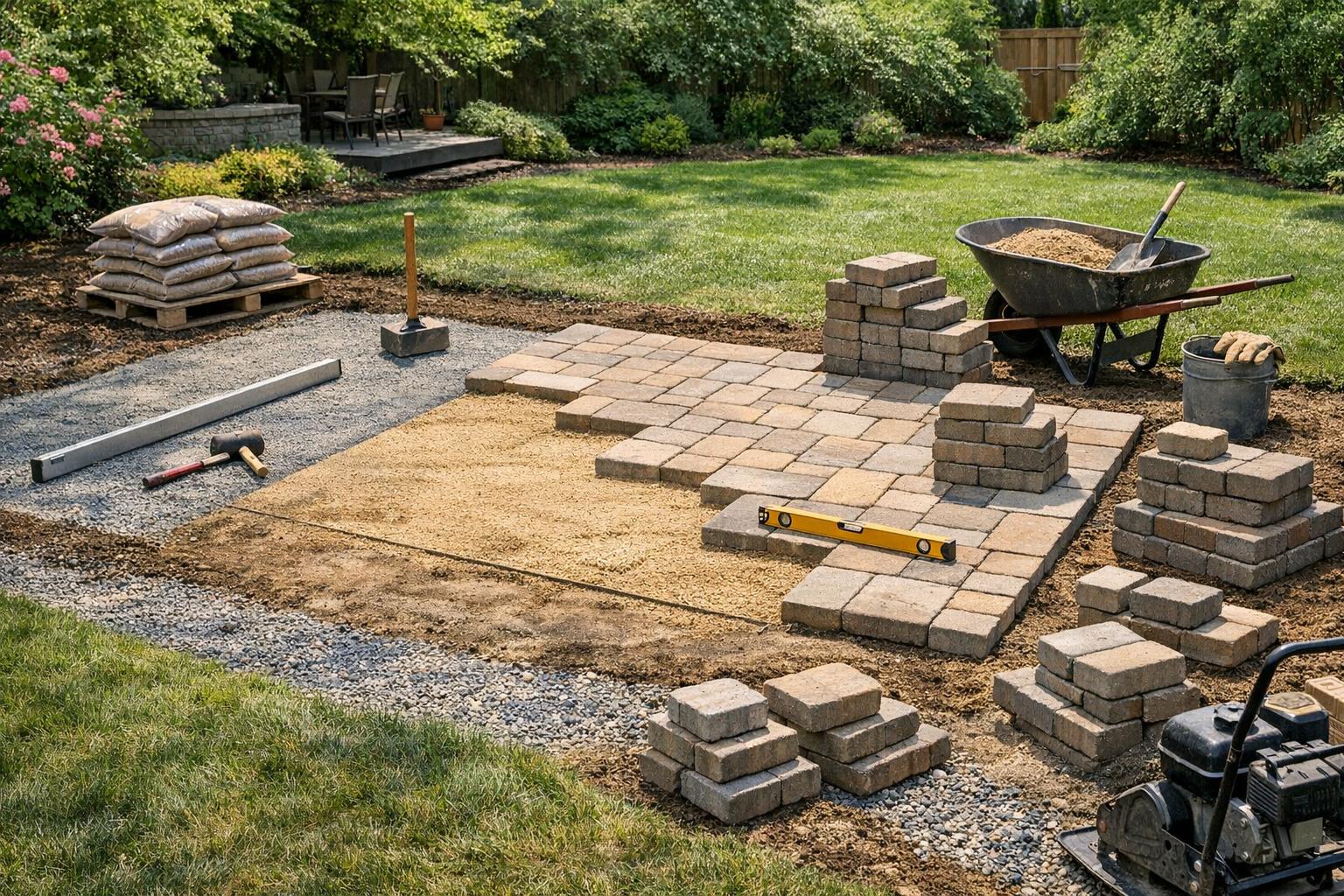
Patio projects rarely take the same amount of time from one yard to the next. Some move quickly because the site is simple, access is easy, and the scope is straightforward. Others take longer because drainage issues, grading, demolition, weather, or design complexity all add steps. Homeowners often want one clean timeline, but the smarter question is what parts of the project may affect that timeline before work begins.
A patio schedule usually reflects both the visible surface work and the invisible preparation underneath it.
What usually happens first
Before the finished surface goes down, contractors often need to demo existing material, excavate, prepare the base, handle drainage or grading issues, and set the layout. In many yards, these early steps take more time than homeowners expect because they determine whether the patio will perform well later.

Common reasons a patio timeline stretches
Weather delays, base or drainage corrections, material lead times, access constraints, and changes to scope can all extend the schedule. If steps, borders, lighting, seating walls, or other attached features are part of the plan, the patio is usually a broader hardscape project rather than a simple surface installation.

The patio installation guide, patio cost guide, and project expectations guide are useful follow-up reads when homeowners want to connect schedule with scope.
Leave a Reply