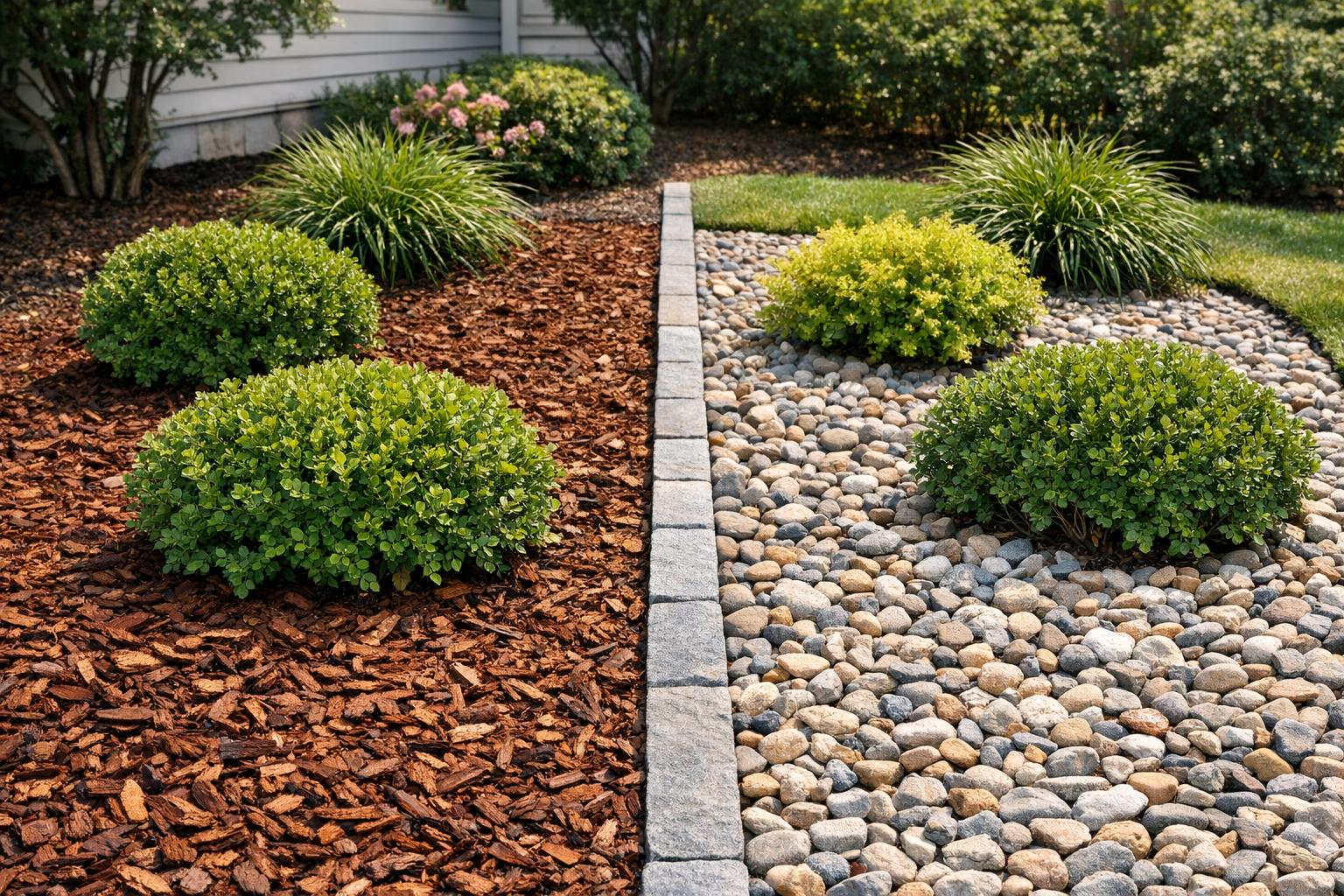
Ground-cover materials rarely stay exactly the same year after year. Organic mulches break down, decorative rock can migrate or sink, and some bed materials lose their clean look faster than homeowners expect. That does not mean the original choice was wrong. It usually means the material has a normal refresh cycle that should be part of the long-term maintenance plan.
The more sun, runoff, foot traffic, and weed pressure a bed receives, the more quickly that refresh cycle may show up.

Organic mulch usually changes the fastest
Mulch often fades, settles, or decomposes over time, especially in sunnier or wetter beds. That is part of how organic material works. Some homeowners like the soil-building benefits, while others prefer a ground cover that keeps a more stable appearance.
Decorative rock can last longer but still needs attention
Rock and stone ground covers usually break down far more slowly, but they can still shift, collect debris, mix with soil, or look uneven over time. Edging, weed control, and occasional redistribution often matter more than homeowners expect.
Longevity depends on the site, not just the product
The mulch vs rock guide, bulk mulch guide, and maintenance plans guide all help homeowners connect lifespan expectations to real upkeep.

Leave a Reply