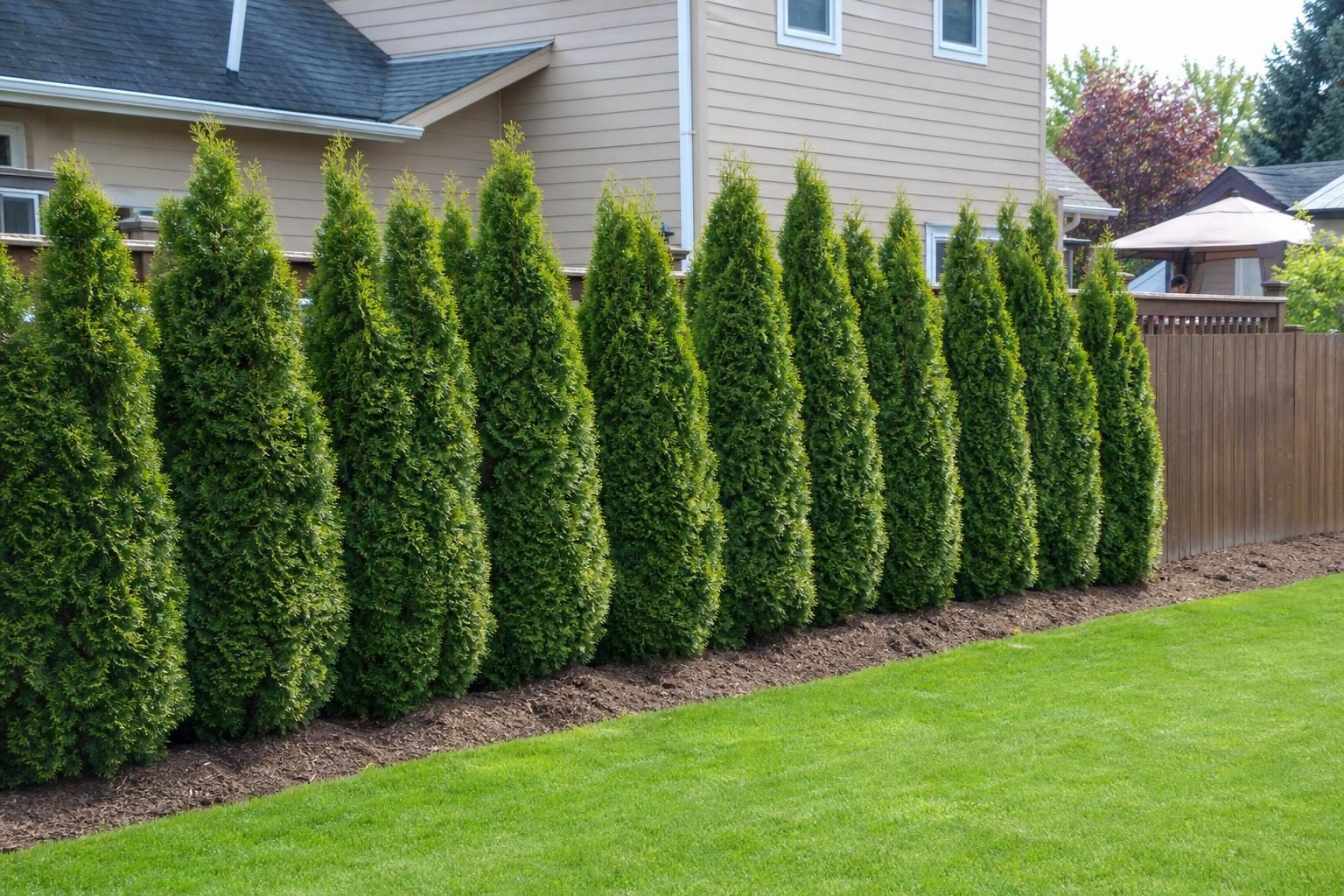
Evergreen screening is one of the most popular ways to create year-round privacy, but it works best when the screen is planned for mature size, spacing, and maintenance instead of just instant coverage. A good evergreen screen should improve privacy and structure without taking over the yard.
Part of our Complete Fence and Privacy Guide: materials, costs, rules, installation and plant screens in one place.
Choose the screen width before choosing the plant
Many evergreen-screen problems come from choosing a plant that is too wide or too tall for the available depth. On tighter sites, a layered or mixed screen may work better than one large hedge species.

Think about year-round appearance, not just privacy
An evergreen screen often becomes a major visual backdrop in the yard, so color, density, and texture matter. Our Privacy Landscaping Guide for Homeowners is a good companion if you are comparing evergreen options with broader screening strategies.
Plan for maintenance access
Even lower-maintenance evergreen screens need some access for trimming, cleanup, and monitoring. Planting too tightly against fences, walls, or paths often creates the problems homeowners were trying to avoid.

What homeowners should remember
The best evergreen-screen ideas provide privacy and long-term structure without creating a maintenance burden that outgrows the site.
Related homeowner planning guides
Use these next-step guides to make the project more specific before comparing estimates or choosing materials.
- Evergreen Screen Gap Filling Guide for Homeowners: Use this when the screen is mostly working but small gaps are weakening privacy.
Related homeowner planning guides
Use these next-step guides to narrow the project before choosing materials, comparing estimates, or changing the layout.
- Evergreen Screen Spacing Mistakes Guide for Homeowners: Use this before planting a screen so spacing supports privacy and plant health over time.

More specific homeowner planning guides
Use these deeper guides when the broad project direction is clear and the next decision is about layout, materials, maintenance, or cost tradeoffs.
- Evergreen Screen Narrow Space Planting Guide: Use this when planning narrow evergreen screen planting to build privacy in tight spaces without choosing plants that get too wide.
- Evergreen Screen Mixed Species Guide: Use this when planning mixed species evergreen screen to avoid a screen that fails all at once from one pest or disease issue.
- Evergreen Screen Replacement Phasing Guide: Use this when planning evergreen screen replacement phasing to replace a failing screen without losing all privacy at once.
- Evergreen Screen Winter Browning Guide: Use this when planning evergreen screen winter browning to understand whether browning is seasonal stress or a bigger health problem.
- Evergreen Screen Fence Offset Guide: Use this when planning evergreen screen fence offset to plant far enough from the fence for growth and care.

More specific homeowner planning guides
Use these deeper guides when the broad project direction is clear and the next decision is about layout, materials, access, maintenance, or cost tradeoffs.
- Evergreen Screen Soil Preparation Guide: Use this when planning evergreen screen soil preparation to give privacy plants a better chance to fill in evenly.
- Evergreen Screen Plant Size Selection Guide: Use this when planning evergreen screen plant size selection to choose plant sizes that balance privacy now with establishment success.
- Evergreen Screen Watering Zone Guide: Use this when planning evergreen screen watering zones to water privacy screens consistently without overwatering nearby beds.
- Evergreen Screen Pruning Access Guide: Use this when planning evergreen screen pruning access to keep the screen shapable after it grows in.
- Evergreen Screen Under Fence Line Guide: Use this when planning evergreen screen under fence lines to improve privacy near fences without damaging access or airflow.
- Evergreen Screen for Noisy Streets Guide: Use this when planning evergreen screening for noisy streets to soften street exposure while setting honest expectations.