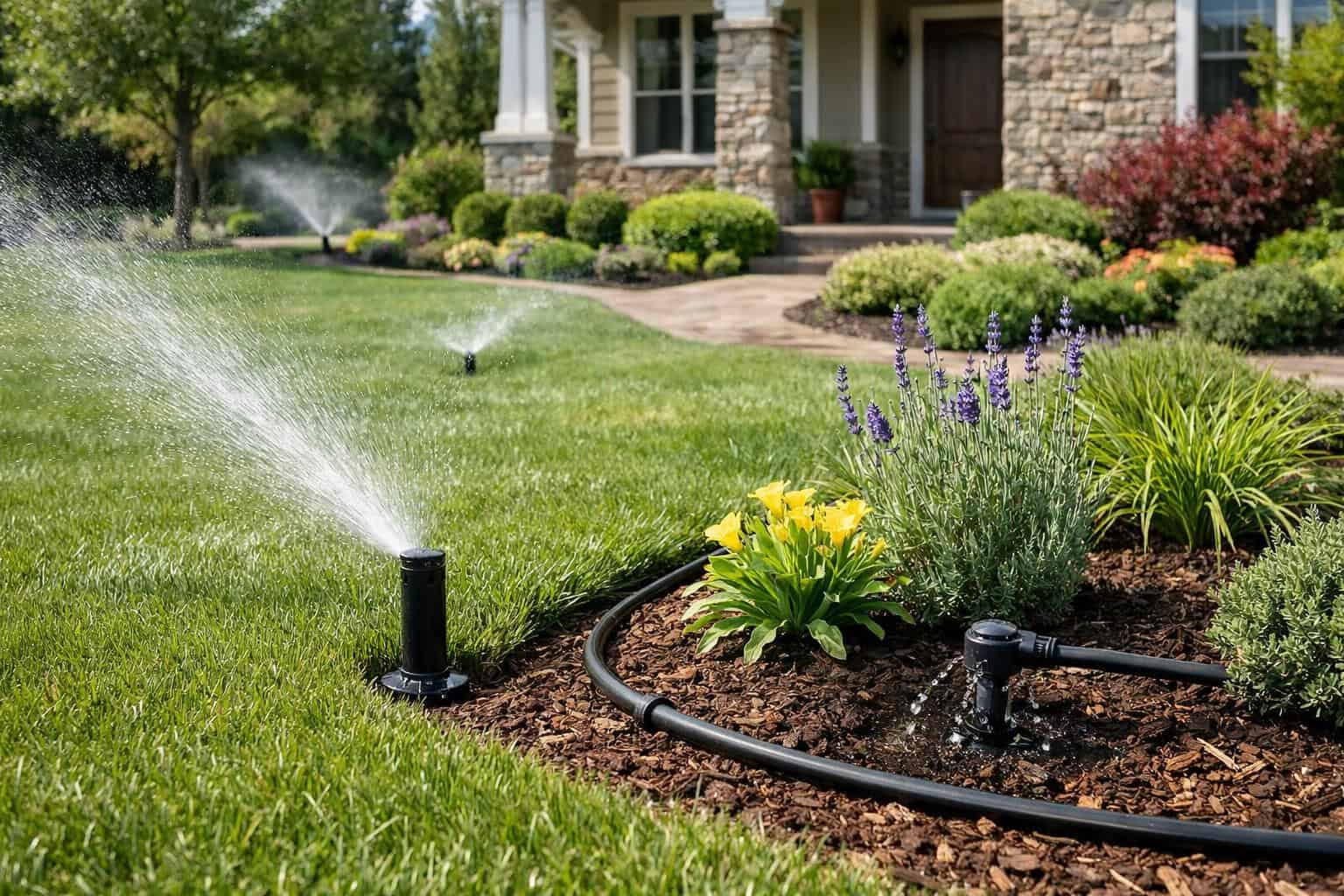
An irrigation system can protect planting investments, support lawn health, reduce hand-watering time, and make a landscape easier to manage through seasonal changes. But not every property needs the same type of irrigation, and not every system is designed with efficiency or long-term maintenance in mind.
This guide explains the basics of residential irrigation planning, common system types, what affects cost, and what homeowners should ask when irrigation is part of a larger landscape project.
What residential irrigation usually includes
Irrigation work can range from a simple sprinkler-zone upgrade to a full system planned around lawn areas, planting beds, drip lines, controllers, valves, and seasonal adjustments. On many projects, irrigation is one of the supporting systems that makes the visible landscaping perform well after installation.
- Lawn irrigation: usually focused on even coverage and durable equipment placement.
- Drip irrigation: often used in planting beds, shrubs, and lower-water-use designs.
- Controller and zoning setup: helps match watering schedules to different plant and exposure needs.
Why irrigation should match the landscape plan
Watering should be built around what is actually being planted and how the property is used. A system designed only for convenience can overwater some areas, miss others, and make maintenance harder. The best results come when irrigation is planned with lawn shape, planting density, sun exposure, and hardscape layout already in mind.
That is one reason irrigation belongs inside the bigger planning conversation described in our landscaping services guide.
When homeowners should evaluate irrigation
Irrigation is worth reviewing when:
- new lawn or planting beds are being installed
- existing zones are not covering evenly
- water bills are high and coverage seems wasteful
- parts of the property stay too wet while others dry out
- the landscape layout is changing enough that old head placement no longer makes sense
Major patio, retaining wall, drainage, and planting projects are often the right time to rework irrigation because the site is already being opened up.
How irrigation affects cost and maintenance
Irrigation pricing depends on zone count, trenching needs, controller choices, valve work, drip-line complexity, repairs to existing systems, and how much of the yard needs new coverage. Long-term cost is also affected by maintenance and seasonal adjustments. A cheaper install that wastes water or requires frequent fixes may not be the better value.
Homeowners comparing full outdoor budgets should also read our landscaping cost guide so irrigation is evaluated as part of the whole project, not as an isolated line item.
Irrigation and drainage are connected
Too much water in the wrong place can look like a drainage failure when the real problem is irrigation coverage or scheduling. In other cases, a true grading or runoff problem can make homeowners think the irrigation system is at fault. That is why the best contractors evaluate both. If water management is a concern on your site, pair this guide with our drainage solutions guide.
Questions to ask before hiring for irrigation work
- How will the system be zoned for lawn, planting beds, and different sun exposures?
- What parts of the existing system can realistically be reused?
- How will irrigation be coordinated with new patios, walls, or planting plans?
- What maintenance or seasonal service should I expect?
- How will you test for even coverage and overspray?
If you are still comparing companies more generally, our hiring guide can help you ask better project-level questions.
What homeowners should remember
A good irrigation system supports the landscape you actually want, not just the one that was there before. The more clearly a contractor explains zoning, efficiency, maintenance, and how irrigation fits into the rest of the project, the more likely you are to end up with a system that protects the investment instead of creating new water problems.
Related guide: If coverage problems, runoff, or dry spots are the main issue, the Signs Your Irrigation System Needs Attention Guide can help narrow the problem before bigger plant stress sets in.
Cost guide: Homeowners comparing system proposals can use the What Affects Irrigation System Cost Guide to understand zoning, trenching, and retrofit factors.
Leave a Reply