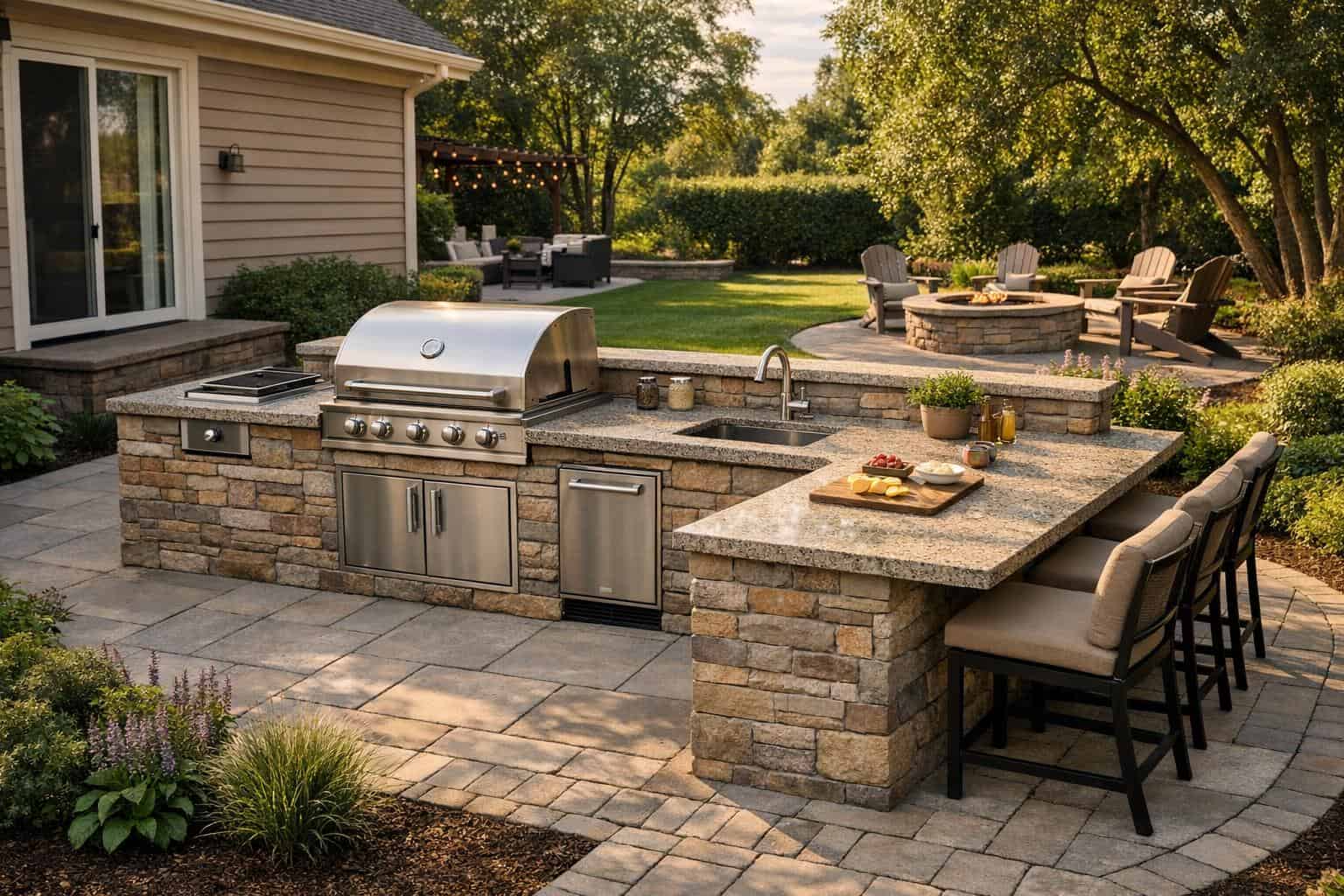
An outdoor kitchen can turn a patio or backyard into a true living space, but it also adds more planning complexity than a basic seating area or fire feature. Homeowners usually need to think through layout, cooking style, countertop space, utility connections, weather exposure, drainage, lighting, and how the new kitchen relates to the rest of the yard.
The most successful projects start with function, not just appearance. Before choosing appliances or finishes, it helps to decide how the space will actually be used. Some households want a simple built-in grill and prep counter. Others want a larger entertaining zone with refrigeration, storage, bar seating, shade, and room for serving. The scope drives the budget, timeline, and contractor team you may need.
What an outdoor kitchen project usually includes
Outdoor kitchens vary widely, but most projects are built from a few core components: a cooking appliance, work surface, durable base structure, and surrounding patio or gathering area. More advanced builds may also include electrical service, gas lines, sink plumbing, task lighting, refrigeration, or overhead cover.
In many yards, the kitchen itself is only part of the work. Contractors may also need to extend a patio, improve grading, adjust drainage, add retaining walls, or strengthen the surface under the finished structure. That is why it helps to review the broader landscaping project process before construction starts.
How to choose the right layout
Layout affects both convenience and cost. A straight run with a grill and prep space is often the simplest and most budget-friendly option. L-shaped and U-shaped layouts create more working room and can support entertaining, but they require more material, more coordination, and more yard space. If the kitchen is too far from the house, utility runs can become more expensive. If it is too close to doors or tight walkways, daily use can feel cramped.
Homeowners should also think about circulation. Guests need room to gather without blocking the cook, and the kitchen should connect naturally to dining, seating, and lighting. If you are already planning a new patio, reviewing a patio installation guide can help you coordinate both spaces as one project.
Utilities and infrastructure matter more than finishes
Appliances get attention, but the infrastructure behind them is often what determines whether a project feels easy or frustrating. Gas, electrical, and water requirements should be addressed early. A contractor may need to trench for service lines, coordinate licensed trades, or meet local code requirements for shutoffs and clearances. Ventilation, drainage, and weather protection also matter, especially around cabinets and appliances.
If the site has slope or water issues, tackle them before the kitchen is built. Pooling water, unstable base conditions, or poor runoff can shorten the life of hardscape and utility components. In those cases, it is smart to compare solutions in the drainage guide or the grading and yard leveling guide.
Best materials for outdoor kitchens
Outdoor kitchens need materials that can handle weather, moisture, heat, and routine cleaning. Stone, concrete, masonry veneer, stainless steel, and outdoor-rated surfaces are common choices because they hold up better than many indoor materials. The right finish depends on climate, maintenance tolerance, and the style of the home.
It is worth asking contractors why they recommend a particular material system, how it performs over time, and what routine care it needs. A beautiful design is less useful if surfaces stain easily, metal components rust, or cabinet materials break down in sun and rain.
How much an outdoor kitchen may cost
Outdoor kitchen costs vary sharply based on size, appliances, utility work, and surrounding hardscape. A compact grill-and-counter project is very different from a full entertaining kitchen with refrigeration, bar seating, lighting, and overhead structure. Labor complexity often rises when electrical, gas, and plumbing are combined with masonry work.
When comparing bids, focus on what is actually included. Some proposals price only the kitchen structure, while others include appliance installation, prep counters, utility rough-ins, permits, or adjacent patio work. The broader landscaping costs guide can help you understand where those cost differences come from.
Questions to ask before hiring
- Will this contractor handle only the hardscape, or coordinate electrical, gas, and plumbing trades too?
- What base preparation is included beneath the kitchen and surrounding patio?
- How are drainage and runoff handled around the finished structure?
- Which finishes and appliances are rated for outdoor use in this climate?
- What access, shutdowns, inspections, or permit steps should be expected?
What to expect during the project
Most outdoor kitchens move through site prep, utility rough-in, structure construction, surface finishing, appliance install, and final cleanup. Weather, inspections, and material lead times can all affect the schedule. Temporary disruption is normal, especially if the new kitchen connects to an existing patio, walkway, or dining zone.
If the goal is to create a complete outdoor-living space, many homeowners also pair the kitchen with a fire pit, landscape lighting, and upgraded planting around the entertaining area. Thinking through the whole yard plan can prevent expensive rework later.
An outdoor kitchen should make the yard easier to enjoy, not just more expensive to build. Homeowners who focus on workflow, utility planning, and durable materials tend to get better long-term value than those who design around appearance alone.
Cost guide: If you are comparing bids, the What Affects Outdoor Kitchen Cost Guide explains why utilities, appliances, and patio integration can change the number quickly.
Process guide: The Outdoor Kitchen Installation Guide breaks the project into the main phases homeowners usually experience on-site.
Leave a Reply