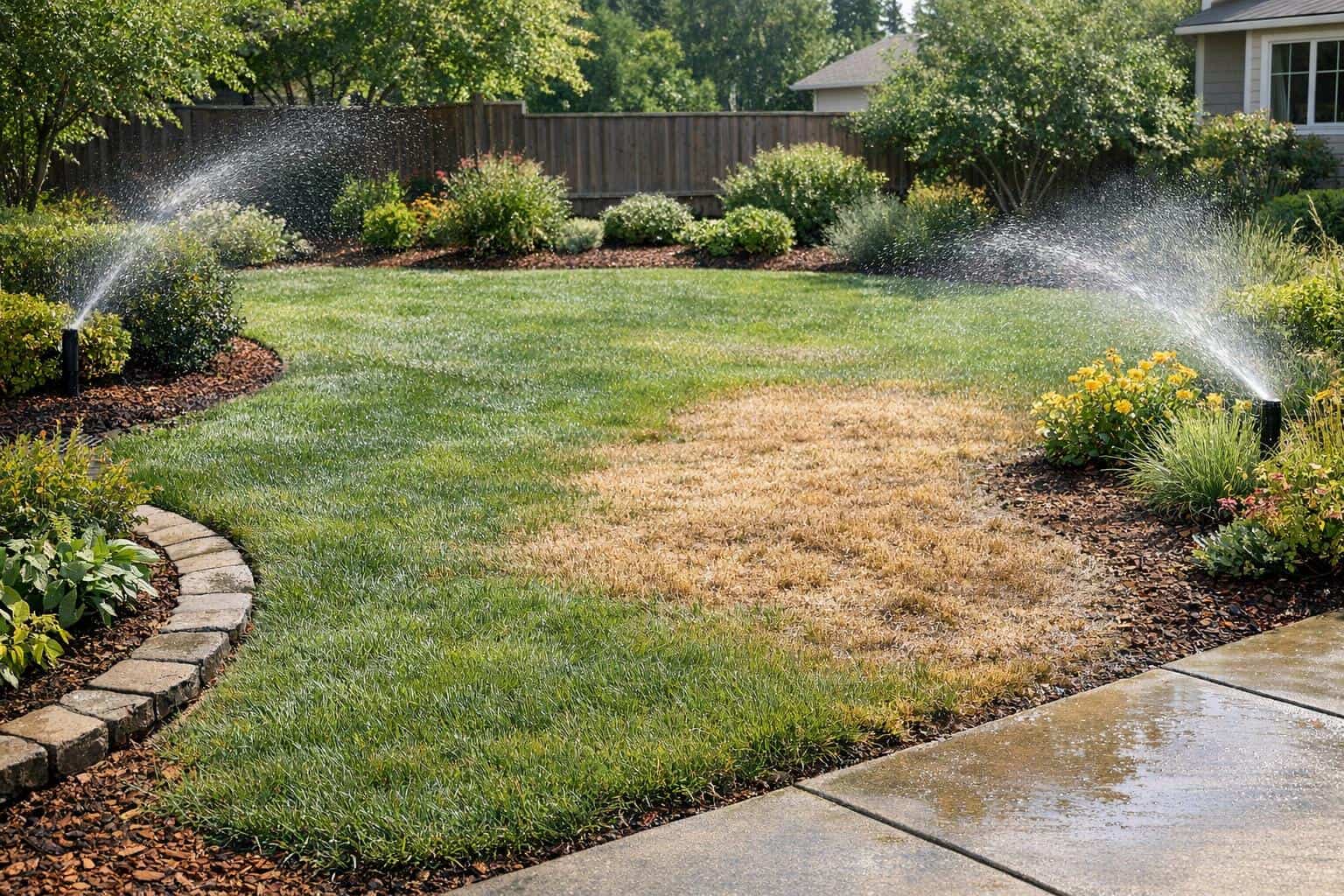
An irrigation system does not have to be completely broken to be a problem. In many yards, the warning signs are subtle at first: dry lawn patches, water hitting the wrong surfaces, runoff near beds, or planting that looks stressed even though the system is running. These small inconsistencies can slowly make the yard harder to maintain and more expensive to keep looking healthy.
Because irrigation issues often build gradually, homeowners sometimes assume the problem is the plant material or weather when the real issue is uneven coverage or poor system adjustment.
Common warning signs
Uneven lawn color, recurring dry spots, water pooling near heads, overspray onto sidewalks or patios, and planting areas that stay too wet or too dry are some of the clearest clues. If one part of the yard looks stressed while another looks overwatered, the system likely needs attention.
Why small irrigation problems matter
Poor irrigation can waste water, increase maintenance, and shorten the life of planting or turf improvements. It can also complicate other goals, especially in yards trying to reduce water use or support new planting. That is why irrigation issues often overlap with the low-water guide and summer maintenance guide.
What to review next
Homeowners should note which zones are struggling, whether runoff appears during watering, and whether some heads seem to spray incorrectly or miss important areas. The broader irrigation system guide covers the bigger planning picture and helps connect these symptoms to longer-term fixes.
Leave a Reply