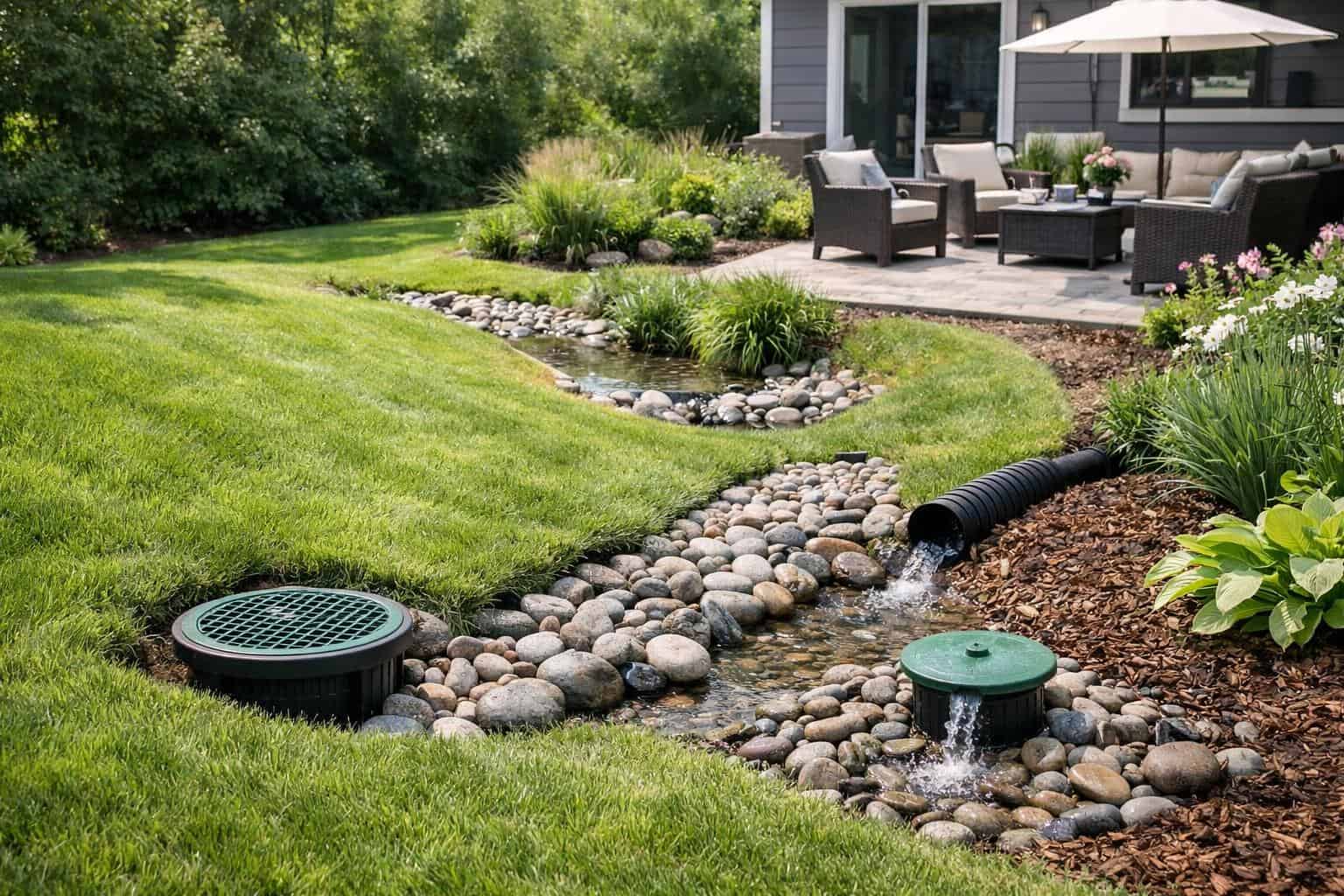
If water is collecting, running toward the house, or soaking one part of the yard, you need to figure out whether the ground itself is shaped wrong or whether the water simply has nowhere to go. Regrading fixes the shape of the land so water flows away on its own. Drainage systems collect water the land can’t shed and carry it somewhere safe. Many yards need a little of both, but one is usually the main fix.
Part of our Complete Yard Drainage Guide: diagnosing water, drains and swales, costs and repairs in one place.
This guide is about water problems: wet basements, soggy lawns, puddles and runoff. If your main problem is a steep slope you want to make usable or hold back, that is a different decision, covered in our guide to regrading vs a retaining wall.
The short answer: shape first, pipe second
Most drainage professionals start with grade because it is the cheapest long-term fix and it never clogs. If the soil next to your foundation slopes toward the house, no buried pipe will fully make up for it. Water will keep arriving at the wall faster than a drain can remove it.
Drainage systems earn their place when grading alone can’t do the job. That happens when the lot is flat, when water arrives from a neighbor’s property, when there’s no room to create enough slope, or when groundwater rises from below rather than running across the surface.
- Regrading moves and compacts soil to change which way the ground tilts.
- Drainage adds parts: French drains, channel drains, catch basins, downspout extensions, dry wells or pop-up emitters.
How to tell which problem you have

Go outside during or right after a steady rain. Where the water goes tells you more than any estimate.
Signs the grade is the problem
- Soil or mulch beds near the foundation sit level with or lower than the lawn further out.
- Water sheets across the surface toward the house rather than away from it.
- Puddles form in low spots that were once filled with loose soil and have since settled.
- Patios or walkways tilt toward the house.
Our list of signs you need regrading goes deeper on how to spot these.
Signs you need a drainage system
- The yard is nearly flat and water sits for a day or more after rain.
- Runoff enters from a neighbor’s yard, a street or a hill above you.
- Downspouts dump water right at the foundation.
- The ground stays soggy even in dry weeks, which can point to a high water table or a spring.
- Heavy clay soil holds water no matter how the surface is shaped.
Start with the cheapest fixes
Before paying for either regrading or a buried drain, rule out the simple causes. A large share of wet-foundation complaints trace back to roof water.
- Clean the gutters and confirm they don’t overflow in a hard rain.
- Extend downspouts so they discharge at least several feet from the house, ideally onto ground that slopes away.
- Pull mulch and soil back so beds don’t hold water against the siding.
- Fill obvious low spots next to the foundation with compacted soil, not loose mulch.
If the problem disappears after a few storms, you may not need a contractor at all.

What regrading involves
A common guideline is for the ground to drop about six inches over the first ten feet away from the foundation. Your local building code or a contractor may give a slightly different target. Beyond that zone, the yard needs a continuous path that carries water to a street, swale or other legal discharge point.
Regrading usually means stripping turf or beds, bringing in fill soil, shaping it with a skid steer or by hand, compacting it in layers and then restoring the surface with sod, seed or planting. Topsoil alone isn’t the right fill against a foundation; a contractor should use a compactable soil and finish with topsoil on top.
Watch for limits. You can’t bury siding or raise soil above the foundation’s exposed edge, and you can’t push your water onto a neighbor’s lot. Tight side yards often can’t fit enough slope, which is where drainage parts take over.

What drainage systems involve
Drainage options range from simple to fairly involved:
- Downspout extensions and buried downspout lines move roof water away from the house.
- Swales are shallow, planted or grassed channels that guide surface water. They sit between grading and drainage.
- French drains use a gravel trench and perforated pipe to collect water that soaks into the ground.
- Channel and catch-basin drains collect surface water from patios, driveways and low spots.
- Dry wells and pop-up emitters give the collected water somewhere to go.
Every system needs a working outlet and enough fall in the pipe. A drain that ends in a buried bucket in clay soil will fill and back up. Our comparison of French drains vs surface drains helps you match the drain type to how water reaches the problem area.
Cost comparison
Costs vary widely by region, soil, access and how much restoration the job needs. These rounded ranges are a starting point for budgeting, not a quote.
| Fix | Typical range | Main cost drivers |
|---|---|---|
| Downspout extensions or buried lines | $100 to $1,500 | Number of downspouts, length of buried run, outlet type |
| Spot regrading near the foundation | $500 to $3,000 | Fill soil volume, hand work vs machine access, plant and turf restoration |
| Larger yard regrading | $2,000 to $10,000+ | Area, soil import or export, equipment access, sod or seed |
| Swale | $1,000 to $5,000 | Length, excavation, erosion control, planting |
| French drain | $25 to $100+ per linear foot | Depth, digging conditions, pipe and gravel, outlet and restoration |
| Channel drain or catch basins | $500 to $5,000+ | Cutting concrete, number of inlets, pipe run to outlet |
Combined projects are common. A contractor might regrade the foundation zone and add a French drain along a property line where a neighbor’s runoff comes in.

Common mistakes to avoid
- Burying a drain to avoid fixing the grade. It can work for a while, then fail as the pipe silts up.
- No defined outlet. Ask exactly where the water ends up and whether that location is legal.
- Using mulch or loose topsoil as fill. It settles and creates new low spots.
- Ignoring the source. If the water comes from uphill, catching it at the top of the yard often beats chasing it at the house.
- Skipping restoration in the budget. New sod, seed and replanting can add noticeably to the total.
Questions to ask a contractor
- Where is the water coming from, and how did you confirm it?
- What slope will the finished grade have near the house?
- Where does the drain discharge, and how much fall does the pipe have?
- Is fill soil, compaction and surface restoration included?
- Do you need a permit or utility locate before digging?
- How do I maintain the system, and is there a cleanout?
Our guide to what a drainage estimate should include walks through the line items to compare.
Estimate drainage work before choosing regrading
Use these calculators to compare a targeted drainage treatment with a broader site-work or landscape-improvement range before deciding whether regrading belongs in the scope.
Drainage Cost Calculator
Estimate drainage project pricing for swales, French drains, and catch basin style systems.
Drainage cost estimate
- Estimated treatment length
- –
- Low estimate
- –
- Mid estimate
- –
- High estimate
- –
- Estimated range per linear ft
- –
Landscaping Cost Range Calculator
Estimate a broad landscaping budget range for common homeowner project types before comparing quotes.
Landscaping cost estimate
- Estimated area
- –
- Low estimate
- –
- Mid estimate
- –
- High estimate
- –
- Estimated range per sq ft
- –
Frequently asked questions
Can regrading alone fix a wet basement?
Often it helps a lot, especially when the soil slopes toward the house. If water is rising from groundwater or seeping through cracks, you may also need a drain or a foundation specialist.
Is a French drain better than regrading?
Neither is better in general. Regrading fixes surface flow and needs little upkeep. A French drain handles water that soaks into the soil or that grading can’t redirect.
How do I know if my yard is too flat to regrade?
If you can’t create a steady downhill path from the problem area to a legal outlet, regrading has limits. A contractor can measure elevations with a level or laser to confirm.
How long does regrading last?
Properly compacted regrading can last for decades. Loose fill settles within a season or two, so compaction matters more than the soil type alone.