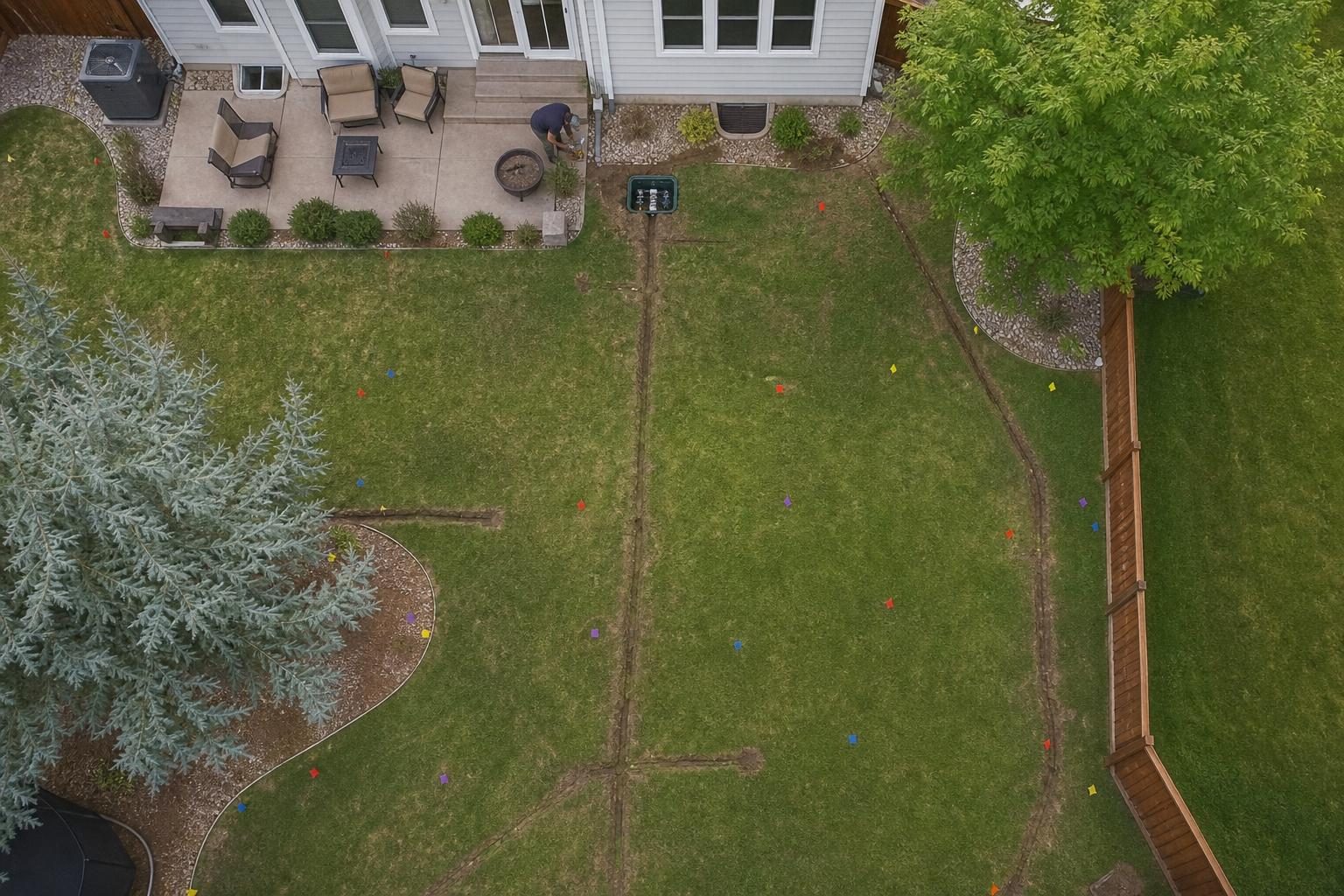
The best irrigation layout usually starts with separating the yard into zones that want different watering, not with trying to cover everything the same way.
Part of our Complete Irrigation Guide: sprinklers vs drip, layout, costs, winterizing and repairs in one place.
What a good layout starts with
- Grouping lawn, planting beds, trees, and low-water areas separately.
- Understanding sun, slope, and runoff patterns.
- Knowing where overspray would create waste or damage.

What weak layouts often do wrong
- They mix plant types with different water needs into the same zone.
- They prioritize coverage maps over actual landscape behavior.
- They create watering overlap that leads to runoff and disease pressure.
How to choose well
- Design around the landscape the yard has now, not just the old piping pattern.
- Ask what each zone is intended to water and why.
- Make sure the layout still works if the yard evolves in later phases.

Bottom line
The right irrigation layout makes watering simpler because each zone has a clear job that matches the yard’s real conditions.
For the broader overview, continue with Irrigation System Guide for Homeowners.

More specific homeowner planning guides
Use these deeper guides when the broad project direction is clear and the next decision is about layout, materials, maintenance, or cost tradeoffs.
- Drip Irrigation for Shrub Beds Guide: Use this when planning drip irrigation for shrub beds to water shrubs efficiently without overspray or runoff.
- Irrigation Zone Planning for Mixed Planting Guide: Use this when planning irrigation zones for mixed planting to avoid watering every plant as if it needs the same schedule.
- Irrigation Repair vs Replacement Guide: Use this when planning irrigation repair vs replacement to decide when a quick fix is enough and when the system needs a reset.

More specific homeowner planning guides
Use these deeper guides when the broad project direction is clear and the next decision is about layout, materials, access, maintenance, or cost tradeoffs.
- Irrigation Head Spacing Guide: Use this when planning irrigation head spacing to water lawns and beds evenly without dry arcs.
- Irrigation Pressure Problem Guide: Use this when planning irrigation pressure problems to diagnose weak coverage before replacing the whole system.
- Smart Irrigation Rain Sensor Guide: Use this when planning smart irrigation rain sensors to avoid watering when the yard does not need it.