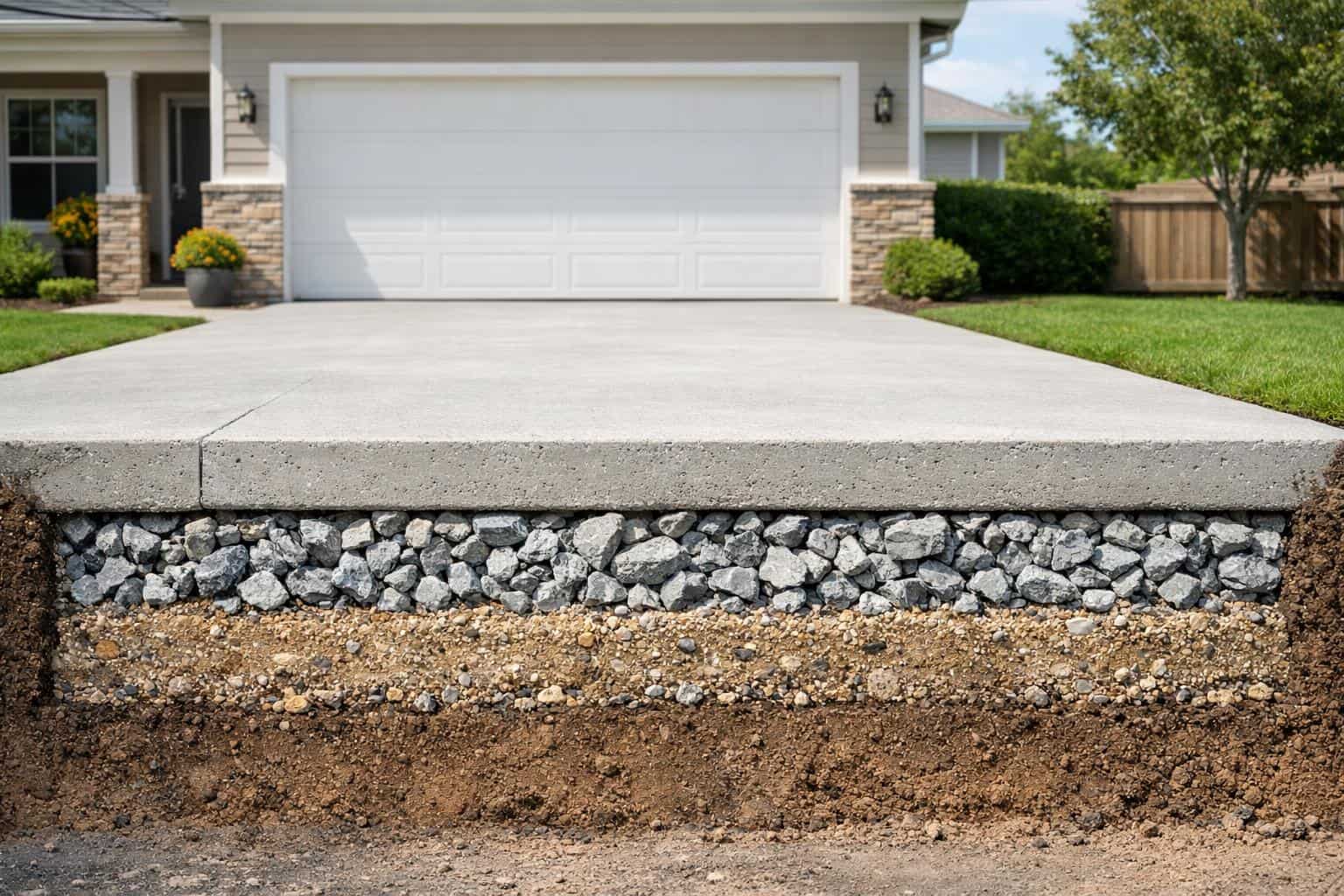
Concrete thickness is one of the most important structural decisions in a driveway project. It does not always get the same attention as finish, color, or price, but it has far more influence on how the slab handles vehicles and how long it stays serviceable.
Part of our Complete Driveway Guide: types, costs, installation, repair and hiring in one place.
Homeowners should never assume thickness is a minor technical detail. If the driveway is poured too thin for the way it will be used, cracking, settling, and edge damage can show up much sooner than expected.

Why thickness matters
A driveway slab has to spread vehicle weight across the base below it. The thicker and better-supported the slab is, the better it can resist bending stress and everyday load. Thickness works together with base preparation and drainage, so it should be discussed as part of the overall structure, not as an isolated number.
- Thicker concrete generally handles stress better.
- Edges are especially vulnerable when thickness is inadequate.
- Heavy vehicles can expose a thin slab quickly.
- Poor base preparation can make even a decent thickness perform badly.
Residential use should drive the recommendation
Most homeowners are not engineering a driveway from scratch, but they should still explain how the surface will be used. A driveway serving normal family vehicles may have different needs than one expected to handle heavier trucks, trailers, or repeated concentrated loads.
That is why a trustworthy contractor asks about use patterns instead of quoting the same thickness to everyone. Matching the slab to the real traffic is part of good planning.

Thickness is not enough without a proper base
Homeowners sometimes hear thickness discussed as if it solves everything. It does not. Concrete still needs consistent support underneath. If the base is poorly compacted, wet, or uneven, the slab may crack or settle even when the thickness sounds acceptable on paper.
When reviewing bids, ask not only how thick the driveway will be, but also what material will go underneath it, how the base will be compacted, and how runoff will be directed away from the slab.
Questions homeowners should ask
- What thickness are you recommending for this specific driveway and why?
- How does that thickness account for heavier vehicles or edge loading?
- What base material will support the slab?
- How will drainage be handled so the slab keeps support over time?
These questions help homeowners compare proposals on structural value rather than surface-level price alone.

Bottom line
The right thickness is the thickness that matches how the driveway will actually be used and is supported by proper base preparation and drainage. Homeowners who want a durable slab should treat thickness as a core decision, not a fine-print detail. If you want to see how thickness fits into the broader process, read our step-by-step installation guide.
Plan the Bigger Project
Concrete work is often just one part of a broader exterior upgrade. If you are still mapping out the full project, also read our landscaping services guide, questions to ask before hiring a landscaper, what to expect during a landscaping project, and our landscaping costs guide for homeowners.