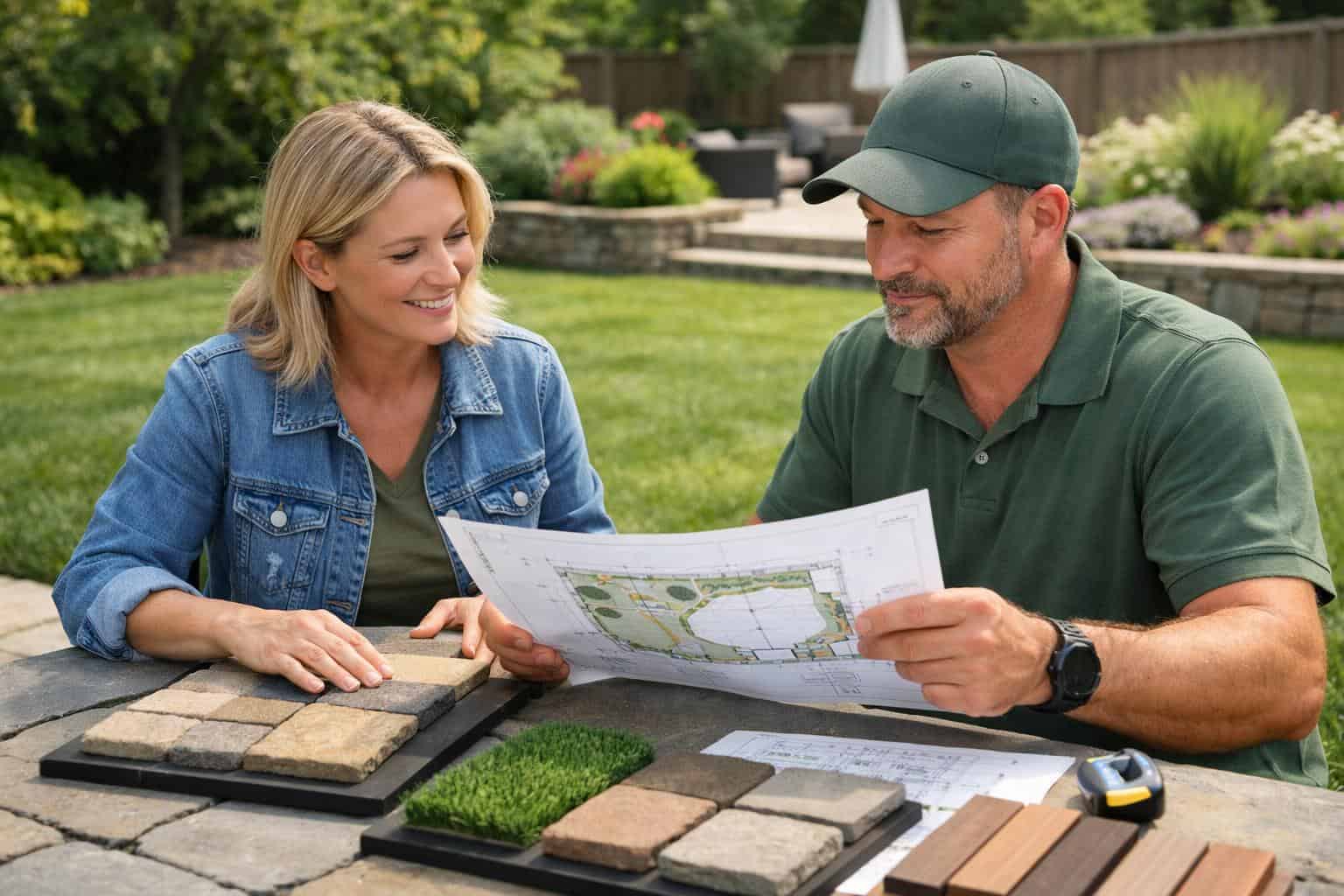
Hiring a landscaper is easier when you treat the first conversation as an interview instead of a sales pitch. Homeowners who ask better questions usually get better proposals, clearer timelines, and fewer surprises during the job. The goal is not to interrogate a contractor. It is to understand how they think, how they work, and whether they are a good fit for the scope you have in mind.
That matters because landscaping projects often involve details that are easy to miss when comparing bids. Drainage, base preparation, cleanup expectations, protection of existing surfaces, schedule delays, and change-order handling can all affect the real outcome. A contractor who explains those items clearly is usually easier to work with than one who jumps straight to price.
Start with questions about the contractor’s fit
Before discussing exact materials or scheduling, ask whether the contractor regularly handles projects like yours. A company that mainly does lawn maintenance may not be the right fit for a retaining wall or driveway replacement. A crew that specializes in high-end design-build work may also not be the best match for a smaller practical cleanup project.
- What types of projects do you handle most often?
- How similar are those projects to mine?
- Will you self-perform the work, subcontract parts of it, or coordinate multiple crews?
- Who will be my day-to-day point of contact once the project starts?
These questions help you understand whether the contractor’s expertise matches the job or whether they are stretching into unfamiliar territory.
Ask how they evaluate the property

Strong contractors usually spend more time observing the property than talking about finishes. They should be paying attention to slope, drainage, access, measurements, existing conditions, and how the space is used. If a bid is produced without much site evaluation, that is worth noticing.
- What site conditions stand out to you right away?
- Do you see any drainage, grading, access, or base concerns?
- What should be solved before cosmetic upgrades begin?
- Are there any areas where you would recommend a different scope than what I originally requested?
The most helpful answers are specific to your property. Generic answers often lead to generic execution.
Clarify the scope in plain language
One of the easiest ways to avoid disputes is to ask the contractor to describe the project in simple, practical terms. You want to know exactly what is included, what is not included, and what assumptions the bid depends on.
- What does this price include from start to finish?
- What prep work is included?
- What materials, quantities, or thicknesses are assumed?
- What cleanup and haul-off are included?
- What would count as an additional charge later?
This is especially important on hardscape projects. For example, our article on concrete driveway thickness shows how missing scope details can affect long-term performance, not just price.
Understand their process before work begins
Homeowners often focus on the finished look, but the process matters just as much. Ask how the work will unfold, how long each stage usually takes, and what needs to happen before crews arrive. That gives you a much better sense of whether the contractor has a repeatable system or is improvising.
- What are the major phases of this job?
- What happens before the first workday?
- How do you handle materials delivery, staging, and site access?
- What can delay the timeline, and how do you communicate delays?
If you want a broader view of the homeowner side of the process, read what to expect during a landscaping project.
Ask about quality control and workmanship
Good contractors can usually explain why they build things a certain way. They can talk about compaction, drainage, joint placement, slope, plant spacing, irrigation coverage, or finish choices in a way that makes sense to a homeowner. You are not looking for perfect technical vocabulary. You are looking for clarity and confidence.
- How do you make sure the finished project performs well over time?
- What are the most common mistakes homeowners should avoid with this kind of project?
- What details separate a durable installation from a rushed one?
- What parts of the job deserve the closest attention during installation?
Discuss scheduling and communication
Communication problems create stress even when the physical work is acceptable. It helps to know how often you will hear updates, who approves changes, and how decisions are documented.
- When could you realistically start?
- How long should this job take in normal conditions?
- How do you communicate weather delays, material changes, or hidden issues?
- Who approves change orders and unexpected extra work?
These questions become even more important on phased projects or jobs that affect access to the garage, yard, or front entry.
Compare bids the smart way

The lowest bid is not automatically the best value, and the highest bid is not automatically the most thorough. When comparing estimates, look at what each contractor assumed about prep work, materials, cleanup, schedule, and problem-solving. Two prices can look close on paper while covering very different levels of work.
A smart comparison focuses on:
- scope completeness
- material quality and quantities
- base or prep assumptions
- timeline clarity
- warranty language
- communication style and responsiveness
If cost comparison is your main concern, our guide to landscaping costs for homeowners can help you judge proposals more realistically.
Red flags worth noticing
Not every concern shows up as a dramatic warning sign. Sometimes the issue is simply that the contractor stays vague whenever the conversation turns to process, scope, or site conditions.
- They push for a quick deposit before clearly defining the job.
- They avoid discussing drainage, prep work, or layout details.
- They promise unusually fast completion without explaining how.
- They cannot explain who will actually supervise the job.
- They keep steering the conversation back to price instead of performance.
What homeowners should remember
The best hiring questions are the ones that reveal how a contractor thinks. Do they notice the right problems? Do they explain tradeoffs clearly? Do they set realistic expectations? Those are the signals that usually matter more than polished sales language.
A good landscaper should help you make better decisions, not rush you into one. When you understand the scope, process, and expectations before signing anything, you put the whole project on much stronger footing from the start.
Related guide: Once estimates start coming in, the How to Compare Landscaping Quotes Guide for Homeowners can help you evaluate scope and exclusions more confidently.
Leave a Reply