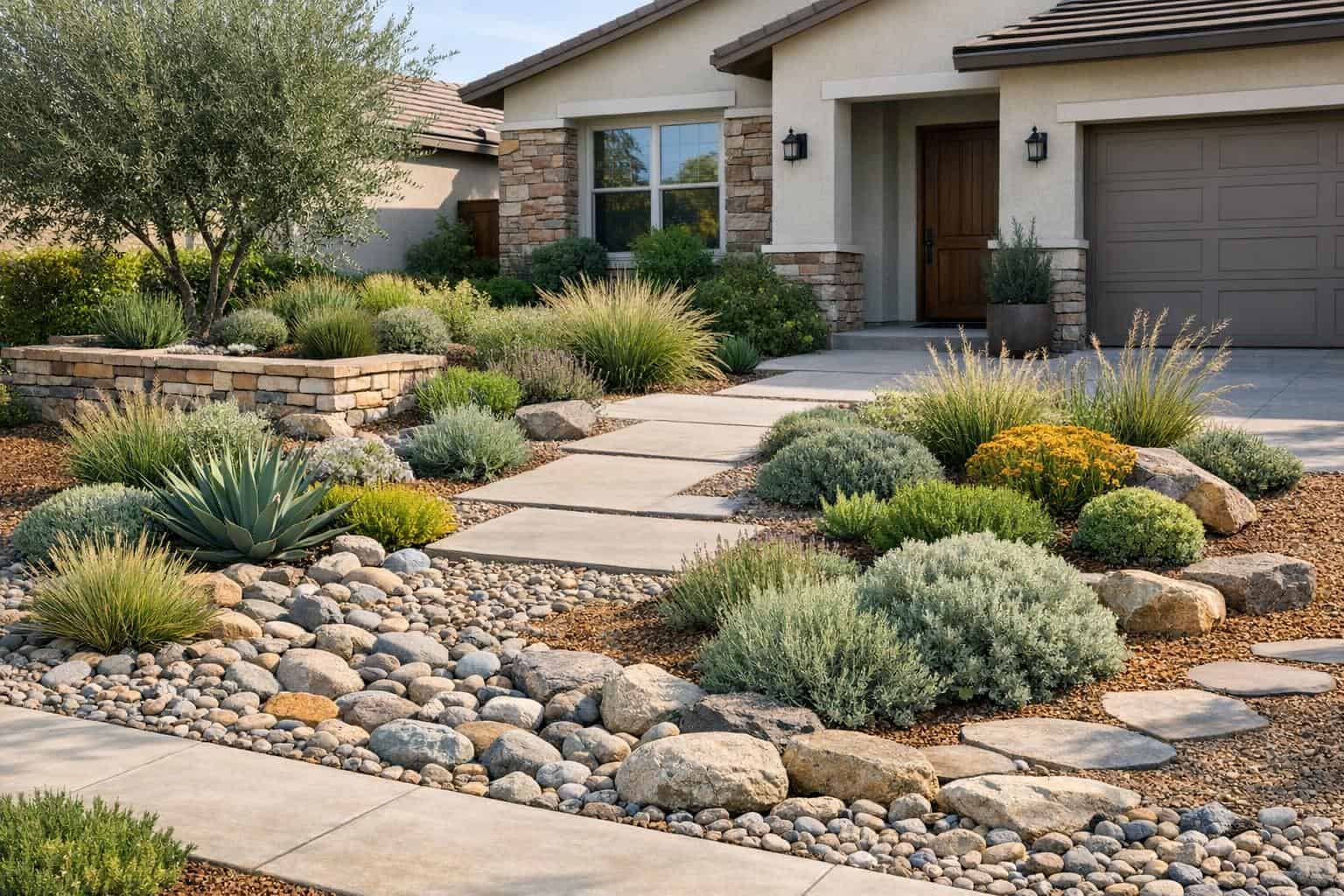
Low-water landscaping is not just about removing lawn or filling a yard with rock. The best low-water landscapes still feel intentional, attractive, and livable. They simply rely on smarter planting, better irrigation planning, more efficient ground-cover choices, and a clearer understanding of how much water different parts of the yard really need.
Part of our Complete Yard Design and Planning Guide: layouts, ideas by yard type, phasing and budgets in one place.
For many homeowners, the goal is not to eliminate water use entirely. It is to reduce waste, simplify maintenance, and create a yard that performs better in the local climate.

Planting strategy matters more than one material choice
Low-water landscapes usually succeed because the plant palette is aligned with the site. Sun exposure, soil conditions, irrigation zones, and maintenance expectations all shape what will thrive. A strong low-water yard still needs layering, structure, and visual interest. It just gets there differently than a lawn-heavy landscape might.
The planting installation guide and mulch vs rock guide both connect naturally to these decisions.
Irrigation still matters in low-water landscapes
Many homeowners assume low-water means no irrigation planning, but that is not usually true. Even drought-conscious planting benefits from an intentional watering strategy, especially during establishment. Efficient zones, correct coverage, and realistic maintenance expectations often matter more than trying to eliminate irrigation entirely.
The irrigation guide is useful here because it explains how watering systems support long-term plant performance.

Ground cover and maintenance tradeoffs
Ground-cover choices can shape both the look and labor of a low-water yard. Rock, mulch, and planted coverage each create different heat, maintenance, and visual effects. The right choice depends on climate, plant palette, and how finished or natural you want the space to feel.
Low-water does not have to feel empty

One of the most common misconceptions is that reducing water means sacrificing comfort or personality. In practice, many of the best low-water yards feel more intentional because they rely on stronger structure, cleaner material transitions, and planting that suits the site better. Homeowners who treat the whole yard as a design problem, not just a water problem, usually get the best result.
Seasonal guide: Water use and plant performance often change through the year. The Summer Landscaping Maintenance Guide helps carry low-water decisions into peak season.
Turf option: Homeowners considering water-saving lawn alternatives can compare the Artificial Turf Installation Guide with lower-water planting strategies.
Materials guide: Homeowners refining a drought-conscious layout can also review the low-water materials guide for a more product-focused decision path.
Timeline guide: The low-water landscaping timeline guide helps homeowners understand how prep, planting, and finish work affect project length.
Maintenance guide: The low-water landscaping maintenance guide helps homeowners keep the yard efficient, healthy, and visually balanced over time.
Mistakes guide: The low-water landscaping planning mistakes guide helps homeowners catch layout and upkeep mismatches before installation.
Warning signs guide: The low-water landscaping warning signs guide helps homeowners judge stress, imbalance, and when the yard needs attention.