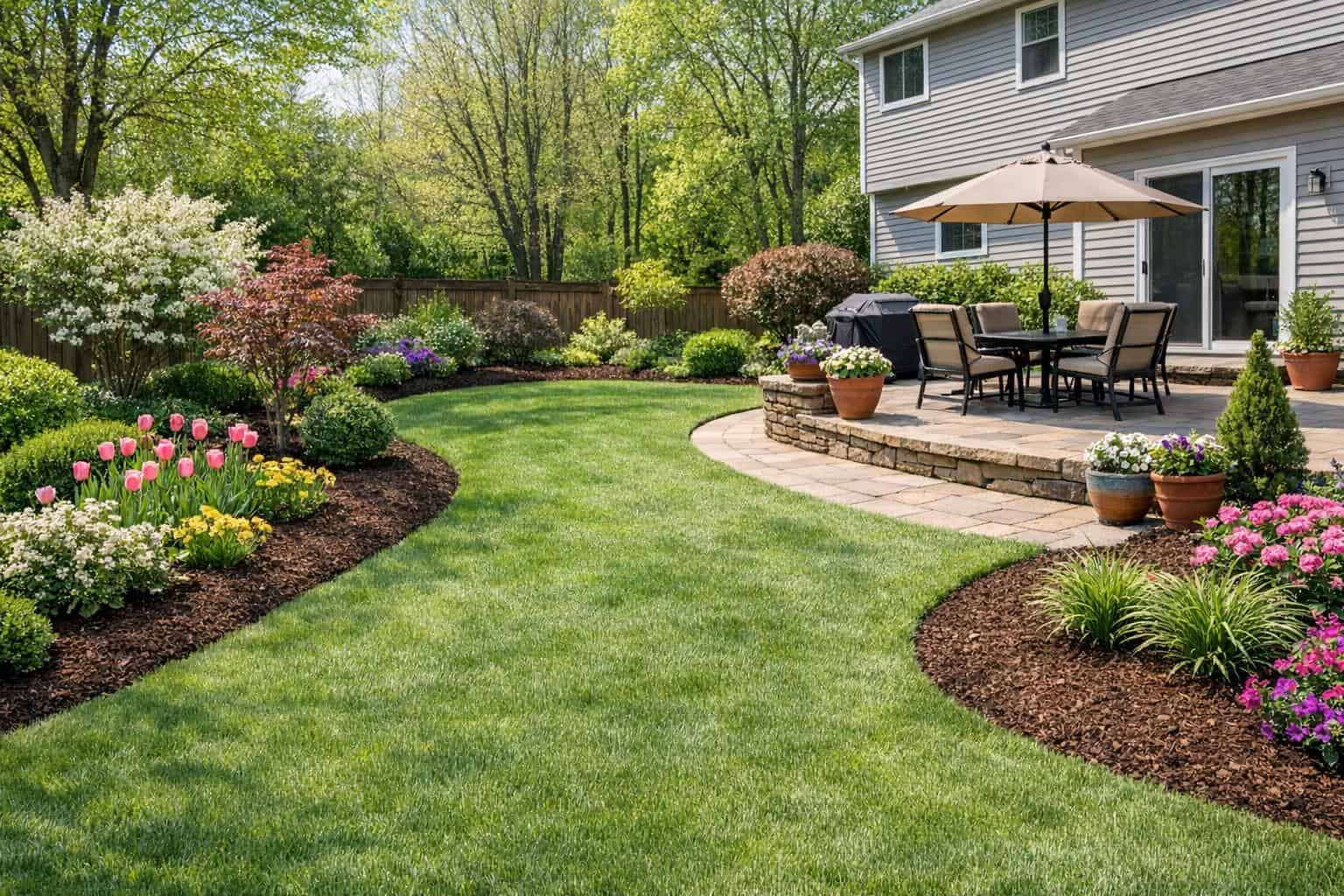
A good spring checklist moves in order: clean up and inspect first, fix soil and structure second, then plant, mulch, and start watering once the ground and weather allow. The exact dates depend on your climate, so treat the months below as a sequence tied to your last frost date rather than fixed calendar deadlines.
Part of our Complete Yard Design and Planning Guide: layouts, ideas by yard type, phasing and budgets in one place.
Before you start: know your frost date and your soil
Almost every spring task hinges on two things. The first is your average last frost date, which you can find through your local cooperative extension office. Tender plants, warm-season grass seed, and most irrigation start-ups wait until after that date. The second is soil condition. If you squeeze a handful of soil and it stays in a wet ball, it is too wet to dig, till, or drive equipment on. Working saturated soil compacts it and can undo the benefit of the work.
Warmer southern and western regions may be doing “spring” tasks in February. Northern regions may not start until April or May. Shift the timeline below to match.
Early spring (roughly 6 to 8 weeks before last frost)

Clean up and look closely
- Remove winter debris. Rake out leaves and broken branches from beds, lawns, and drains. Leave some leaf litter in out-of-the-way beds if you want to support overwintering insects, but clear it from lawn areas so grass is not smothered.
- Walk the property after a heavy rain. Note where water pools, where it runs toward the house, and whether downspouts discharge far enough from the foundation. Spring is the easiest time to see drainage problems.
- Inspect hardscape. Look for heaved pavers, new cracks in concrete, sunken walkway sections, and any lean or bulge in retaining walls. Freeze-thaw cycles show up now.
- Check fences, edging, and lighting. Reset loose edging, test landscape lights, and replace burned-out bulbs or damaged fixtures.
Prune at the right time
- Prune summer-flowering shrubs and most deciduous trees while they are still dormant.
- Do not prune spring bloomers such as forsythia, lilac, or azalea yet. They set buds last year, so cutting now removes this year’s flowers. Prune them right after they finish blooming.
- Cut back ornamental grasses and dead perennial stems to a few inches before new growth emerges.
- Leave large tree work to a certified arborist. Removal or major limb work commonly runs a few hundred dollars to well over $1,000 per tree depending on size and access.
Book contractors now
If you are planning a patio, wall, drainage fix, new lawn, or irrigation install, get estimates early. Spring is peak season, and the gap between calling and starting can stretch to several weeks. Our guide on the best time of year to start a landscaping project covers how seasonality affects scheduling and pricing.
Mid-spring (around your last frost date)
Soil and beds
- Test your soil. An extension-office soil test usually costs somewhere around $15 to $50 and tells you pH and nutrient levels, so you stop guessing about fertilizer and lime.
- Add compost. Work 1 to 2 inches of compost into vegetable and annual beds. For established perennial beds, top-dress rather than till.
- Edge and define beds. A clean edge makes mulch last longer and keeps grass from creeping in.
Lawn
- Rake and assess. Lightly rake matted areas and look for bare patches, grub damage, or thin spots in shade.
- Pre-emergent timing. If crabgrass is a recurring problem, pre-emergent herbicide goes down before soil temperatures reach the mid-50s Fahrenheit. Remember that most pre-emergents also stop grass seed from germinating, so do not apply one where you plan to overseed.
- Decide on seed versus sod. Cool-season lawns can be overseeded in spring, though fall is often better. For larger bare areas, compare options in our sod vs seed guide.
- Tune up the mower. Sharpen blades, change oil, and set cutting height on the higher side for the first mows.
Irrigation start-up
- In freeze-prone areas, wait until overnight freezes are over before turning water back on.
- Open the main valve slowly to avoid pressure surges, then run each zone and look for broken heads, geysers, dry spots, and spray hitting pavement or siding.
- Update the controller schedule, check the rain sensor, and replace the backup battery.
- A professional spring start-up commonly runs about $75 to $200 for a typical residential system, with repairs extra.

Late spring (2 to 6 weeks after last frost)
Planting
- Plant warm-season annuals and vegetables once nights are reliably mild.
- Install shrubs and perennials early enough that they root in before summer heat, and plan to water them deeply for their first season.
Mulch
- Apply mulch after soil has warmed and after you finish planting and weeding.
- Aim for about 2 to 3 inches. Keep it a few inches away from stems and tree trunks. Do not build mulch “volcanoes” around trees.
- If old mulch is still 2 inches deep, fluff it and top it off rather than adding a full new layer. For depth by bed type, see our mulch depth guide.
Warm-season lawns
Bermuda, zoysia, St. Augustine, and centipede lawns green up later. Fertilize, seed, or sod them once they are actively growing, usually late spring into early summer, not while they are still partly dormant.
Spring checklist at a glance
| Task | When | DIY or pro? |
|---|---|---|
| Debris cleanup and walk-through | Early spring | DIY |
| Dormant pruning of summer bloomers | Early spring | DIY for shrubs; arborist for large trees |
| Drainage and hardscape inspection | Early spring, after rain | DIY to spot; pro to fix |
| Soil test and compost | Mid-spring | DIY |
| Pre-emergent weed control | Mid-spring, before soil hits mid-50s F | DIY or lawn service |
| Irrigation start-up | After last hard freeze | DIY if comfortable; pro for repairs |
| Planting annuals, shrubs, perennials | Late spring | DIY or landscaper |
| Mulching | Late spring, after planting | DIY or crew |

What to hire out, and what to ask
Most cleanup, pruning of small shrubs, mulching, and planting is manageable for a homeowner. Hire out work that involves heavy equipment, structural risk, or specialized knowledge: retaining wall repair, regrading, drainage systems, large tree work, and irrigation repairs beyond swapping a head.
For a spring cleanup or mulch job, a reasonable estimate should state:
- Which beds and areas are included, and whether debris is hauled away.
- Mulch type, depth, and total quantity in cubic yards.
- Whether old mulch is removed or topped off.
- Edging, weeding, and pruning scope, with plants listed if any are being cut back hard.
- Price structure: flat rate, hourly, or per yard.
Small spring cleanups often fall in the low hundreds of dollars; full-property cleanup with mulch can run into the high hundreds or more. Prices vary widely by region, lot size, and access. For help comparing bids, read our guide on how to compare landscaping quotes.
Common spring mistakes
- Working wet soil. Tilling or driving on saturated ground compacts it for the whole season.
- Pruning spring bloomers too early and losing the year’s flowers.
- Applying pre-emergent where you plan to seed. The seed will not come up.
- Over-mulching. Piling fresh mulch on top of thick old layers every year can starve roots of air and invite rot.
- Turning irrigation on too early in freeze-prone areas and cracking pipes or backflow devices.
- Ignoring small warning signs. A leaning wall section or new pooling spot is cheaper to address now than after a wet summer.
Frequently asked questions
When should I start spring yard work?
Start cleanup as soon as snow is gone and the ground is not soggy. Hold off on planting tender plants, warm-season seed, and irrigation start-up until after your area’s last frost date.
Should I remove old mulch every spring?
Usually not. If existing mulch is still 2 or more inches deep, rake it to loosen it and add only enough to restore 2 to 3 inches. Remove it only if it is matted, moldy, or far too deep.
Is spring a good time to reseed a lawn?
For cool-season grasses, spring seeding works but fall is often more reliable because weeds and heat are less of a problem. Warm-season grasses do best when seeded or sodded in late spring to early summer.
How early should I book a landscaper for spring?
For larger projects, request estimates in late winter. Even routine cleanup and mulch services can book up a few weeks out once the weather turns.