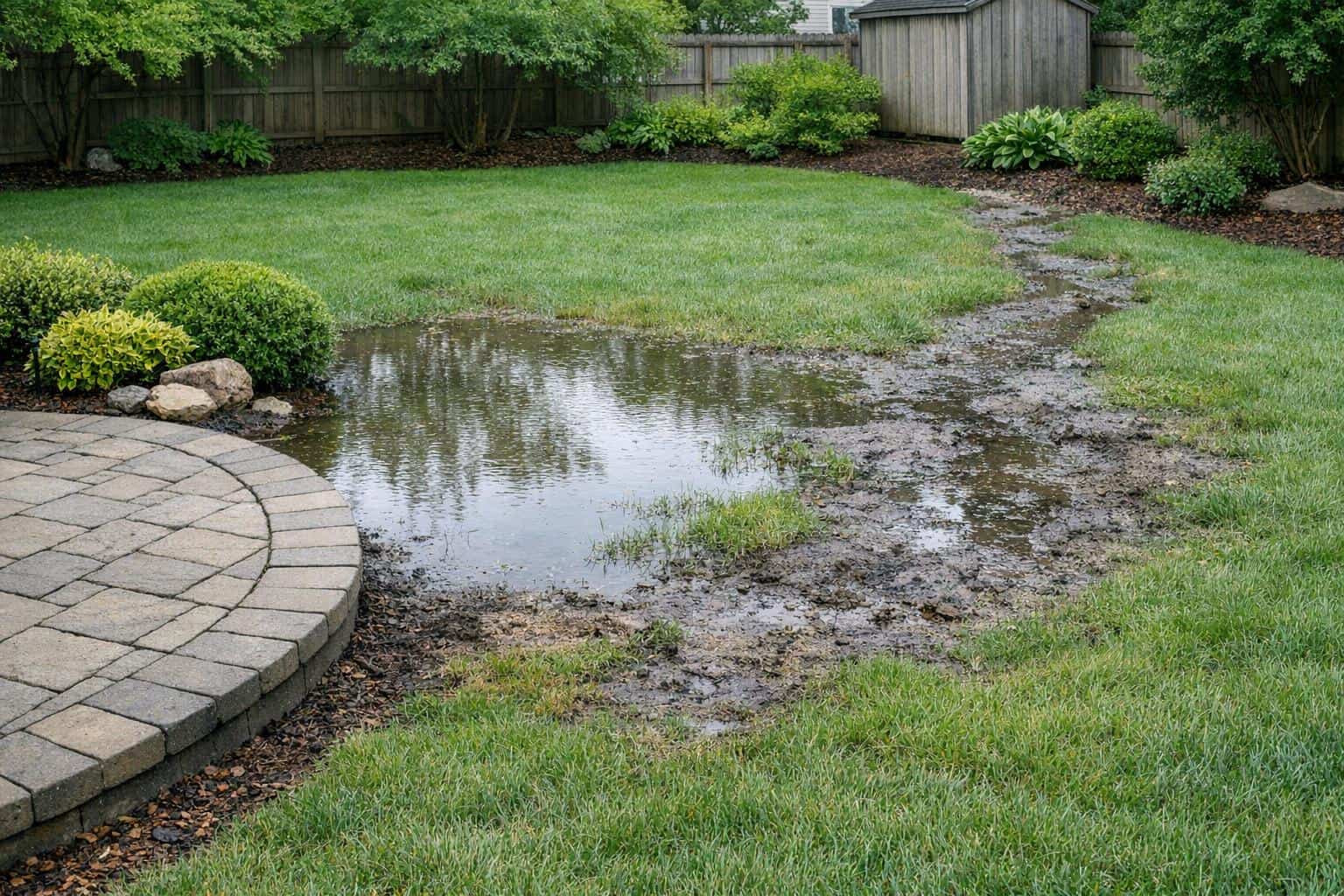
Drainage problems rarely begin with a dramatic failure. More often, they show up as small but repeated warning signs: soggy lawn areas, water sitting too long after rain, mulch washing out, patio edges staying messy, or planting that never seems to thrive. Homeowners sometimes tolerate these issues for years because they seem normal, but repeated water trouble usually means the yard needs more than routine maintenance.
The earlier drainage problems are recognized, the easier they are to solve cleanly. Waiting too long can lead to more visible site damage, stressed planting, and hardscape problems that are more expensive to correct.
Common drainage warning signs
One of the clearest signs is standing water that lingers after rain or irrigation. Other clues include lawn areas that stay muddy, runoff cutting channels through beds, water collecting near patios or foundations, and soil washing out of planted areas. If parts of the yard are regularly unusable because they stay wet, that is a practical sign of a larger drainage issue.

Some homeowners also notice the problem indirectly through erosion, plant decline, or recurring maintenance work that never seems to fix the underlying mess.
Why drainage problems should be addressed early
Water issues can affect more than the lawn. Poor drainage may shorten the life of hardscape, make walkways or patios messier, weaken some slopes, and create frustration in any part of the yard meant for entertaining or daily use. That is why drainage concerns often overlap with the grading guide and erosion control guide.

What to do next
Homeowners do not need to diagnose the exact solution first, but they should identify where water is collecting, how often it happens, and whether site slope, hardscape, or downspout discharge may be contributing. The broader drainage solutions guide and drainage vs regrading comparison are the natural next steps once the warning signs are clear.
Leave a Reply