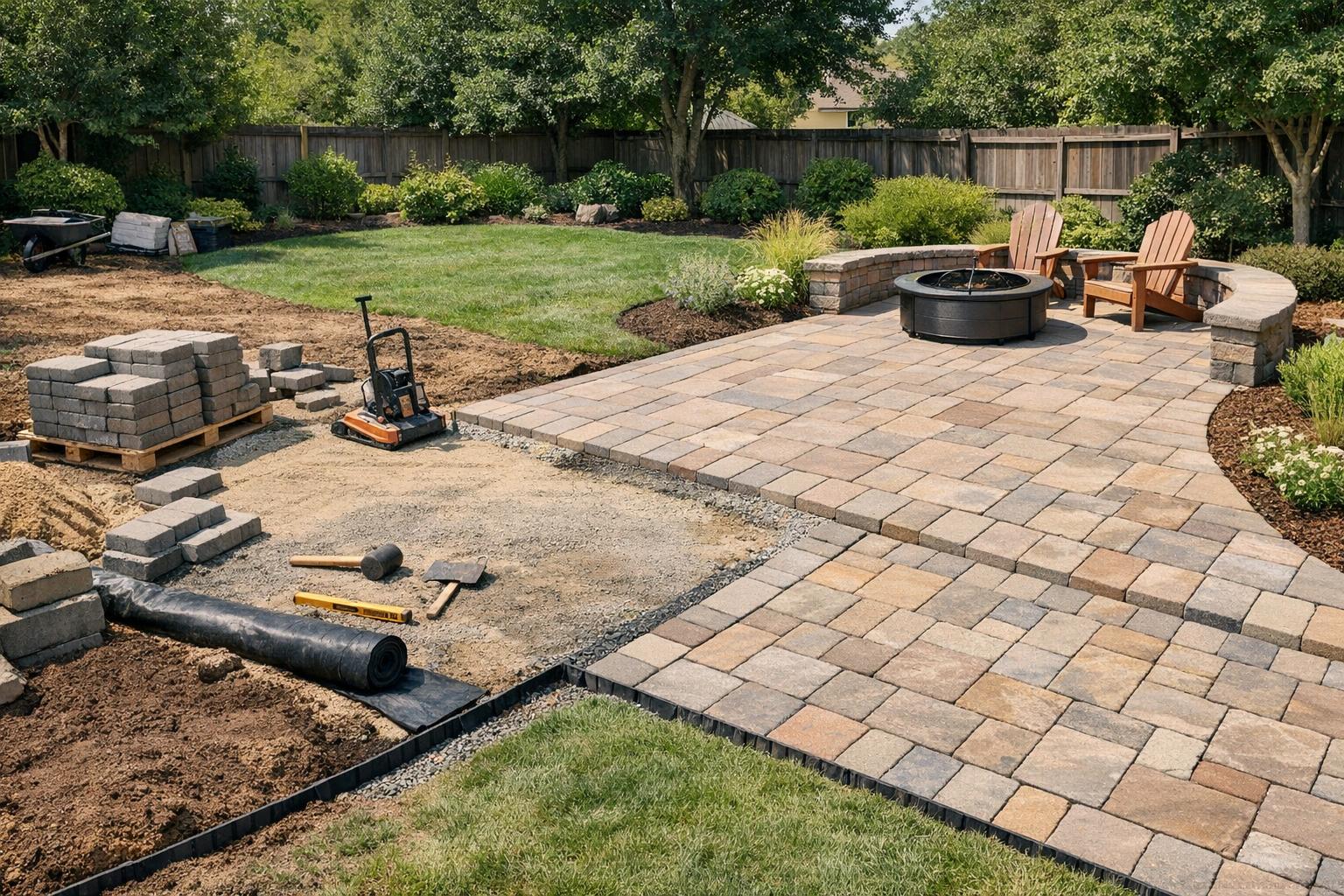
Patio cost comes down to five things: size, material, what is under the surface, how hard the site is to work on, and the extras built into it. A simple poured concrete pad can cost a fraction of a natural stone patio of the same size, and a sloped or hard-to-reach yard can add more than the material upgrade itself. Here is how each factor moves the price and what to check in an estimate.
Part of our Complete Patio and Paver Guide: materials, costs, installation, repair and hiring in one place.
Typical patio cost ranges by material
These are broad installed ranges for a basic patio in the US. Prices vary by region, site conditions, access and the contractor’s workload, so use them for budgeting, not as a quote.
| Material | Typical installed cost per sq ft | Notes |
|---|---|---|
| Gravel or decomposed granite | $3 to $8 | Lowest cost; needs edging and occasional raking |
| Plain poured concrete | $8 to $15 | Broom finish; cost rises with thickness and reinforcement |
| Stamped or colored concrete | $14 to $25 | Decorative look; needs resealing |
| Concrete pavers | $15 to $30 | Wide range of styles; repairable |
| Brick | $18 to $35 | Classic look; labor-intensive patterns |
| Natural stone (flagstone, bluestone, travertine) | $20 to $45+ | Highest material and labor cost |
For a 300-square-foot patio, that can mean anything from about $1,000 for gravel to $10,000 or more for natural stone. Our patio and walkway materials guide compares how each surface wears over time.

Size and shape
Bigger patios cost more in total, but often less per square foot, because setup, mobilization and equipment costs are spread over more area. Very small patios can have a surprisingly high per-foot price for the same reason.
A quick budgeting example
Say you want a 12 by 16 foot patio, which is 192 square feet. At the plain concrete range above, that is roughly $1,500 to $2,900. In concrete pavers it is roughly $2,900 to $5,800, and in natural stone it could pass $8,000. Add a few hundred dollars to a few thousand for removal, grading or a step down from the back door, and you have a realistic first budget to take into conversations with contractors.
Shape matters too. Curves, angles and inset borders mean more cutting, more waste and more labor. A rectangle with straight edges is the most efficient shape to build in any material.

Base preparation and what is under the surface
The base is the part of the patio you never see, and it is where cheap bids most often cut corners. A typical base involves:
- Excavating soil to the right depth, often 6 to 10 inches below finished grade for pavers.
- Compacting the subgrade.
- Adding and compacting crushed aggregate in layers.
- For pavers, a bedding layer of sand or fine aggregate; for concrete, forms and usually reinforcement.
Clay soils, soft spots or old fill can call for deeper excavation, more base or geotextile fabric. Removing and hauling away soil is a real cost; a bid that does not mention it may be assuming you handle it.
Site conditions and access
Two identical patios can be priced very differently because of the yard they go into.
- Slope: a sloped yard may need grading, steps or a short retaining wall to make a level surface.
- Access: if a skid steer cannot reach the backyard, crews move base material and pavers by wheelbarrow, which adds labor hours.
- Removal: tearing out an old patio, deck or tree roots adds demolition and disposal.
- Drainage: if water already pools where the patio will go, the plan may need regrading or a drain.
If your patio site is on a slope, our retaining wall cost guide explains what a small wall can add.

Design extras that add up
Features built into or around the patio often cost more than the surface itself:
- Seat walls and steps
- Built-in fire pits or fireplaces
- Outdoor kitchens, gas lines and electrical work
- Lighting
- Pergolas or shade structures
- Border bands, inlays and mixed materials
It helps to get the base patio priced separately from extras so you can decide what to phase in later.
Labor, region and timing
Labor is often half or more of a patio’s cost. Paver and stone patios are especially labor-heavy because each unit is set and cut by hand, which is why the gap between material prices at the supply yard and installed prices is so large.
Rates are higher in high-cost metro areas and during the busy spring season. Permits, where required, add fees and sometimes inspection time; check whether your city requires one for patios, especially if they are attached to the house, raised, or include gas or electrical work.

How to read a patio estimate
When comparing bids, make sure each one includes the same scope. Ask or check:
- Exact square footage and the material, including brand or stone type, color and thickness.
- Excavation depth and base thickness, and whether the base is compacted in layers.
- Edge restraint for pavers, or reinforcement and control joints for concrete.
- How water will drain off the patio and away from the house.
- Soil and debris removal, and who pays for disposal.
- Permits, if needed, and who pulls them.
- Workmanship warranty length and what it covers.
- Payment schedule tied to work milestones, not a large upfront deposit.
Our hardscape estimate guide has a fuller checklist for comparing quotes line by line.
Ways to lower patio cost without cutting quality
- Choose a simple rectangle or square.
- Use a less expensive field material with a nicer border.
- Build the patio now and add the fire pit, lighting or kitchen later.
- Pick a level, accessible location if you have options.
- Ask about off-season scheduling.
If you are handy, you can also save by doing finish work yourself, such as planting around the patio or adding lighting later, while leaving excavation, base work and setting to the crew.
Avoid saving money on base preparation. Settling, heaving and cracking are much more expensive to fix than to prevent.
Estimate the patio cost range
Use this calculator to test patio size, paver tier, demolition, layout complexity, and border details before comparing formal quotes.
Paver Patio Cost Calculator
Estimate patio cost ranges using size, paver tier, prep complexity, and demolition assumptions.
Patio cost estimate
- Estimated area
- –
- Low estimate
- –
- Mid estimate
- –
- High estimate
- –
- Estimated range per sq ft
- –
Frequently asked questions
What is the cheapest type of patio?
Gravel or decomposed granite is usually the least expensive, followed by plain poured concrete. Both cost far less than pavers or natural stone, though gravel needs more upkeep.
Why are two patio quotes so different?
Usually because of scope. One bid may include deeper base, drainage, removal and permits, while another leaves them out. Compare line items, not just totals.
Does a patio need a permit?
It depends on your city. Simple ground-level patios often do not, but raised patios, attached structures, gas lines and electrical work frequently do. Check with your local building department.
How much should I budget for extras?
Extras like seat walls, fire features and lighting can easily match or exceed the cost of the patio surface. Price them separately so you can phase them.