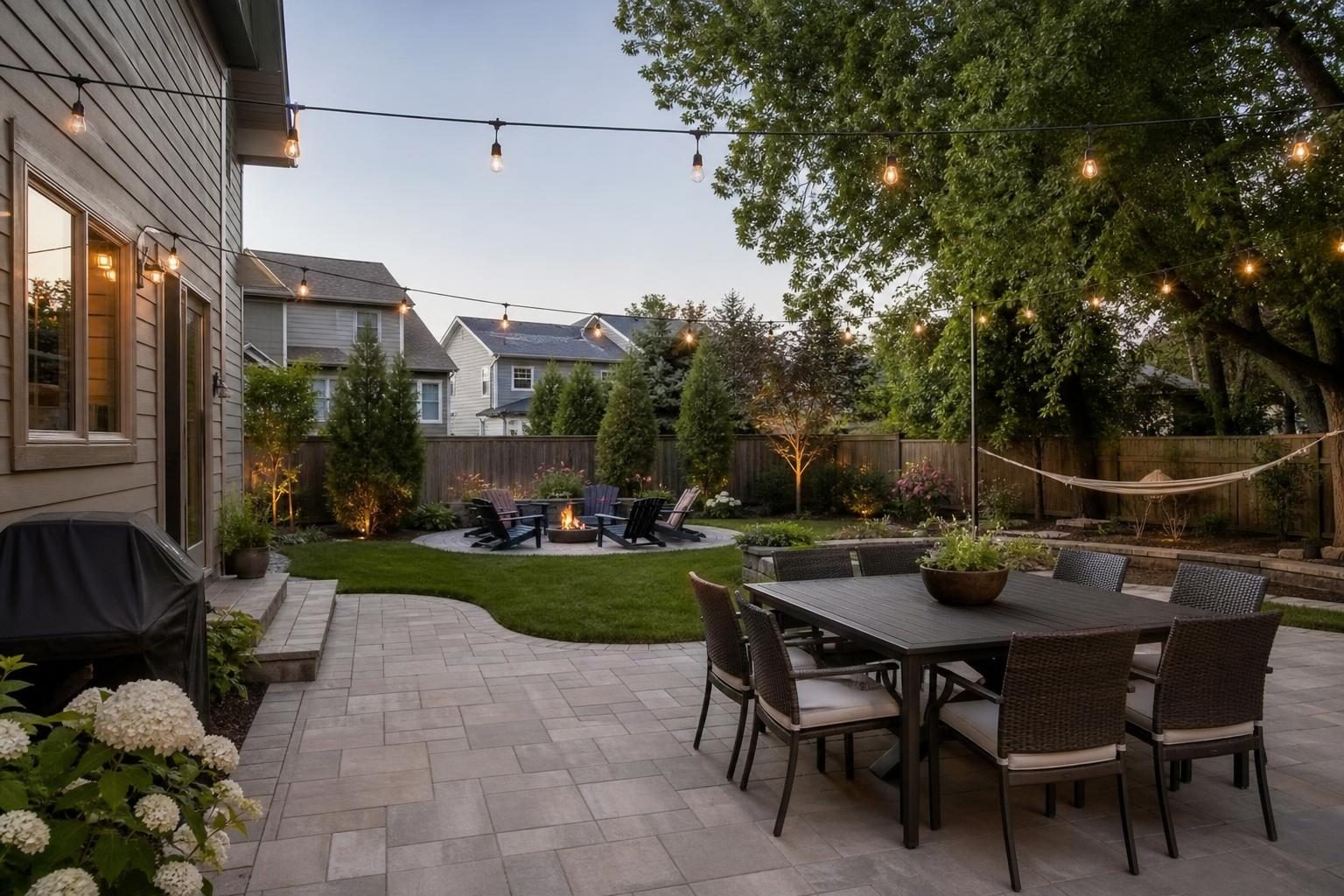
A backyard living space does not have to mean a full luxury build with every feature installed at once. For most homeowners, the better question is how to create a yard that works better for daily use, entertaining, comfort, and long-term value within a realistic budget and a realistic amount of space.
Part of our Complete Yard Design and Planning Guide: layouts, ideas by yard type, phasing and budgets in one place.
This guide organizes backyard living-space ideas by yard size and budget so homeowners can think more clearly about what to prioritize first and what can be phased later.
What makes a backyard feel like a living space
The best backyard living spaces are not defined by size alone. They work because circulation, seating, shade, lighting, and surface choices support how the household actually uses the yard. Even a modest space can feel intentional when there is a clear place to sit, move, gather, and transition between the house and the yard.
- A defined surface for seating or dining
- Enough circulation room so the area does not feel cramped
- Comfort elements such as shade, privacy, or evening lighting
- A relationship to planting that softens the edges instead of leaving the space exposed

Ideas for smaller budgets
Smaller budgets often work best when homeowners focus on one strong zone instead of too many unfinished upgrades. A compact patio, cleaned-up border planting, privacy screening in the right direction, and better lighting can transform how the space feels without forcing a full-yard rebuild.
- A modest dining or lounge pad with better edge planting
- Simple privacy screening where the space feels most exposed
- Lighting that makes evening use easier and safer
- Furniture layout that creates one clear activity zone
Homeowners comparing smaller-space ideas should also review Small Backyard Landscaping Ideas and Backyard Landscaping Ideas and Planning for more detailed layout thinking.

Ideas for medium-size yards and phased budgets
Medium-size yards often have the best opportunity for phased improvement. Homeowners can create a first patio or seating area, then add shade, planting, lighting, or a secondary zone later. The key is to plan the full layout before phase one so the early investment does not block better options later.
- Separate dining and lounge areas with a connected circulation path
- Add shade structure or privacy planting after the primary layout is set
- Use planting to divide zones instead of relying only on hardscape
- Leave room for future outdoor kitchen, fire feature, or play area decisions
Ideas for larger yards
Larger yards can support multiple zones, but they can also become disjointed if too many features are added without a strong plan. A larger backyard living space should still feel organized. That usually means a primary gathering area, a supporting secondary use area, and landscape transitions that make the yard feel connected rather than scattered.
- Primary entertaining patio close to the house
- Secondary lounge, fire, or quiet retreat space farther into the yard
- Walkway or planting transitions that connect the zones
- Lighting, privacy, and maintenance planning that scales with the size of the space
How budget should shape feature choices
Estimate the first-phase backyard budget
Use these calculators to compare a broad backyard improvement range with a more focused patio range before deciding what to phase first.

Landscaping Cost Range Calculator
Estimate a broad landscaping budget range for common homeowner project types before comparing quotes.
Landscaping cost estimate
- Estimated area
- –
- Low estimate
- –
- Mid estimate
- –
- High estimate
- –
- Estimated range per sq ft
- –
Paver Patio Cost Calculator
Estimate patio cost ranges using size, paver tier, prep complexity, and demolition assumptions.
Patio cost estimate
- Estimated area
- –
- Low estimate
- –
- Mid estimate
- –
- High estimate
- –
- Estimated range per sq ft
- –
Budget should influence sequencing more than style. Homeowners usually get a better long-term result by building one strong, comfortable zone first instead of buying too many disconnected features at once. If the project will eventually include a pergola, kitchen, or privacy screen, those future plans should influence the first layout even if they are not part of the first phase.
How to choose the right starting point
The best starting point is the feature that will change day-to-day use the most. For some households that is a dining patio. For others it is shade, privacy, or a cleaner circulation path from the house. Backyard living-space planning works best when homeowners prioritize function first and let style grow from that foundation.
A backyard becomes more usable when it reflects how people actually live. Budget and yard size matter, but the bigger advantage comes from planning the space in a way that feels intentional, comfortable, and realistic to build over time.