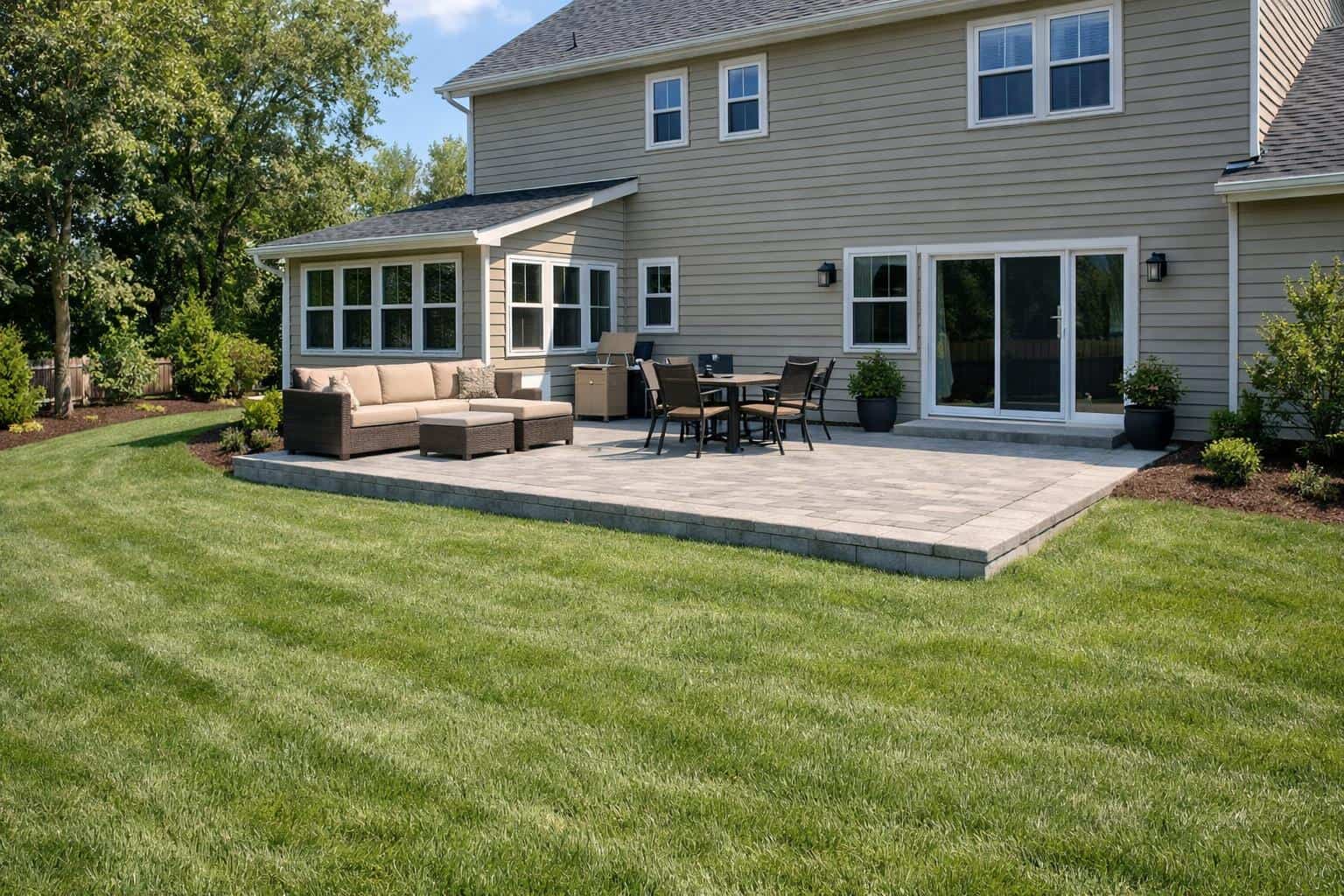
Grading and yard leveling are often the hidden foundation of a successful landscape project. Homeowners usually notice the visible symptoms first: standing water, awkward slopes, muddy lawn areas, patios that feel disconnected from the yard, or low spots that make mowing and drainage harder. But those symptoms often point back to a grade issue underneath the surface.
Part of our Complete Yard Drainage Guide: diagnosing water, drains and swales, costs and repairs in one place.
This guide explains what grading work usually includes, when yard leveling matters most, and how it connects to drainage, lawn installation, patios, and retaining walls.

What grading usually includes
Grading work may involve reshaping the surface, redistributing soil, correcting low spots, adjusting slope near structures, preparing for sod or planting, and coordinating with drainage features. Some projects are simple surface corrections. Others are part of a broader plan that includes walls, patios, irrigation, or lawn replacement.
- Common goals: improve drainage, create flatter usable areas, support hardscape, and make lawn or planting installation more successful.
- Main performance factors: slope direction, soil stability, compaction, and how the grade connects to surrounding structures and surfaces.
Why grading matters before other upgrades
Homeowners often want to jump to the visible layer first, whether that is new sod, a patio, or refreshed planting beds. But if the grade underneath is sending water the wrong way or creating awkward transitions, those upgrades may not perform the way you expect. That is why grading often belongs early in the project sequence.
Our drainage vs regrading guide is especially helpful if you are trying to decide whether surface shaping, drainage components, or both are the right answer.

Grading and usable outdoor space
Yard leveling is not only about solving water issues. It can also make the space more usable. A better grade can improve circulation, make lawn areas easier to maintain, create a cleaner transition into a patio, and reduce the need for constant workarounds in the landscape design.
Questions to ask before hiring
- What is the main problem the grading work is solving?
- How will the new surface direct water differently?
- Will this grading affect patios, walls, lawn, or irrigation elsewhere on the property?
- Is compaction or additional base work needed for the next phase?
- What visible changes should I expect once the work is complete?

What homeowners should remember
Good grading often goes unnoticed once the landscape is complete, and that is exactly the point. It should make everything above it work better. When a contractor can clearly explain how the grade affects water, use, and the next phase of the project, you are much more likely to make the right call before money is spent on visible finishes.
Related guide: If soil movement is showing up after storms or on a slope, the Erosion Control Guide for Homeowners explains how stabilization and runoff management often need to work together.
Related guide: If you are still not sure whether the grade itself is the problem, the Signs You Need Regrading Guide can help narrow the issue before choosing a fix.