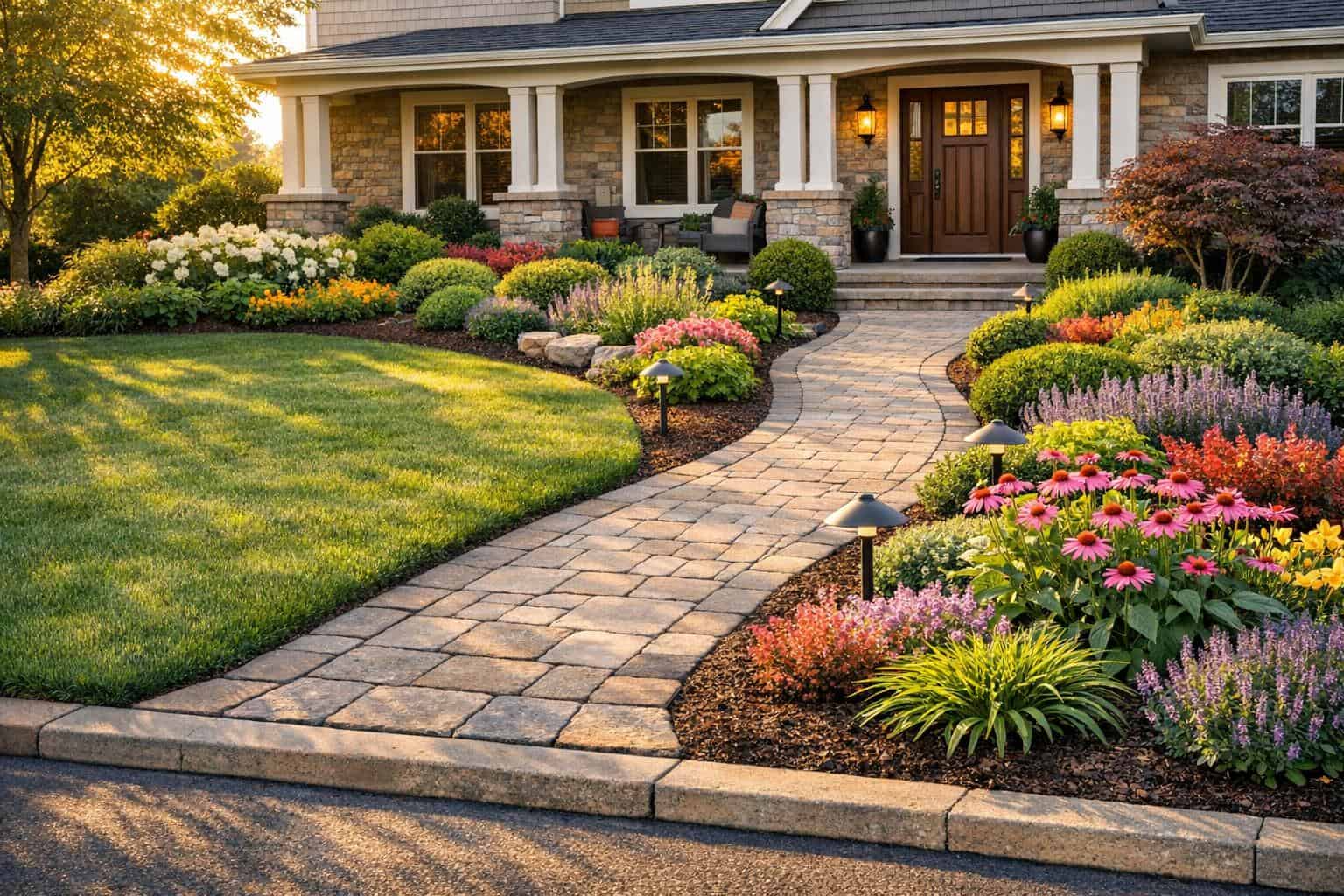
Front yard landscaping shapes first impressions, but it also does more than improve curb appeal. The front yard often handles access, lighting, drainage, lawn presentation, and the visual transition from the street to the home. A good front yard plan should feel attractive, functional, and manageable to maintain over time.
Part of our Complete Yard Design and Planning Guide: layouts, ideas by yard type, phasing and budgets in one place.
Many homeowners start with isolated ideas, such as new shrubs, a walkway upgrade, or a cleaner lawn edge. The strongest results usually come from treating the front yard as one coordinated system instead of a series of separate fixes.
What a front yard project may include
Front yard landscaping can include planting beds, privacy or framing shrubs, walkway installation, lighting, lawn renovation, edging, mulch or rock finishes, and drainage adjustments. Some projects stay decorative. Others solve practical issues like poor curb appeal, worn access paths, pooling water, or planting that has outgrown the space.
If your access path is part of the project, the walkway and pathway guide can help clarify layout and installation expectations.

Balancing curb appeal and maintenance
The front yard is usually the most visible part of the property, which can tempt homeowners to over-design it. A better approach is to decide what kind of upkeep you actually want. A highly detailed planting scheme can look impressive but require more trimming, cleanup, and seasonal attention. Simpler masses of durable plants may create a stronger long-term result for many households.
That is why it helps to pair aesthetic decisions with the low-maintenance landscaping guide before choosing plant density and bed complexity.
How lighting and lawn choices affect the whole look
Front yard lighting can improve safety, highlight entry paths, and make the landscaping feel more finished at night. Lawn condition also has an outsized impact because it frames everything around it. A front yard with strong planting but weak turf often still feels incomplete. If lawn replacement or irrigation is part of the plan, those systems should be considered early rather than after the beds are installed.
The landscape lighting guide, sod vs seed guide, and irrigation guide all connect naturally to front yard planning.
Questions to ask before starting

- What problem is the front yard project solving besides appearance?
- How much maintenance do you realistically want?
- Does the walkway, lighting, and lawn plan support the planting design?
- Are drainage or grade issues affecting the front yard now?
- Will the project be phased, or built as one coordinated upgrade?
A successful front yard should make the home feel more welcoming and easier to care for. Homeowners usually get the best result when curb appeal, access, and maintenance are planned together from the start.
Related guide: Homeowners improving curb appeal for resale often pair this topic with the Does Landscaping Increase Home Value Guide to think through value more strategically.
Materials guide: If curb appeal is the priority, the small front-yard materials guide helps narrow surface choices and reduce visual clutter.
Timeline guide: The front yard landscaping timeline guide helps homeowners understand how prep, installation, and finish work affect project length.
Maintenance guide: The front yard landscaping maintenance guide helps homeowners protect curb appeal and catch small issues early.
Mistakes guide: The front yard landscaping planning mistakes guide helps homeowners catch layout and upkeep mismatches before work begins.
Warning signs guide: The front yard landscaping warning signs guide helps homeowners judge decline, wear, and weak curb-appeal performance.
Related homeowner planning guides
Use these next-step guides to make the project more specific before comparing estimates or choosing materials.
- Front Yard Bed Texture Balance Guide for Homeowners: Use this when the planting plan needs more depth without making the front yard look cluttered.
- Front Yard Entry Bed Annuals vs Perennials Guide: Use this when seasonal color near the entry needs to feel intentional and manageable.
Related homeowner planning guides
Use these next-step guides to narrow the project before choosing materials, comparing estimates, or changing the layout.
- Front Yard Bed Seasonal Texture Guide for Homeowners: Use this when the front planting needs year-round interest instead of one short bloom season.
- Front Yard Entry Bed Winter Interest Guide: Use this when the entry bed looks empty once flowers and warm-season color fade.
More specific homeowner planning guides

Use these deeper guides when the broad project direction is clear and the next decision is about layout, materials, maintenance, or cost tradeoffs.
- Front Yard Bed Drip Irrigation Layout Guide: Use this when planning front yard bed drip irrigation to put water where shrubs and perennials need it without soaking walks or foundations.
- Front Yard Bed Edging Depth Guide: Use this when planning front yard bed edging depth to keep planting beds clean without creating a hard edge that fights the design.
- Front Yard Bed Boulder Placement Guide: Use this when planning front yard boulder placement to make boulders feel intentional instead of dropped into the bed.
- Front Yard Bed Tree Underplanting Guide: Use this when planning tree underplanting in front yard beds to add softness below trees without stressing the tree or crowding the entry.
- Front Yard Lawn Reduction Planning Guide: Use this when planning front yard lawn reduction to reduce mowing while keeping the front yard organized and neighbor-friendly.
- Front Yard Foundation Planting Window Clearance Guide: Use this when planning foundation planting window clearance to avoid shrubs that block windows or make the house look crowded.

More specific homeowner planning guides
Use these deeper guides when the broad project direction is clear and the next decision is about layout, materials, access, maintenance, or cost tradeoffs.
- Front Yard Bed Evergreen vs Deciduous Shrubs Guide: Use this when planning evergreen vs deciduous shrubs in front yard beds to balance winter structure with seasonal interest.
- Front Yard Bed Corner Anchor Plant Guide: Use this when planning corner anchor plants for front yard beds to make bed corners feel grounded without blocking the house.
- Front Yard Bed Mailbox Transition Guide: Use this when planning mailbox transition planting to connect mailbox planting to the wider front yard.
- Front Yard Entry Lighting and Planting Guide: Use this when planning front entry lighting and planting to keep the front entry safe and welcoming after dark.
- Front Yard Bed Irrigation Valve Access Guide: Use this when planning irrigation valve access in front beds to hide utility elements without burying them.
- Front Yard Bed Seasonal Color Budget Guide: Use this when planning seasonal color budget for front beds to spend on color where it creates the most curb appeal.