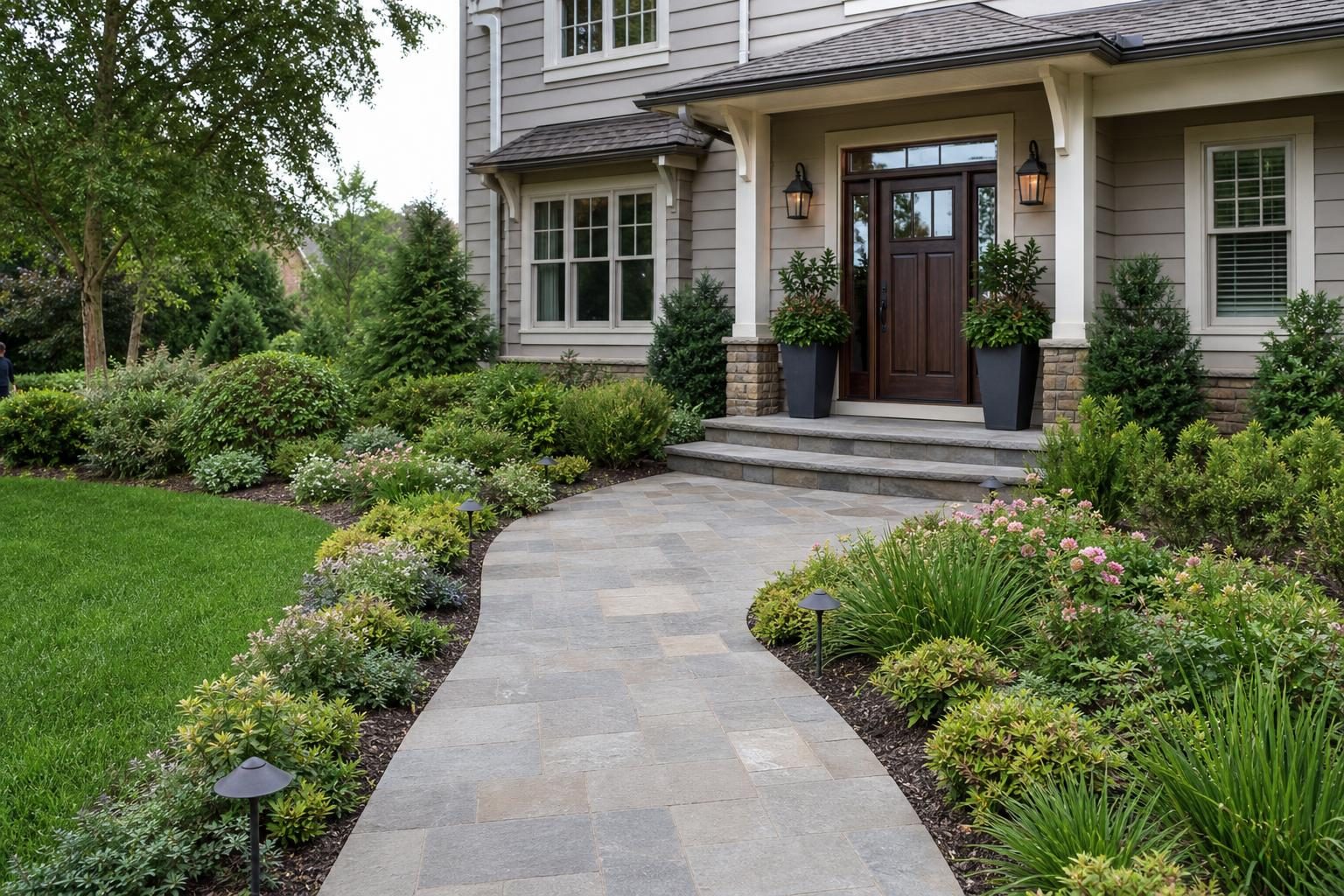
The best front entry landscaping makes the door easy to find, the walk comfortable to use, and the planting in proportion to the house. A wider walkway, layered plantings that stay below the windows, good lighting and one strong focal point usually do more for curb appeal than adding lots of small decorations. Below are practical ideas, what they cost, and the mistakes to avoid.
Part of our Complete Yard Design and Planning Guide: layouts, ideas by yard type, phasing and budgets in one place.

Start with the path to the door
Your entry walk does most of the work. If it’s narrow, cracked or leads visitors to the garage instead of the door, fix that first.
- Width: around 4 feet lets two people walk side by side. Many older homes have 3-foot walks that feel cramped.
- Route: a gentle curve can add interest, but people will cut corners if the path wanders. Keep it mostly direct.
- Landing: a small landing at the door, wide enough to stand while unlocking or greeting someone, makes the entry feel generous.
- Material: match or complement the house. Brick homes pair well with clay pavers or bluestone; modern homes often suit large-format concrete pavers or poured concrete.
Our walkway and pathway installation guide covers base, edging and material choices.
Planting ideas that frame the entry
Layer from low to high
Put low ground covers and perennials along the walk, medium shrubs behind them, and taller plants at the corners of the house. This frames the door instead of hiding it.
Keep foundation shrubs below the windows
Check mature size on the plant tag. Many overgrown entries start with shrubs that were cute in a pot and too big within five years.
Choose plants for the light you actually have
Many front entries sit in deep shade under a porch roof or in full afternoon sun against a hot wall. Watch the entry through a full day before buying. Shade-tolerant ferns, hostas and compact evergreens suit covered entries, while sun-baked walks call for heat-tolerant shrubs and grasses. Plants that fight their light conditions look thin and need replacing.
Use evergreens for structure
A few evergreen shrubs keep the entry looking finished in winter. Add seasonal color with perennials, bulbs or containers.
Repeat plants rather than mixing many
Three to five of the same plant reads as intentional. One of everything reads as cluttered.
Add a pair of containers
Matching planters on either side of the door are an easy, low-cost way to mark the entry and change color with the seasons.

Lighting for safety and welcome
Lighting is one of the most noticeable entry upgrades for the money.
- Path lights spaced along the walk, not lined up like a runway.
- Step lights on any stairs.
- Wall wash or uplights on the house facade or a nearby tree.
- Updated door fixtures sized to the door; many are too small.
For pricing, see what affects landscape lighting cost.

Focal points and finishing touches
Pick one focal point and let the rest support it. Options include a small ornamental tree near the corner, a boulder grouping, a bench, or a distinctive container. Visible, readable house numbers are a practical touch that’s often overlooked. Fresh mulch, crisp bed edges and a clean walk give a big lift for little cost.
If the house has a plain facade, a focal point near the door helps more than one at the edge of the yard. If the house already has a striking door or porch, keep the planting quiet so it doesn’t compete.
Costs by idea
Prices vary by region, house size, materials and access. These are rough ranges for common front entry upgrades.
| Upgrade | Rough cost range | Impact |
|---|---|---|
| Fresh mulch and new bed edging | $200 to $1,000 | Quick refresh |
| Pair of planters with plants | $100 to $600 | Marks the door, seasonal color |
| Foundation replanting | $1,000 to $5,000 | Fixes overgrowth, adds structure |
| Entry lighting (small system) | $1,500 to $4,000 | Safety plus nighttime curb appeal |
| New or widened walkway | $2,000 to $8,000+ | Biggest change in function and look |
| New entry steps or landing | $2,000 to $10,000+ | Major upgrade, may need permit |

Practical considerations
Drainage near the door
Walks and beds should slope away from the house. Downspouts near the entry need extensions so water doesn’t pool on the walk or freeze in winter.
Maintenance
Pick plants that fit the space at full size so you aren’t shearing them constantly. Mulch beds and add drip irrigation if you want plantings to look good without hand watering.
Accessibility
Fewer steps, gentle slopes, handrails and even, slip-resistant surfaces help visitors of all ages. Think ahead if you plan to stay in the home for many years.
HOA and local rules
Some HOAs regulate plant choices, lighting and hardscape. Changes in the public sidewalk or curb usually need city approval.
Common front entry mistakes
- Shrubs planted too close to the house or the walk.
- A path that’s too narrow or leads people to the driveway first.
- Too many plant types, ornaments or small decorations.
- No lighting, or lighting that glares into visitors’ eyes.
- Ignoring the view from the street, where most people see the entry.
For broader front yard planning, see our front yard landscaping guide and our small front yard landscaping ideas.
Frequently asked questions
What’s the cheapest way to improve a front entry?
Clean and edge the beds, add fresh mulch, prune overgrown shrubs, and add a pair of planters by the door. Updating house numbers and the door light can also make a noticeable difference.
How wide should a front walkway be?
Around 4 feet is comfortable for two people side by side. Three feet is a practical minimum for a single-person path.
Which plants work best near a front door?
Plants that stay compact at maturity, look good year-round and suit the light at your entry. Evergreen shrubs with seasonal perennials are a reliable combination.
Should I hire a designer for front entry landscaping?
For simple replanting, many homeowners don’t. If you’re changing the walk, steps or grading, a designer or experienced contractor can help get proportions and drainage right.