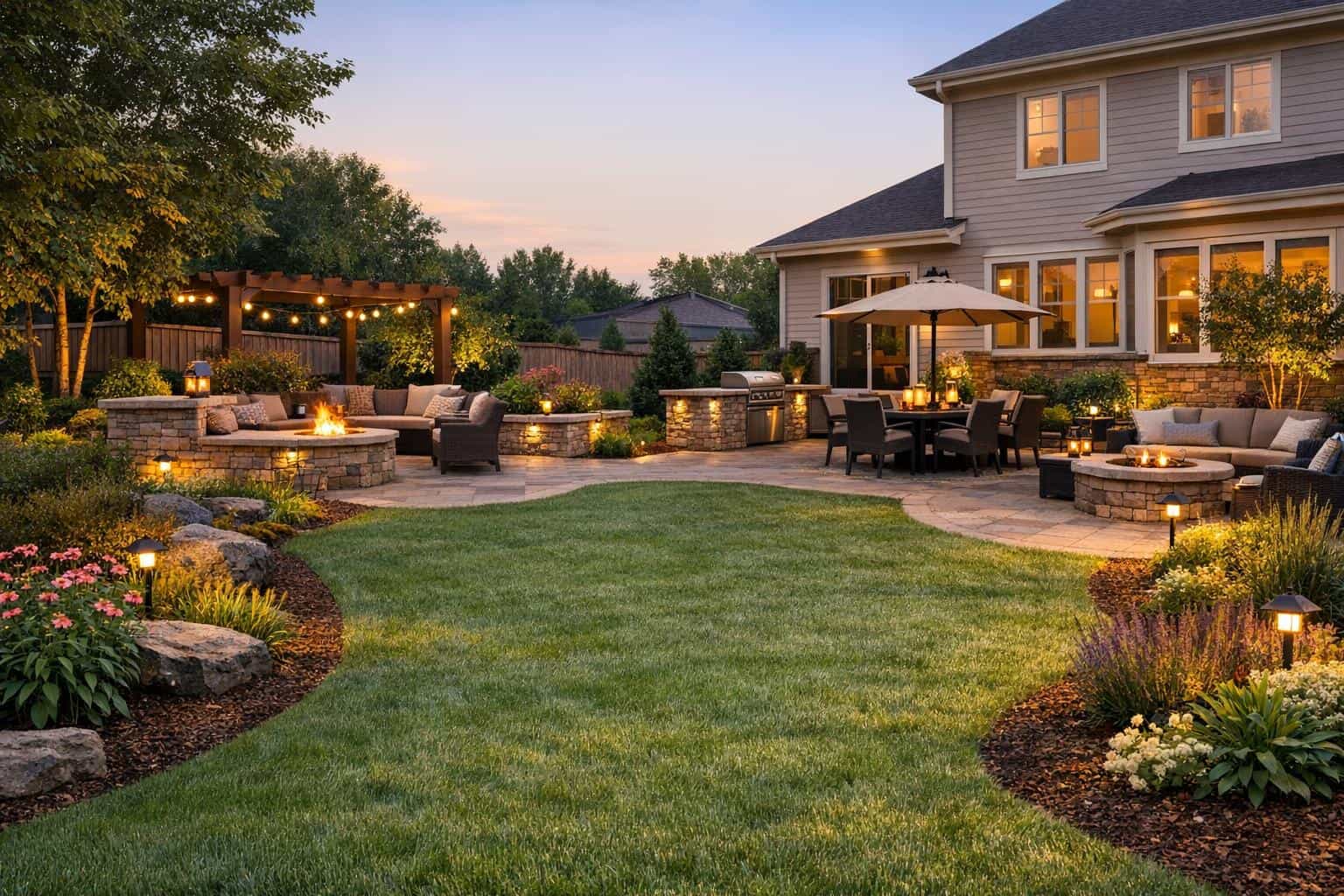
Backyard landscaping can mean almost anything, which is why many projects start with excitement and drift into confusion. A homeowner may want a patio, better privacy, cleaner planting, easier maintenance, and more room to entertain, all in the same yard. Those ideas can work together well, but only if the backyard is planned as a set of connected zones rather than a pile of separate upgrades.
The best backyard projects usually start with use. Before choosing materials or features, decide how you want the space to function. Do you want dining, lounging, lawn play space, a fire feature, stronger privacy, lower upkeep, or a better place to host guests? Those answers shape the layout more than style images alone.
Common backyard zones to plan for
Many backyards work best when they are organized into a few clear zones. A patio or deck may handle seating and dining. Lawn or open space may support play or visual openness. Planting beds can soften edges and create privacy. Lighting, walkways, and fire features help connect everything into one usable environment.
Instead of asking what single feature to add first, it helps to ask how people will move through the yard and where each activity belongs.
Privacy, entertaining, and atmosphere
Privacy often becomes more important once homeowners begin imagining actual use. A backyard can look good from inside the house but still feel exposed when people are dining or sitting outside. That is where the privacy landscaping guide becomes part of planning rather than a later add-on.
Atmosphere also matters. Lighting and fire features can extend the usefulness of a backyard well beyond daylight hours. The lighting guide and fire pit guide are often natural next reads for homeowners building entertaining space.
How to phase a backyard project
Not every homeowner wants or needs to complete the whole backyard at once. Phasing can work well, but only when the project is still planned as a whole. For example, drainage, grading, and hardscape layout should usually be considered before adding final planting or decorative upgrades. A phased backyard should still feel like one plan, not a series of disconnected decisions.

The project expectations guide is helpful here because it frames how different parts of a larger yard build often overlap.
Backyard planning questions to answer early
- What are the top two or three ways you want to use the yard?
- Where should entertaining, lawn, privacy, and circulation each happen?
- Does the backyard need drainage or grading work before cosmetic upgrades?
- What features should be built first if the work is phased?
- How much maintenance do you want after installation?
A strong backyard plan makes the space feel easier to use, not just nicer to photograph. Homeowners usually get better results when they organize the yard around function first and finish choices second.

Related guide: If the project will be built over multiple steps, the How to Phase a Landscaping Project Guide can help organize the order of work.
Related guide: Small yards often need clearer prioritization than large ones. The Small Backyard Landscaping Ideas Guide for Homeowners helps narrow layout choices without making the yard feel crowded.
Related guide: If the yard never feels comfortable to use even after upgrades, the Signs Your Backyard Layout Is Not Working Guide can help identify layout issues instead of isolated feature problems.
Timeline guide: The backyard landscaping timeline guide helps homeowners understand how prep, installation, and finish work affect project length.
Maintenance guide: The backyard landscaping maintenance guide helps homeowners protect comfort, function, and long-term appearance.
Mistakes guide: The backyard landscaping planning mistakes guide helps homeowners catch layout and upkeep mismatches before work begins.
Warning signs guide: The backyard landscaping warning signs guide helps homeowners judge when the yard needs more than casual refreshes.
More Decision and Planning Guides
- Backyard Entertaining vs Low Maintenance Guide for Homeowners
- Backyard Lawn vs Patio Space Guide for Homeowners
- Kid-Friendly vs Adult Gathering Backyard Guide for Homeowners
- How to Prioritize Backyard Zones and Budget Guide
More Backyard Ideas and Example Guides
- Budget Backyard Landscaping Ideas Guide for Homeowners
- Backyard Patio Layout Ideas Guide for Homeowners
More Backyard Use and Comfort Guides
More Backyard Space-Planning Guides
- Outdoor Room Layout Ideas Guide for Homeowners
- Backyard Dining Area Ideas Guide for Homeowners
- Backyard Privacy Screen Ideas Guide for Homeowners
Leave a Reply