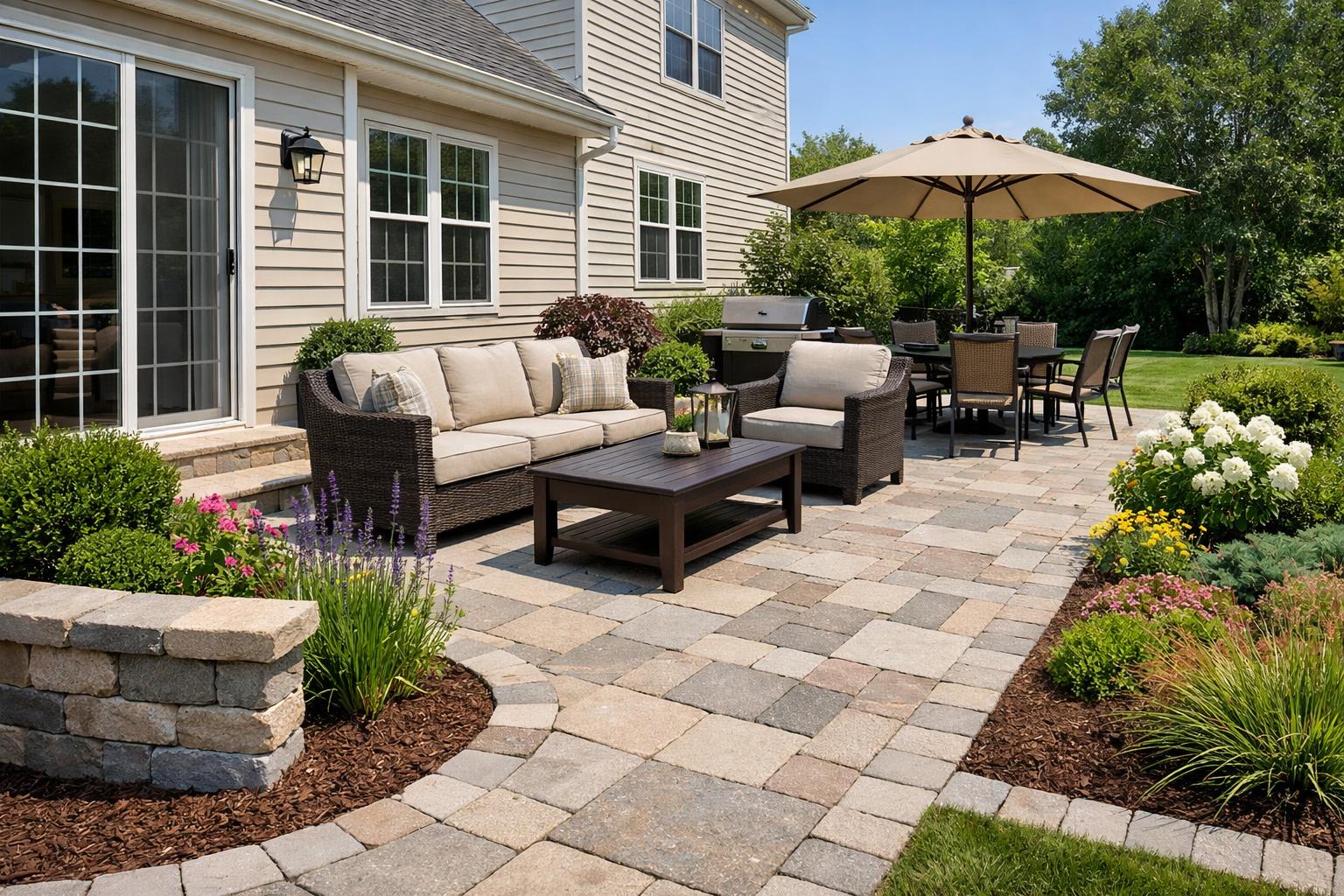
Many homeowners start a patio project by searching for a contractor when the bigger question is whether the layout has been thought through yet. Other homeowners hire for design help first when the project is already simple enough for a qualified contractor to build directly. The right path depends on the complexity of the yard, the number of decisions still unresolved, and how many connected features are involved.
Part of our Complete Patio and Paver Guide: materials, costs, installation, repair and hiring in one place.
This guide explains the difference between a patio designer and a patio contractor so homeowners can decide what kind of help they need before spending money in the wrong order.

What a patio designer does
A patio designer helps homeowners solve layout and planning questions before installation begins. That may include circulation, furniture zones, relationship to the house, shade, privacy, planting integration, lighting, and how the patio fits into the broader backyard. Design work is especially useful when several outdoor-living features need to work together.
- Organizes layout before materials are chosen
- Helps define seating, dining, cooking, or lounge zones
- Improves circulation and spacing around doors and pathways
- Coordinates planting, privacy, shade, and outdoor-living features
What a patio contractor does
A patio contractor is responsible for building the project. That includes prep, excavation, base work, drainage details, material installation, edge conditions, and cleanup. Some contractors can also help refine layout decisions, but their core value is construction execution rather than concept development.
Homeowners can compare this build-side role with pages like Patio Installation Guide and What a Patio Quote Should Include if they are already moving into the estimate phase.
- Site preparation and demolition
- Base prep and compaction
- Drainage planning within the construction scope
- Paver, concrete, or stone installation
- Transitions to lawn, planting beds, steps, or walkways

When homeowners need design first
Design usually comes first when the patio is part of a larger backyard plan, when the space has awkward circulation, or when the homeowner is still deciding between multiple use patterns. It is also helpful when the yard needs privacy screening, lighting, kitchen space, or multiple seating areas that must feel connected instead of pieced together.
- The patio is part of a backyard renovation rather than a one-for-one replacement
- There are unresolved questions about size, shape, and circulation
- The project also includes planting, privacy, lighting, or grading decisions
- The homeowner wants to compare more than one layout direction
When a contractor-first approach is often enough
Check the patio cost range before choosing the right help
A rough patio range can make it easier to decide whether the biggest remaining risk is layout planning, construction scope, or both.
Paver Patio Cost Calculator
Estimate patio cost ranges using size, paver tier, prep complexity, and demolition assumptions.
Patio cost estimate
- Estimated area
- –
- Low estimate
- –
- Mid estimate
- –
- High estimate
- –
- Estimated range per sq ft
- –
A contractor-first path can work well when the project is straightforward. That usually means the patio location is already clear, the homeowner knows the intended use, and the site does not require a more holistic redesign. In those situations, the contractor can often help with practical refinements while still keeping the job efficient.
- Simple replacement of an existing patio footprint
- A modest expansion with clear dimensions and use
- No major unresolved grading, privacy, or circulation issues
- Limited number of connected features beyond the patio surface itself

How to avoid paying twice for the same decisions
Homeowners sometimes pay separately for design and construction discussions that overlap without actually moving the project forward. The key is to define what decisions still need to be made and who should own them. Design should answer layout and concept questions. Construction should answer buildability, pricing, and execution questions.
When both roles are needed, the handoff should be clean. That means the contractor receives enough design clarity to quote accurately, and the homeowner knows which decisions are already settled before installation starts.
How to choose the right path
If the yard still feels unresolved, design usually comes first. If the project is already clearly defined and mainly needs a competent build team, a contractor-first path often makes sense. Homeowners do best when they match the kind of help to the kind of uncertainty that remains.
The smartest patio projects are not just well built. They are well planned. Choosing between a patio designer and a patio contractor is really a decision about whether the biggest remaining risk is layout uncertainty or construction execution.