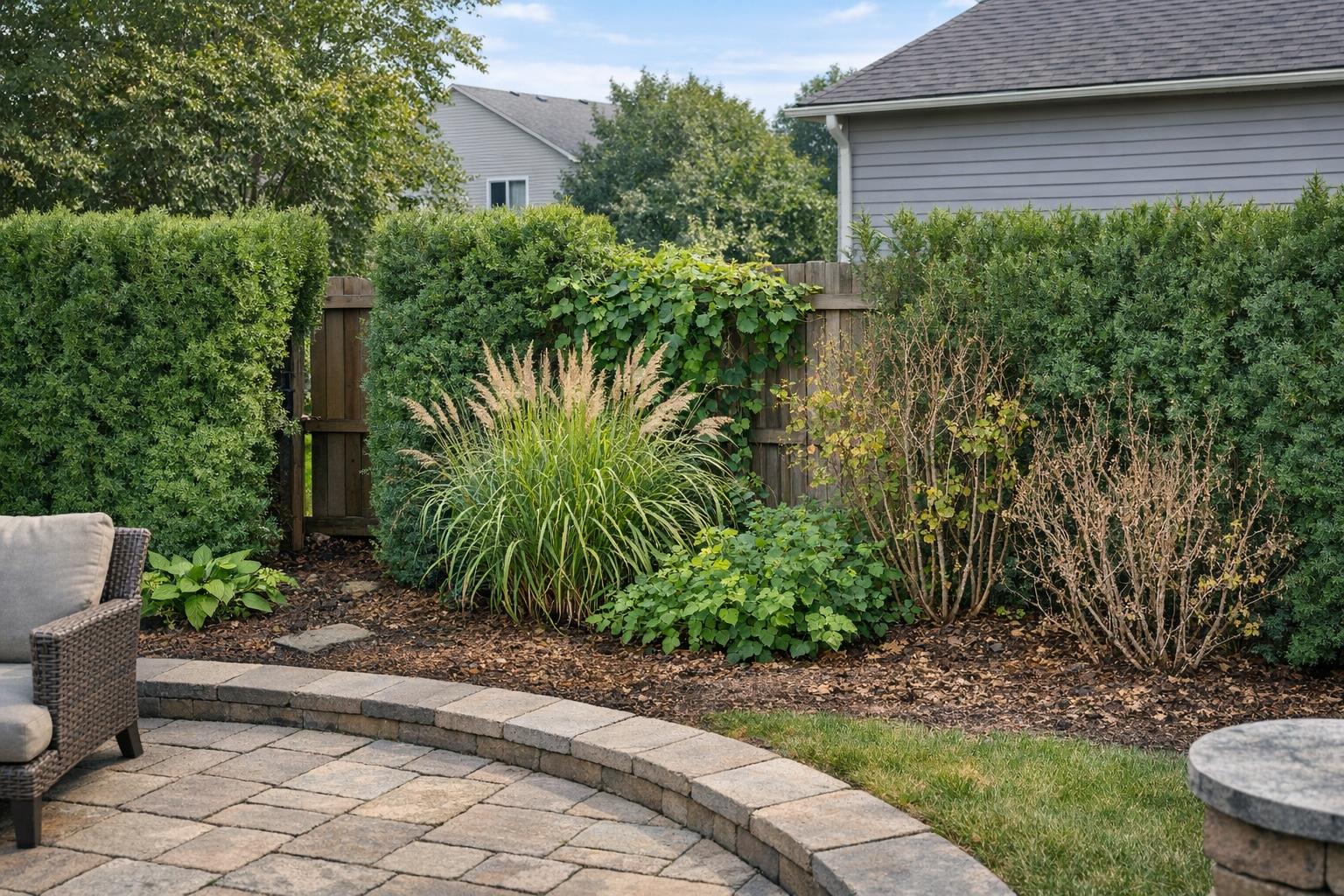
Privacy problems in a yard are rarely solved by planting something tall and hoping it fills in quickly. The best outdoor privacy solutions depend on where the exposure is coming from, how fast the homeowner needs relief, what kind of maintenance is acceptable, and whether the yard also needs better layout, shade, or circulation.
Part of our Complete Patio and Paver Guide: materials, costs, installation, repair and hiring in one place.
This guide helps homeowners compare privacy solutions for backyards, side yards, and patios so they can choose an approach that actually fits the site instead of copying a photo that worked somewhere else.
Start with the type of privacy problem
Privacy can mean several different things. Some homeowners need to block a direct second-story sightline. Others want to make a patio dining area feel less exposed, soften a fence line, or create a more private side-yard walkway. The source of the exposure changes the right solution.
- Direct side-to-side views from neighboring windows or yards
- Overhead visibility from decks or second-story rooms
- Exposure around patios, pools, hot tubs, or dining areas
- Utility or service areas that look messy from key views

When planting works best
Planting is often the best solution when homeowners want privacy that feels softer and more integrated into the landscape. Trees, hedges, layered shrubs, and trellis planting can all work well, but they require enough rooting space, the right mature size, and a realistic maintenance plan.
- Use evergreen screening for year-round coverage where space allows.
- Use layered planting when the goal is to soften views instead of fully block them.
- Use small trees or tall shrubs when overhead lines or narrow beds limit larger screening choices.
- Plan for irrigation and pruning access before choosing dense privacy planting.
Homeowners who want more planting-specific examples can also review Privacy Landscaping Guide and related pages such as Privacy Screening for Side Yards.
When fences, screens, and structures make more sense
Built privacy solutions are often better when the homeowner needs faster results, has very limited space, or wants to screen a specific activity zone like a patio, hot tub, or side-yard utility area. These solutions can also work well when planting is part of the final plan but cannot provide enough near-term coverage on its own.
- Decorative fence panels for narrow spaces
- Trellis screens with vines where airflow and filtered coverage are preferred
- Pergolas, slatted walls, or privacy panels around patios and lounge areas
- Hybrid approaches that combine a structural screen with planting

How layout changes can improve privacy without building a full wall
Sometimes the best privacy solution is not taller screening. Moving the dining table, rotating the seating direction, adding a planting island, or shifting the walkway can reduce exposure dramatically. This is why privacy planning often overlaps with broader patio and backyard design decisions.
What homeowners should compare before choosing
Estimate a privacy-focused landscape upgrade
Privacy projects can include planting, screens, grading, patio adjustments, and lighting. Use this broad range calculator as a planning starting point before asking for bids.
Landscaping Cost Range Calculator
Estimate a broad landscaping budget range for common homeowner project types before comparing quotes.
Landscaping cost estimate
- Estimated area
- –
- Low estimate
- –
- Mid estimate
- –
- High estimate
- –
- Estimated range per sq ft
- –
Privacy choices should be evaluated on more than appearance. Homeowners should compare speed of coverage, maintenance, mature size, irrigation needs, winter performance, and whether the solution creates a space that still feels open enough to enjoy.

- How quickly the screen needs to work
- Available planting width or structural footprint
- Desired maintenance level over time
- Whether the solution should fully block or only soften views
- How the privacy treatment will affect adjacent circulation and usable space
How to choose the right solution
The right privacy solution is usually the one that matches the exact exposure problem and the homeowner’s tolerance for time, maintenance, and cost. Quick structural screening may make sense near a patio, while layered planting may be the better long-term move along a property edge. In many yards, the best answer is a combination of both.
Homeowners hire smarter when they treat privacy as a planning question rather than a single-product purchase. That approach leads to screens that feel intentional, useful, and integrated into the rest of the landscape.