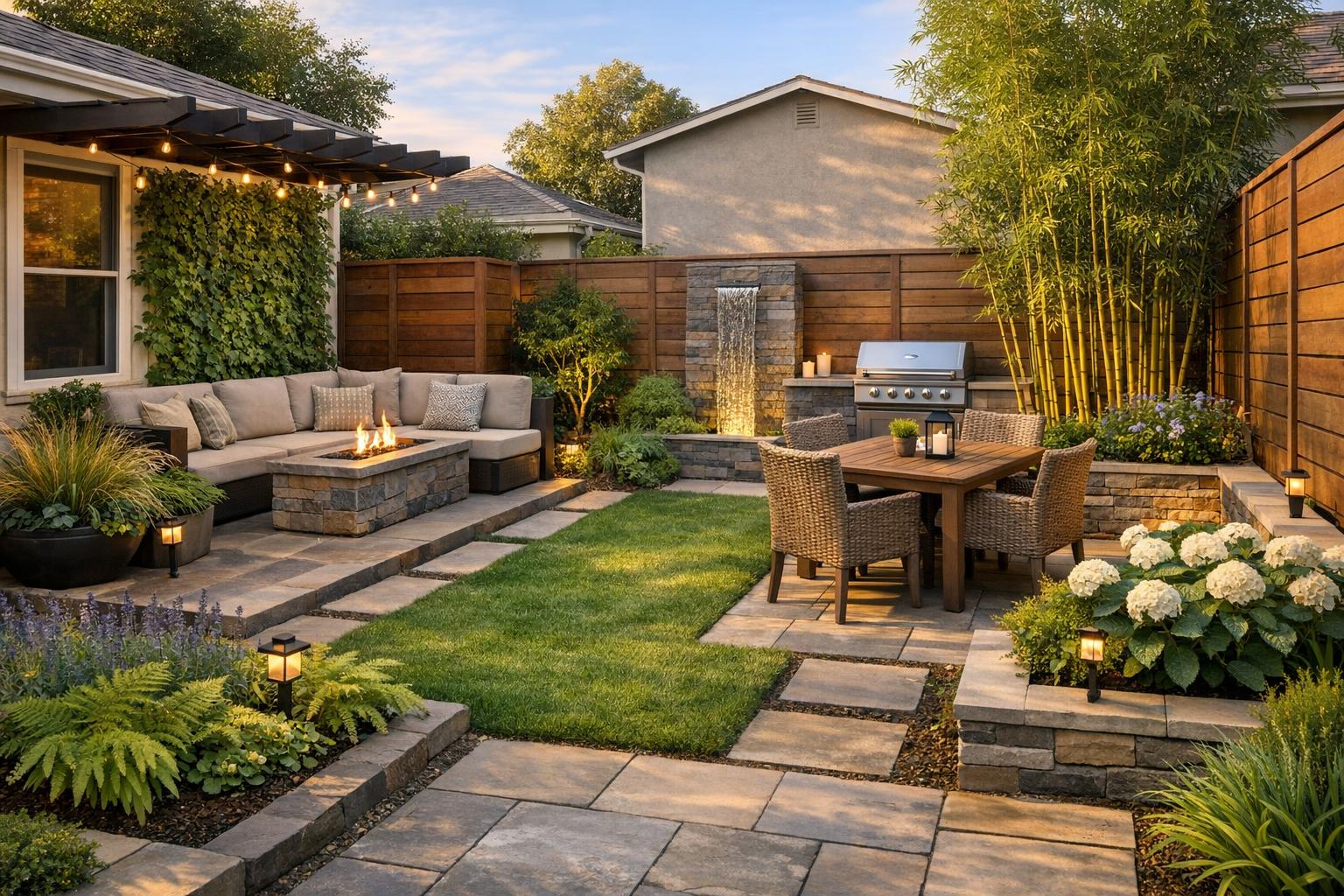
A backyard renovation works best when homeowners decide what the space needs to do before choosing features. A patio, new lawn, privacy screen, drainage fix, outdoor kitchen, play area, or planting refresh can all be useful, but they do not all belong in the first phase of every yard.
This guide helps homeowners plan a backyard renovation in the right order: goals first, site conditions second, budget and phasing third, and contractor scope after the big decisions are clear enough to quote.
Start with the backyard problem you are solving
The strongest renovation plans begin with a use problem rather than a shopping list. A yard may feel too exposed, too muddy, too hot, too hard to maintain, or too awkward for entertaining. Naming that problem keeps the project from becoming a collection of disconnected upgrades.

- Make the yard easier to use for dining, relaxing, or entertaining.
- Fix drainage, slope, mud, or worn lawn areas before adding finish features.
- Create privacy where neighbors, streets, or side yards feel too exposed.
- Reduce maintenance with better materials, planting, irrigation, or layout choices.
Homeowners still comparing broad outdoor-living ideas can pair this guide with Backyard Living Space Ideas by Budget and Yard Size.
Check site conditions before designing the wish list
Drainage, access, utilities, sun exposure, soil, existing trees, and elevation changes should influence the plan before materials are chosen. A beautiful patio can become frustrating if water moves toward the house, if furniture does not fit, or if the contractor has no practical access for base materials and equipment.

- Where does water go during storms or irrigation cycles?
- Which doors, gates, and side-yard paths control access?
- Are there buried utilities, irrigation lines, or tree roots to protect?
- Does the yard need grading, retaining, or drainage work before finish upgrades?
Estimate the first backyard renovation range
Use these calculators to compare a broad renovation range with a focused patio range before deciding what belongs in phase one.
Landscaping Cost Range Calculator
Estimate a broad landscaping budget range for common homeowner project types before comparing quotes.
Landscaping cost estimate
- Estimated area
- –
- Low estimate
- –
- Mid estimate
- –
- High estimate
- –
- Estimated range per sq ft
- –
Paver Patio Cost Calculator
Estimate patio cost ranges using size, paver tier, prep complexity, and demolition assumptions.
Patio cost estimate
- Estimated area
- –
- Low estimate
- –
- Mid estimate
- –
- High estimate
- –
- Estimated range per sq ft
- –
Plan the renovation in phases
Phasing is not just a budget tactic. It is a sequencing tool. Drainage, grading, retaining walls, and major hardscape usually need to come before planting, lighting, furniture, and decorative details. When phase one is planned with later phases in mind, the homeowner avoids paying twice for demolition, access, or layout changes.

- Phase one: solve access, drainage, grading, and core layout.
- Phase two: build the primary patio, path, lawn, or planting structure.
- Phase three: add lighting, privacy, shade, furniture, and finish details.
- Future phase: outdoor kitchen, fire feature, pergola, or secondary seating zone.
What to ask contractors before hiring
A backyard renovation often crosses trade boundaries, so the estimate should clarify who owns design, demolition, drainage, hardscape, planting, irrigation, lighting, cleanup, and warranty details. Homeowners should compare scope, not just total price.
- What site conditions could change the price after work starts?
- Which parts of the project should happen before hardscape or planting?
- How will drainage and irrigation be protected or changed?
- What is included in cleanup, soil prep, and final grading?
The best backyard renovation plan gives the contractor enough clarity to quote accurately while leaving room for site-specific recommendations. That balance helps homeowners avoid both vague bids and overdesigned plans that are not realistic to build.
Leave a Reply