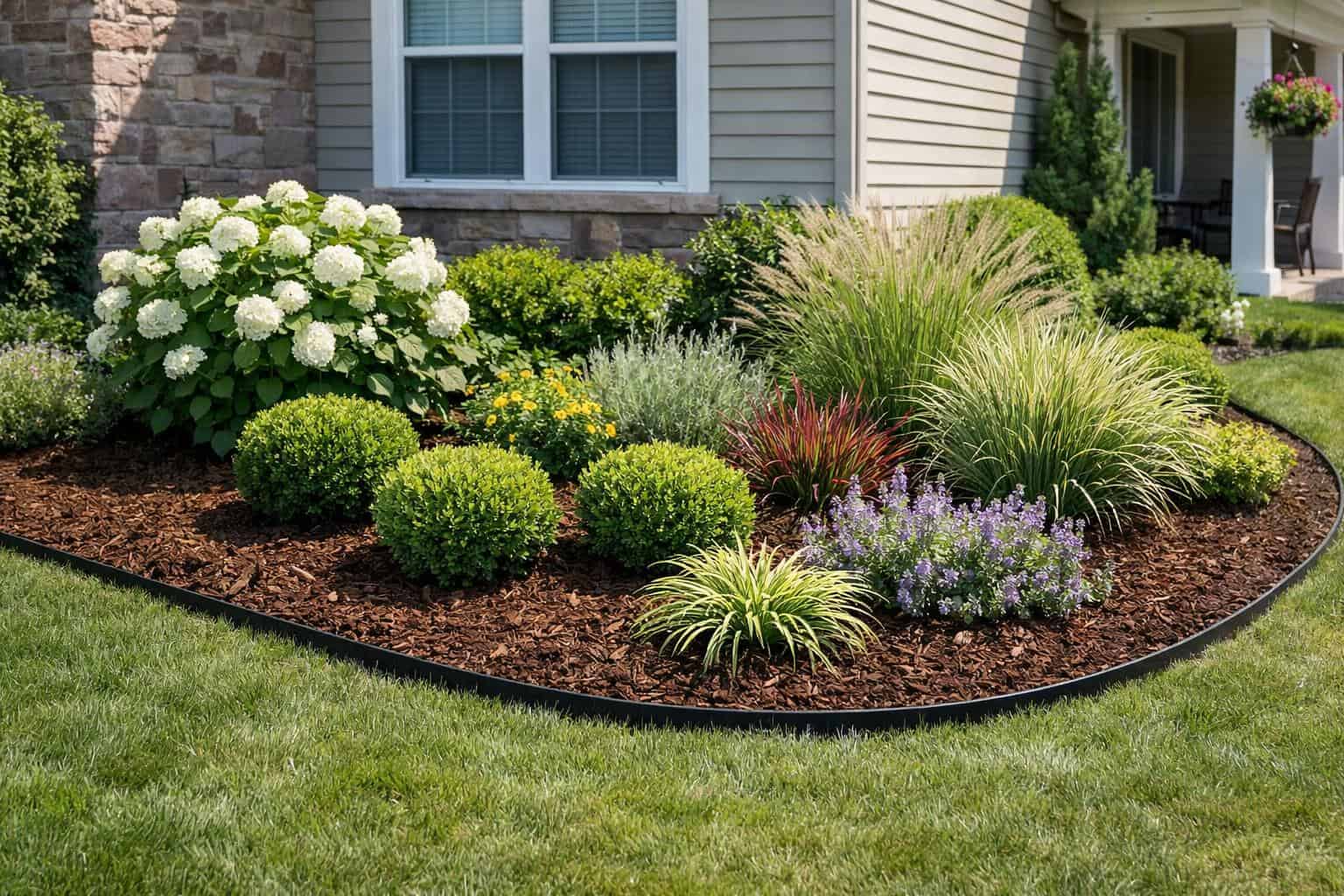
Planting and garden bed installation can transform a property faster than almost any other landscape service. It can soften hardscape edges, improve curb appeal, add privacy, organize the yard, and make the whole property feel more intentional. But not every planting project is planned around the same goal, and the long-term result depends on more than simply picking attractive plants.
Part of our Complete Yard Design and Planning Guide: layouts, ideas by yard type, phasing and budgets in one place.
This guide helps homeowners understand what planting installation usually includes, what affects cost, and how to choose a plant layout that matches both the property and the level of maintenance they are willing to take on.

What planting installation usually includes
Garden bed and planting work may include bed layout, soil prep, plant selection, tree and shrub placement, edging, mulch or decorative stone, irrigation adjustments, and cleanup. Some projects are simple refreshes. Others are part of a larger landscape redesign tied to new patios, walls, or grading changes.
- Common project goals: curb appeal, privacy, shade, screening, seasonal color, or a cleaner low-maintenance look.
- Common materials: shrubs, trees, perennials, ornamental grasses, mulch, decorative rock, and edging details.
- Main performance factors: plant spacing, irrigation compatibility, sun exposure, soil conditions, and long-term maintenance planning.
Planting should match the way the property is used
Some homeowners want bold visual impact near the front entry. Others want backyard privacy, low-maintenance structure, or softer transitions around patios and walkways. Those are all valid goals, but they lead to different plant choices and bed layouts.
This is why planting should be tied to the broader landscape plan described in our services guide. Beds that ignore circulation, drainage, and irrigation often look good briefly but become harder to maintain over time.

What affects planting and garden bed cost
Project cost is shaped by plant size, quantity, soil amendment needs, bed preparation, edging details, mulch or stone coverage, irrigation updates, and how much removal or cleanup is required before the new work begins. Larger specimen material can change the budget quickly, especially when access is limited.
Homeowners should also think about long-term maintenance. A lower-maintenance bed may cost more upfront if it uses better spacing, stronger structure plants, weed suppression layers, or irrigation improvements, but it can save time and labor later.
How irrigation and drainage connect to planting
Planting performance is closely tied to water management. Beds that stay too wet, dry out too quickly, or receive uneven irrigation often struggle no matter how attractive the plant palette looked on paper. If water movement is a concern, pair this topic with our drainage guide and irrigation guide.

Questions to ask before hiring for planting work
- What is the main goal of this planting plan: privacy, curb appeal, screening, color, or lower maintenance?
- How will the plant choices respond to sun, irrigation, and soil conditions on this property?
- What prep work is included before new plants go in?
- What mulch, edging, and watering assumptions are part of the bid?
- How much maintenance should I expect in the first year?
Our hiring guide can help you compare planting proposals more effectively.
What homeowners should remember

A strong planting project is about function as much as appearance. The best results come when the plants match the site, the water plan, and the way the homeowner wants to live with the yard after installation. When a contractor explains spacing, maintenance, and irrigation clearly, the finished landscape usually holds up much better over time.
Related guide: If the goal is to create separation from neighboring properties or soften a fence line, the Privacy Landscaping Guide for Homeowners can help with layered screening ideas.
Nursery guide: If planting purchases are part of the project, the plant material comparison guide can help homeowners buy with more confidence.
Plant-selection guide: The low-maintenance plant guide helps connect nursery choices to real long-term upkeep.
Cost guide: The planting and garden bed cost guide helps homeowners compare bed scope, plant size, and finish-detail pricing more clearly.
Quote guide: The planting and garden bed quote guide makes it easier to compare plant size, bed prep, mulch, and irrigation assumptions.
Timeline guide: The planting and garden bed timeline guide helps homeowners compare layout, sourcing, installation, and finish timing more clearly.
Expectations guide: The planting expectations guide helps homeowners understand bed prep, plant staging, and finish-work flow.
Maintenance guide: The planting maintenance guide helps homeowners manage watering, pruning, and long-term bed health.
Mistakes guide: The planting planning mistakes guide helps homeowners catch layout, plant-size, and upkeep mismatches early.
Warning signs guide: The planting-bed warning signs guide helps homeowners judge stress, thin coverage, and irrigation trouble before the bed declines further.