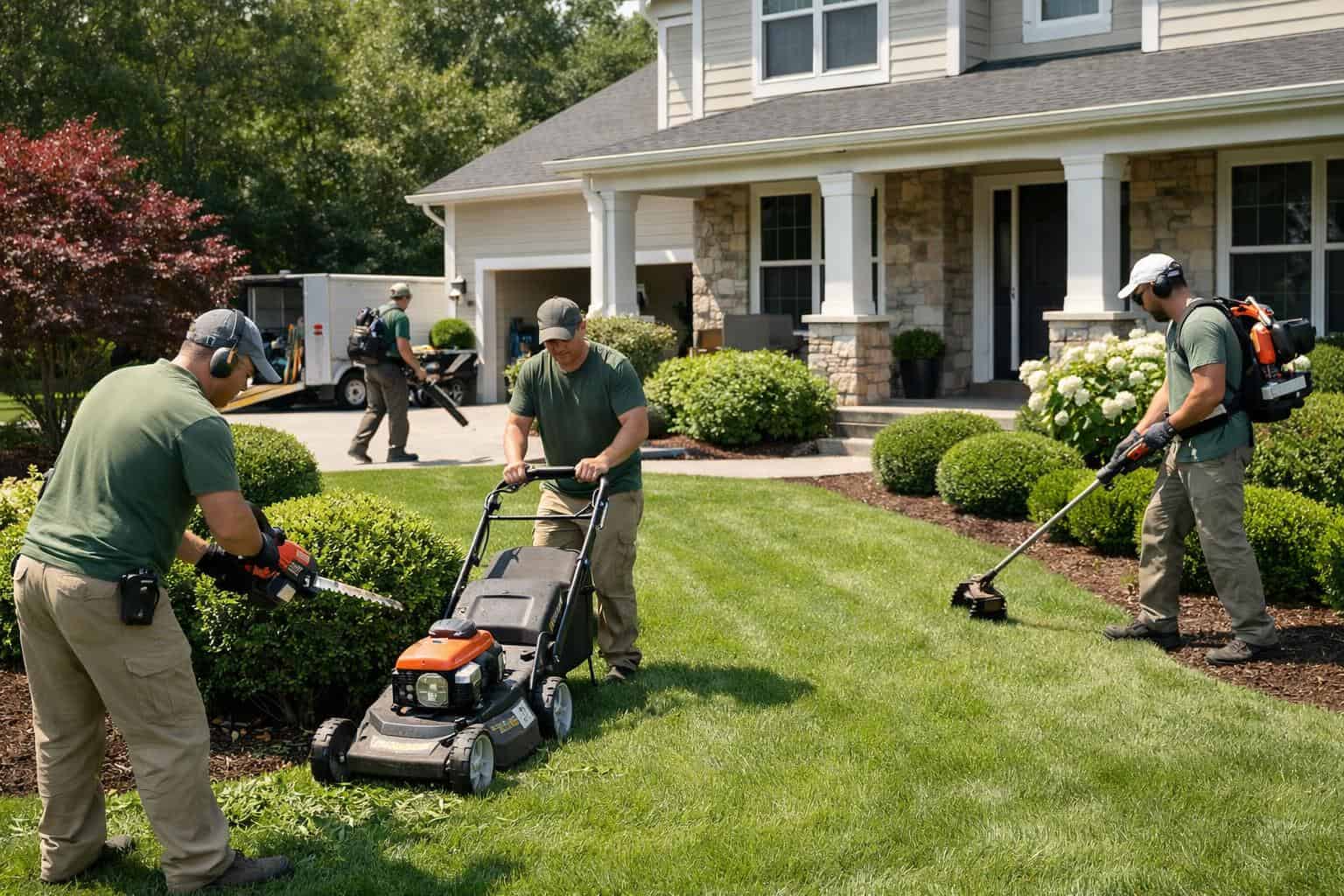
Landscape maintenance plans can keep a property looking intentional long after the installation crew leaves. For many homeowners, maintenance is the difference between a landscape that matures well and one that slowly becomes overgrown, uneven, or harder to manage every season. The right plan should match the type of landscape you have and how involved you want to be day to day.
This guide explains what residential maintenance plans often include, how to think about value, and what homeowners should ask when comparing recurring service options.
What maintenance plans usually include
Landscape maintenance can range from simple lawn care to broader recurring service that includes pruning, seasonal cleanup, mulch refreshes, irrigation checks, weed control, and care for planting beds. Some plans are designed for basic appearance. Others are meant to protect a larger investment in patios, lighting, walls, lawn, and planting work.

- Common services: mowing, edging, pruning, bed cleanup, mulch refreshes, irrigation observation, seasonal trimming, and debris removal.
- Common plan goals: keep the property consistent, reduce catch-up work, protect installations, and make seasonal transitions easier.
- Main planning factors: property size, plant maturity, lawn area, irrigation needs, and how hands-on the homeowner wants to be.
Why maintenance should be part of the project plan
Homeowners often think about maintenance only after installation, but the long-term care plan should influence decisions earlier. A planting scheme that looks great on day one may not suit a homeowner who wants lower upkeep. A new concrete or patio installation still benefits from cleaning, joint observation, and surrounding bed care over time.
This is why maintenance belongs in the same conversation as the larger plan described in our services guide.
What affects maintenance-plan cost
Recurring service pricing depends on visit frequency, property size, lawn area, pruning needs, bed complexity, seasonal cleanup volume, irrigation oversight, and whether the plan includes consumables like mulch or fertilizer. A simple mow-and-edge plan is very different from a full-service maintenance program for a recently renovated landscape.
Homeowners comparing ongoing ownership costs should also review our landscaping cost guide.
Maintenance and new installations
Fresh sod, new planting beds, recently sealed concrete, and lighting systems all have early-stage care needs that differ from mature landscape maintenance. The more a contractor explains that transition, the easier it is for homeowners to avoid early problems caused by under-watering, over-pruning, or neglected cleanup.
Related reading includes our guides on planting installation, sod and lawn installation, and concrete driveway maintenance.
Questions to ask before choosing a maintenance plan
- What is included at each visit, and what is billed separately?
- How often will the property be serviced during peak growing season?
- How is pruning handled for shrubs, perennials, and ornamental grasses?
- Will the crew monitor irrigation issues or only report visible problems?
- How does the plan change seasonally?
Our hiring guide is also useful when comparing recurring service providers.
What homeowners should remember
A maintenance plan should support the landscape you actually own, not a generic checklist. The best plans feel preventative rather than reactive. When a contractor explains visit scope, seasonal changes, and how the maintenance supports the investment over time, it becomes much easier to judge the real value of recurring service.

If your bigger goal is reducing upkeep across the whole property, pair this page with our low-maintenance landscaping guide for homeowners.
Related guide: If you are optimizing the yard for pets, kids, or lower water use, the Small Backyard Landscaping Ideas Guide can help keep the layout efficient and manageable.
Seasonal guide: Homeowners looking for a year-round upkeep rhythm can use the Spring Landscaping Checklist and Summer Landscaping Maintenance Guide to structure recurring work.
Quote guide: The planting and garden bed quote guide makes it easier to compare plant size, bed prep, mulch, and irrigation assumptions.
More Service Planning Guides
- Weekly vs Monthly Landscape Maintenance Plans Guide
- Full-Service vs Basic Landscape Maintenance Guide for Homeowners
- Landscape Maintenance Cost vs Time Saved Guide for Homeowners
- How to Choose the Right Landscape Maintenance Plan Guide
Estimate seasonal refresh and material costs
Maintenance planning often includes cleanup, mulch, planting-bed refreshes, and small improvements. Use these calculators to frame a rough range before comparing service plans.
Landscaping Cost Range Calculator
Estimate a broad landscaping budget range for common homeowner project types before comparing quotes.
Landscaping cost estimate
- Estimated area
- –
- Low estimate
- –
- Mid estimate
- –
- High estimate
- –
- Estimated range per sq ft
- –
Mulch Cost Calculator
Estimate mulch quantity plus material and installation cost ranges for planting beds.
Mulch cost estimate
- Estimated cubic yards
- –
- Material estimate
- –
- Delivery and labor estimate
- –
- Low total
- –
- High total
- –
Leave a Reply