
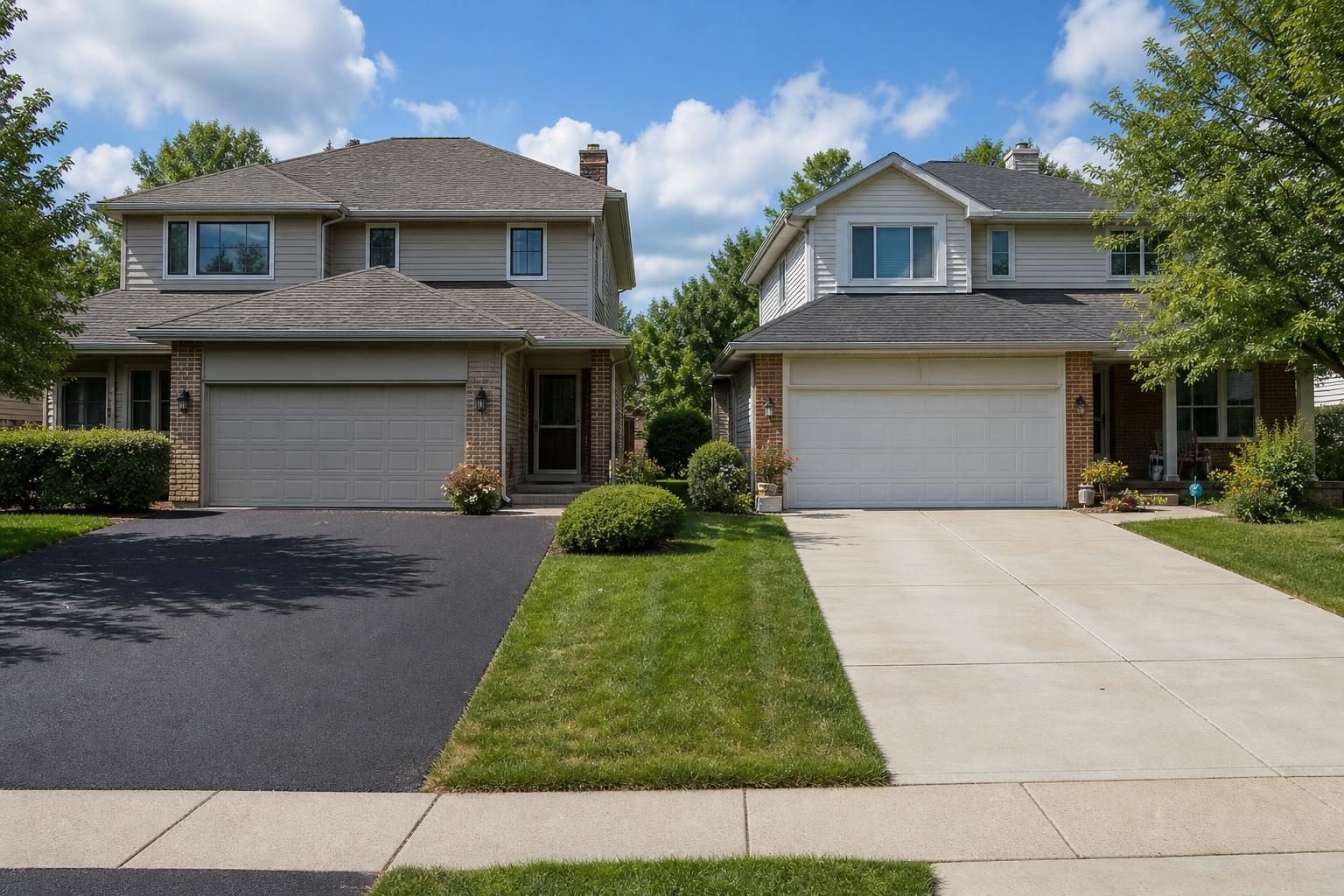
Asphalt and concrete are both common driveway choices, but they behave differently over time. Asphalt is often chosen for lower upfront cost and faster installation. Concrete is often chosen for a cleaner look, longer potential lifespan, and more finish options. The better choice depends on climate, budget, maintenance tolerance, and how the driveway fits the front yard.
Part of our Complete Driveway Guide: types, costs, installation, repair and hiring in one place.
This guide compares asphalt vs concrete driveways from a homeowner planning perspective so the decision is based on scope and ownership, not just the first estimate.
Quick comparison
- Asphalt usually has a lower initial cost but needs periodic sealing and more frequent resurfacing.
- Concrete usually costs more upfront but can last longer with good prep, drainage, and joint planning.
- Hot climates can soften asphalt, while freeze-thaw conditions can affect both surfaces if drainage and base prep are weak.
- Concrete offers more finish choices, while asphalt has a simpler, darker appearance.
Estimate driveway cost by surface type
Use this calculator to compare rough asphalt and concrete driveway ranges for the same square footage before requesting site-specific bids.
Driveway Cost Calculator
Estimate driveway material plus labor ranges for gravel, asphalt, concrete, or paver installs.
Driveway cost estimate
- Estimated area
- –
- Low estimate
- –
- Mid estimate
- –
- High estimate
- –
- Estimated range per sq ft
- –

When asphalt makes more sense
Asphalt can be a practical choice when the homeowner wants a functional driveway at a lower initial price, when the driveway is large, or when a simple black surface fits the property. It can also be easier to patch visually than decorative concrete, although patches may still show.
- Large driveways where cost per square foot matters heavily
- Properties where a simple utilitarian surface is acceptable
- Homeowners comfortable with sealing and periodic resurfacing
- Projects where faster installation and use are important

When concrete makes more sense
Concrete tends to fit homeowners who care more about long-term appearance, curb appeal, and finish options. It may be a better match near modern front yards, formal entries, or homes where the driveway is a major visual element.
- Front yards where curb appeal matters strongly
- Homeowners who want broom, exposed aggregate, stamped, or decorative finishes
- Properties where a lighter surface is preferred in hot sun
- Projects where longer potential service life is worth higher upfront cost
What affects both choices
Neither material performs well if the base, drainage, thickness, or edge support are ignored. A cheap asphalt quote and a cheap concrete quote can both fail early if the contractor skips prep. Homeowners should compare how the driveway will be built, not only what material will be visible.
Use this page with How to Choose a Paving Company and Concrete Contractor Guide before hiring.