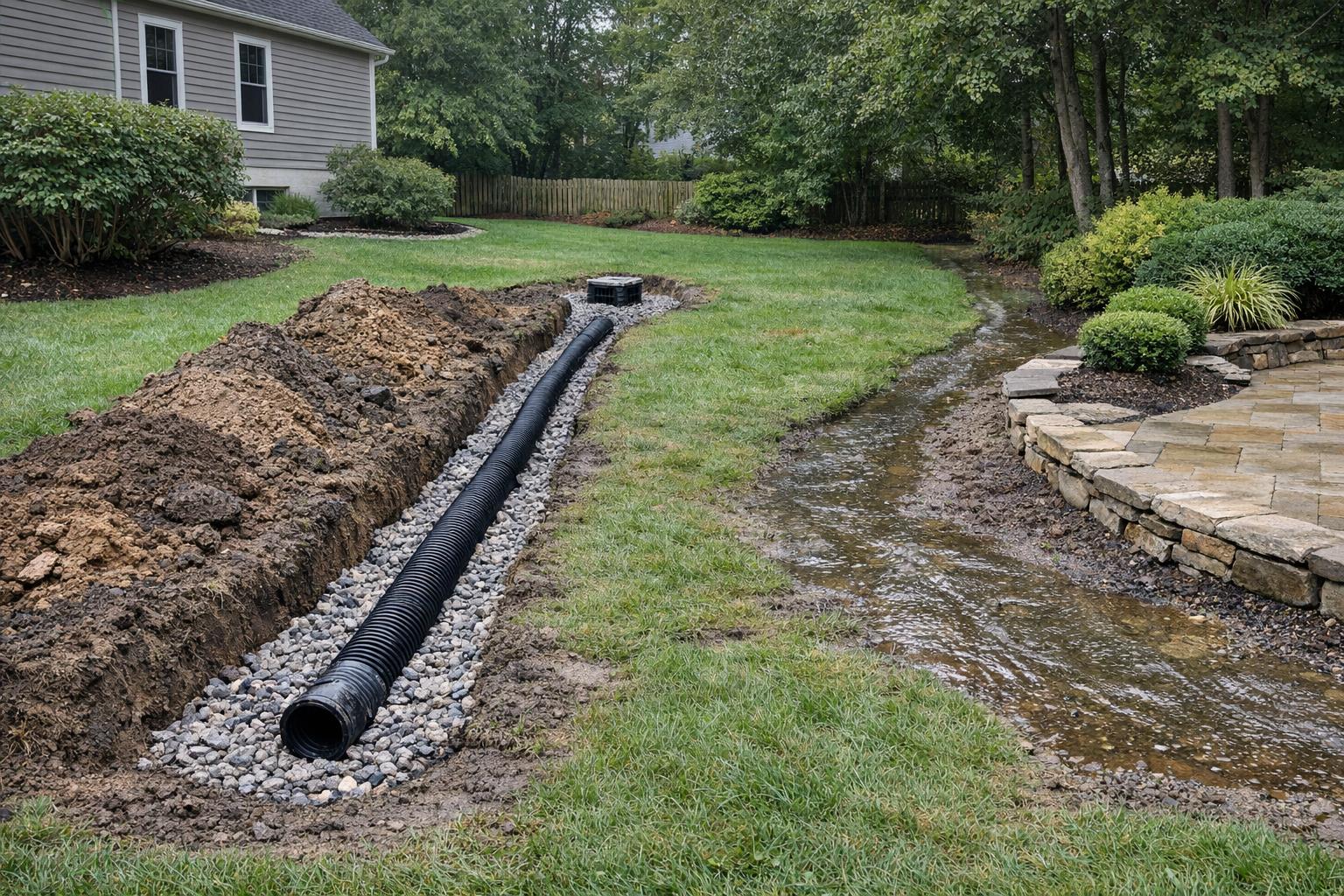
A good drainage estimate explains what’s causing the water problem, what system will fix it, exactly where it goes and where the water ends up, and what materials, depth and restoration are included. If an estimate just says “install French drain, $4,500,” you can’t tell whether it solves your problem or how it compares to another bid. Use the checklist below to make sure each quote covers the same work.
Part of our Complete Yard Drainage Guide: diagnosing water, drains and swales, costs and repairs in one place.

1. A diagnosis of the problem
The estimate, or the conversation behind it, should explain where the water comes from and why it’s collecting. Common sources include roof runoff, poor grading, a neighbor’s yard, a hillside, a high water table, or compacted clay soil.
Be cautious if a contractor proposes a solution without walking the property, asking when the problem happens, or looking at downspouts and grade. The right fix depends on the source. If you’re not sure whether the issue is water or slope, our guide to drainage vs regrading helps you sort it out.
2. The proposed system, clearly named
The estimate should say what is being installed, such as:
Our comparison of French drains vs surface drains explains which fits which problem.
A good estimate also notes whether simple fixes, such as cleaning gutters or extending downspouts, were checked first. If a contractor jumps straight to a buried system without mentioning roof water, ask why. Fixing the cheap causes first can shrink the size of the system you actually need, or remove the need entirely.
- Downspout extensions or buried downspout lines.
- Regrading or a swale.
- A French drain or curtain drain.
- Channel drains, catch basins or area drains.
- A dry well, pop-up emitter or connection to a storm drain.
- A sump or pump system, if gravity won’t work.

3. Layout, length and depth
Look for a sketch or description showing where the system runs, plus:
- Total length of trench and pipe, in linear feet.
- Trench depth and width.
- Slope of the pipe, often about 1 percent (roughly 1/8 inch per foot) or more, so water keeps moving.
- Number and location of catch basins, inlets and cleanouts.
4. Materials and specs
Different materials have different lifespans and performance. The estimate should name:
- Pipe type and diameter, for example rigid PVC vs flexible corrugated pipe, and 4-inch vs 6-inch. Rigid pipe is easier to clean and holds its slope better.
- Perforated or solid pipe in each section.
- Gravel type and amount around the pipe.
- Filter fabric to keep soil from clogging the gravel.
- Grates, basins and emitters by size and material.

5. The discharge point
This is one of the most important lines in the estimate. Water has to go somewhere legal and functional: a street curb, storm drain, dry well, rain garden, or a lower area on your own property. Many towns limit where you can discharge, and sending water onto a neighbor’s lot can cause disputes. Ask the contractor to show you exactly where the outlet will be.
6. Excavation, access and restoration
Drainage work often means trenching through lawn, beds or hardscape. The estimate should cover:
- Utility locate before digging (often free through your local 811 service, but the contractor should request it).
- Machine vs hand digging, and access route for equipment.
- Haul-off of excess soil.
- Cutting and patching concrete or pavers if needed.
- Lawn restoration: seed, sod or topsoil.
- Replanting or resetting moved plants and edging.
Restoration is where many estimates differ. One may include sod; another may leave a bare trench line.
7. Price breakdown, permits and warranty
Ask for labor, materials and restoration listed separately where possible. Costs vary by region, soil, depth and access, but rough ranges help you spot outliers.

| Item | Rough range | What drives it |
|---|---|---|
| Downspout extensions or buried lines | $100 to $1,500 | Number of downspouts, run length, outlet |
| French drain | $25 to $100+ per linear foot | Depth, soil, pipe type, restoration |
| Channel drain | $50 to $150+ per linear foot | Concrete cutting, grate type |
| Catch basin | $300 to $1,500+ each | Size, depth, connection run |
| Dry well | $1,000 to $5,000+ | Size, soil percolation, excavation |
| Sump pump system | $1,500 to $5,000+ | Pit, pump, power, discharge line |
The estimate should also state who obtains any permits, the payment schedule, and the warranty on workmanship and materials. Ask what happens if water still pools after the work is done.
How to compare two drainage estimates
- Confirm both contractors identified the same water source.
- Compare length, depth and pipe type, not just total price.
- Check that both include the same discharge point.
- Compare restoration: bare soil, seed or sod.
- Look at warranty terms side by side.
Our guide to comparing drainage contractors covers vetting the companies themselves, and drainage cost vs property protection helps weigh the spend.
Red flags in a drainage estimate
- No outlet named. “Drain to daylight” without saying where daylight is.
- A dry well in heavy clay with no percolation test or explanation of how the soil will absorb water.
- Price by the job only, with no lengths, depths or materials.
- Guaranteed dry basement claims from a landscape drain alone, when water may be entering through the foundation.
- No mention of restoration, which often means you’ll be left with a muddy trench line.
None of these automatically rules a contractor out, but each one is worth a direct question before you sign.
Estimate drainage scope before reviewing proposals
Use this calculator to compare common drainage treatments before evaluating contractor estimates.
Drainage Cost Calculator
Estimate drainage project pricing for swales, French drains, and catch basin style systems.
Drainage cost estimate
- Estimated treatment length
- –
- Low estimate
- –
- Mid estimate
- –
- High estimate
- –
- Estimated range per linear ft
- –
Frequently asked questions
Why do drainage estimates vary so much?
Contractors may diagnose different causes, propose different systems, use different pipe and gravel, or include different restoration. Compare the scope line by line before comparing totals.
Should a drainage estimate include a cleanout?
Ideally yes, for longer pipe runs. A cleanout lets the system be flushed if it clogs with silt or roots.
Is corrugated pipe acceptable for a French drain?
It’s common and cheaper, but rigid pipe is easier to clean and keeps a steadier slope. Ask the contractor why they chose one over the other.
Do I need a permit for yard drainage?
Many small residential jobs don’t, but connections to a storm sewer, work near property lines or discharge to the street often do. Your contractor or local building department can confirm.