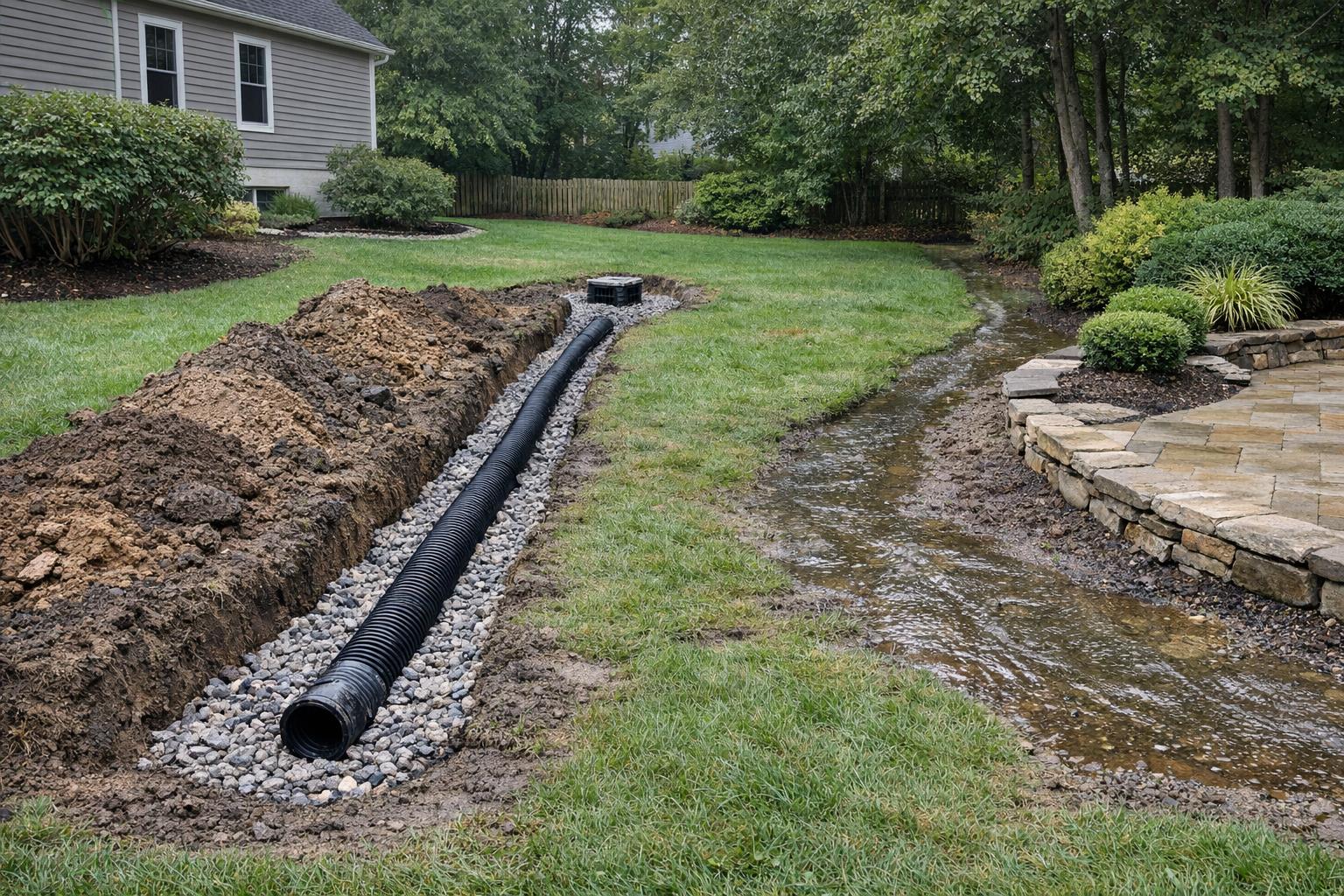
Searching for drainage contractors near you usually means a yard already has a visible water problem. The danger is hiring for the first proposed fix before anyone has explained where the water starts, where it currently moves, and where it can legally and safely discharge.
Part of our Complete Yard Drainage Guide: diagnosing water, drains and swales, costs and repairs in one place.
This guide helps homeowners compare local drainage contractors by diagnosis, solution fit, estimate detail, and long-term property protection. It is not about finding the closest company. It is about finding the contractor who understands the site well enough to recommend the right fix.
Start with the water path
A good drainage visit should trace the full water path. The contractor should look at roof runoff, downspouts, soil saturation, hardscape slope, low spots, neighboring grades, and where water can exit without creating a new problem.

- Where does water collect during ordinary rain?
- Is the problem surface runoff, subsurface saturation, roof runoff, or grading?
- Can water discharge to a safe outlet instead of another low spot?
- Will the proposed fix affect patios, lawns, planting beds, or foundations?
Estimate the drainage project range
Use this calculator to compare rough ranges for French drains, surface drains, catch basins, downspout extensions, and related site work before requesting bids.
Drainage Cost Calculator
Estimate drainage project pricing for swales, French drains, and catch basin style systems.
Drainage cost estimate
- Estimated treatment length
- –
- Low estimate
- –
- Mid estimate
- –
- High estimate
- –
- Estimated range per linear ft
- –

Compare solution types, not just prices
Two drainage contractors may quote very different solutions for the same symptom. One may recommend a French drain, another may recommend surface collection, and another may focus on regrading. The right choice depends on the source of the water, soil conditions, slope, available outlets, and how the yard is used.
Use this page with French Drain vs Surface Drain and Drainage vs Regrading before choosing.
What a drainage estimate should include
- Drain type, approximate length, depth, pipe, fabric, stone, and basin details
- Outlet location and any limitations around discharge
- Restoration of lawn, mulch, planting beds, hardscape edges, or irrigation
- Exclusions for permits, utility conflicts, hidden roots, or unexpected soil conditions
The best drainage contractor is usually the one who can explain why the proposed solution fits the site. A clear diagnosis is worth more than a vague low number because drainage problems often return when the original water path is misunderstood.