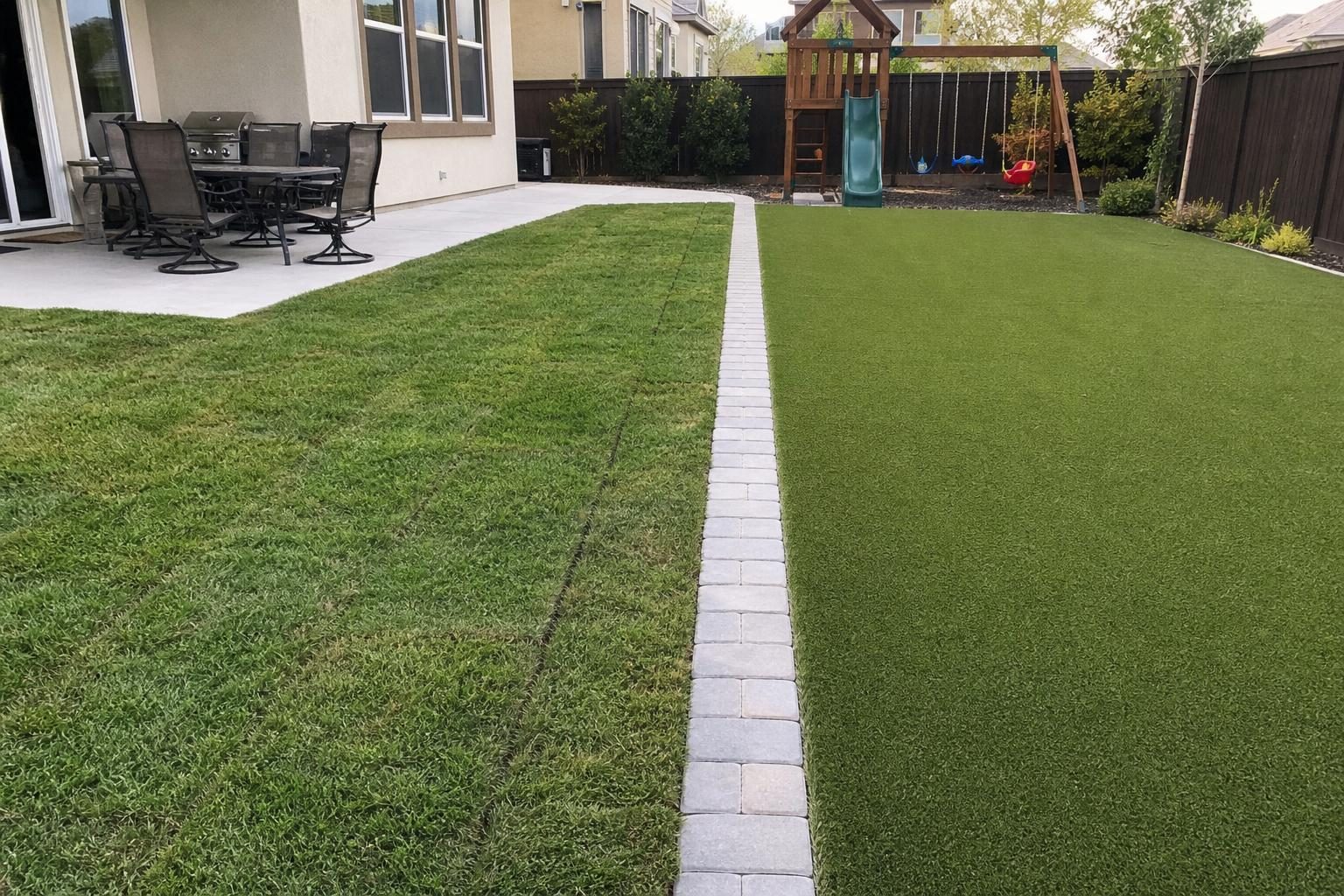
Artificial turf and sod both create a usable green surface, but they are very different ownership choices. Sod is living grass with irrigation, mowing, and seasonal care needs. Artificial turf is a manufactured surface with higher prep requirements, different heat behavior, and less routine lawn care.
Part of our Complete Lawn Guide: seed vs sod, grass types, costs, care calendar and hiring in one place.
The better choice depends on how the yard is used, how much maintenance the homeowner will accept, local water concerns, pets, shade, drainage, and budget.
Quick comparison
- Sod usually costs less upfront but requires watering, mowing, and ongoing lawn care.
- Artificial turf usually costs more upfront but reduces mowing and regular watering.
- Sod can struggle in shade, drought, heavy pet use, or compacted soil.
- Artificial turf can get hot, needs drainage prep, and eventually wears out.
Compare artificial turf and sod ranges
Use these calculators to compare artificial turf installation with sod, seed, and hydroseed ranges for the same area.

Artificial Turf Cost Calculator
Estimate artificial turf pricing with turf grade, removal needs, access, and install complexity.
Artificial turf cost estimate
- Estimated area
- –
- Low estimate
- –
- Mid estimate
- –
- High estimate
- –
- Estimated range per sq ft
- –
Sod vs Seed Cost Calculator
Compare rough installed cost ranges for sod, seed, and hydroseed on the same lawn area.
Lawn establishment comparison
- Estimated area
- –
- Seed estimate
- –
- Hydroseed estimate
- –
- Sod estimate
- –
- Fastest visible result
- –

When artificial turf makes more sense
Artificial turf can be a strong option when the homeowner wants a consistently green surface with less mowing and watering. It may also help in small yards, pet runs, or areas where natural grass repeatedly fails. The installation should still address base prep, drainage, odor control, edge restraints, and heat exposure.
- Small or high-use lawn areas where grass struggles
- Yards where reduced mowing and watering are top priorities
- Pet areas that need durable surfacing and cleanup access
- Properties where irrigation limits make sod hard to maintain
When sod makes more sense
Sod may be the better fit when the homeowner wants living grass, a cooler surface, and a lower upfront installation cost. It needs soil prep, irrigation planning, and realistic care during establishment.
- Families who prefer natural grass for play and comfort
- Yards with enough sun and irrigation to support healthy turf
- Homeowners comfortable with mowing, watering, and seasonal care
- Projects where lower upfront cost matters more than reducing maintenance

Questions to ask before choosing
Before choosing turf or sod, homeowners should ask how the area drains, how hot the surface gets, whether pets use the space, and what maintenance they are truly willing to keep doing. The right answer is less about which product is better and more about which surface fits the way the yard will actually be used.
Use this guide with Artificial Turf Installation Guide and What Affects Sod and Lawn Installation Cost.