Many homeowners are comfortable choosing colors, materials, and general design ideas, but they still feel unsure about what a landscaping project will actually look like once work starts. That uncertainty is normal. Even a relatively simple project can involve deliveries, demolition, noise, dust, access changes, inspection points, weather delays, and decisions that have to be made quickly.
This guide walks through the normal rhythm of a landscaping job so you know what to expect before the crew arrives. While every project is different, the same broad stages show up again and again: planning, site prep, installation, adjustments, cleanup, and handoff.
Before the first workday
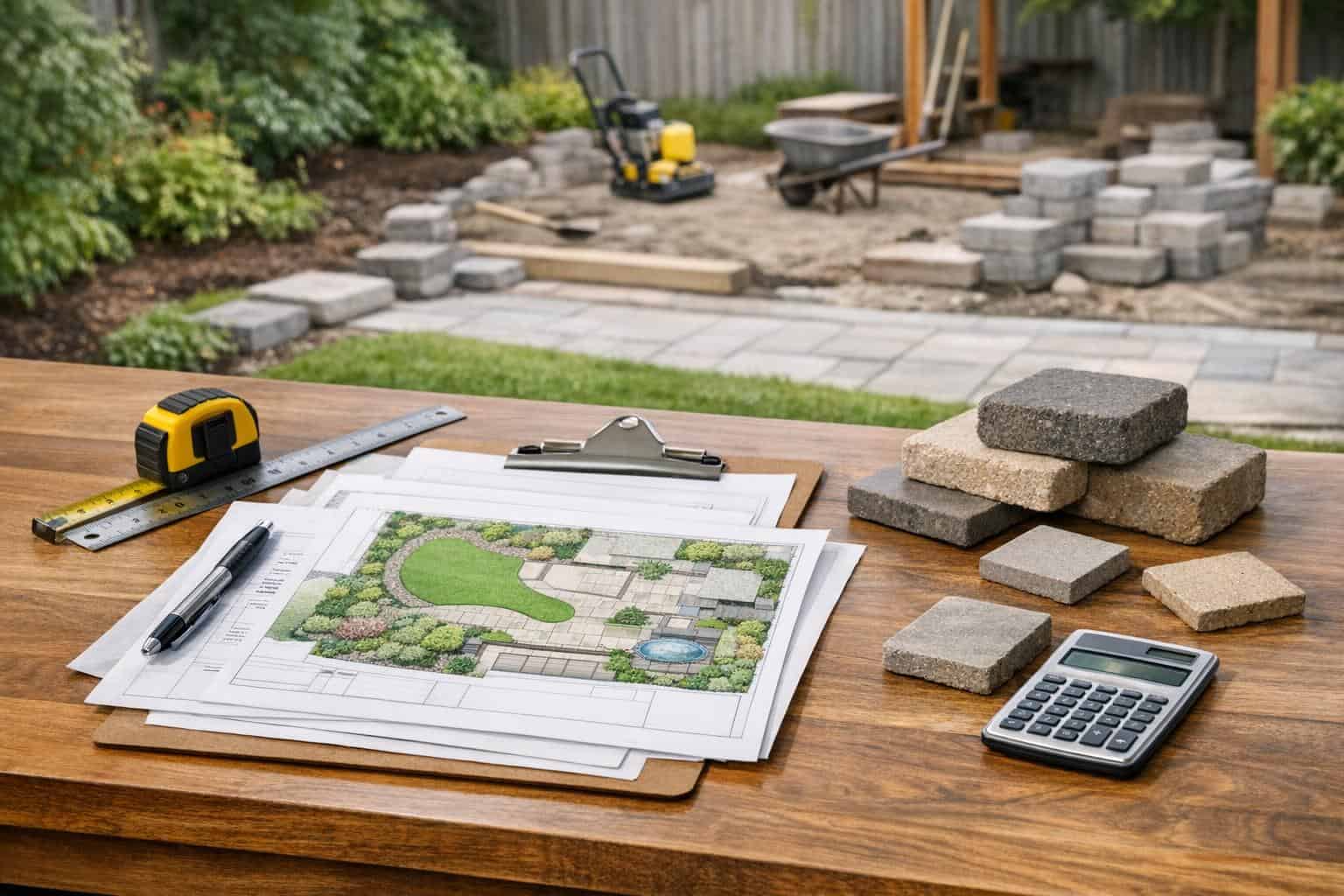
The project usually starts long before anyone unloads equipment. Measurements, material approvals, layout decisions, and scheduling all happen ahead of the first visible activity. Homeowners should expect a few details to be confirmed before work begins, especially on jobs involving concrete, drainage, retaining walls, patios, or irrigation changes.
- Final scope and pricing should be clearly documented.
- Material selections and finish choices should be confirmed.
- Access points, parking, and staging areas should be discussed.
- Any utility marking or permit needs should be addressed in advance.
This is also the right moment to ask how communication will work during the job. Knowing who gives updates and who approves changes prevents confusion later.
Site prep can look messy before it looks better
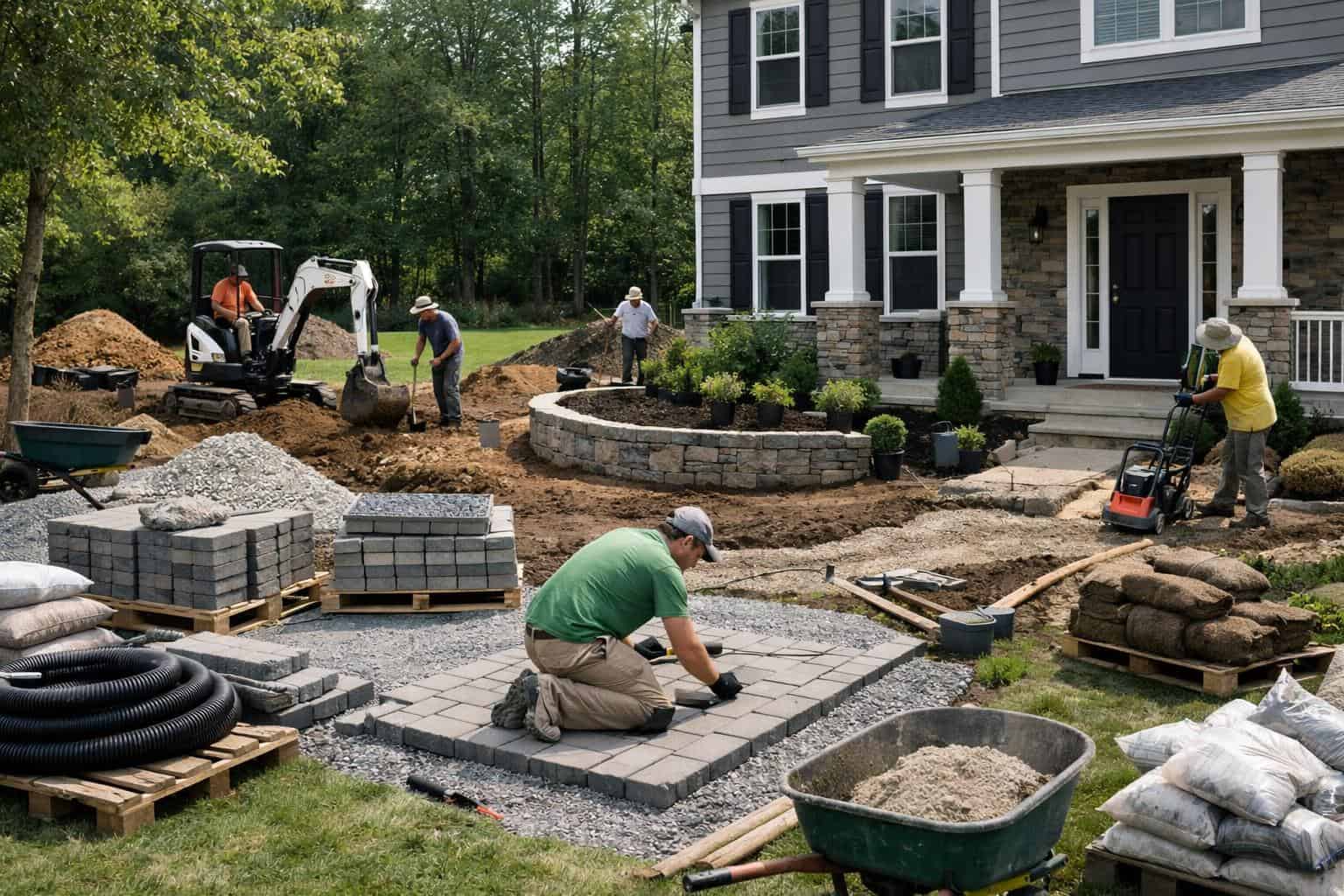
The early stage of a landscaping project often looks worse before it looks better. Existing surfaces may be removed, planting beds may be stripped back, soil may be stockpiled, and materials may take over parts of the driveway or yard. That can feel disruptive, but it is usually a normal part of getting the site ready.
Prep work may include demolition, excavation, rough grading, debris removal, base installation, layout marking, or protective measures for nearby surfaces. If the project involves hardscape work, this phase often determines how durable the finished installation will be.
For homeowners comparing concrete work specifically, our step-by-step guide to concrete driveway installation shows how much of the long-term performance depends on preparation before the pour.
Crews may work in phases rather than one continuous push
Many homeowners picture landscaping as a straight line from start to finish, but real projects often move in stages. One crew may handle demolition or grading. Another may install drainage or irrigation. A finishing crew may handle concrete, pavers, planting, or lighting later.
That means the site may appear quiet for short stretches while materials arrive, concrete cures, inspections happen, or the next phase is scheduled. Short pauses do not always mean the project is off track. What matters is whether the contractor communicates those pauses clearly.
Expect decisions and adjustments along the way
Even well-planned projects can uncover surprises once work begins. Soil conditions may be worse than expected. Drainage issues may be more obvious after excavation. Existing surfaces may reveal hidden thickness or base problems. Grades may need to be adjusted to make water move correctly.
Good contractors bring those issues forward with options, not panic. They should explain what changed, why it matters, what it costs, and what happens if the issue is ignored. That is one reason our guide on questions to ask before hiring a landscaper emphasizes process and communication instead of price alone.
How daily life may be affected during the job
The level of disruption depends on the scope, but homeowners should assume at least some temporary inconvenience. Depending on the project, that can include blocked access, noise, dust, crew vehicles, wet concrete, limited use of the yard, or areas that need to stay undisturbed for curing.
- Driveways and approaches: may be unusable for a period of time.
- Backyards: may have restricted access while excavation or installation is underway.
- Pets and children: usually need extra supervision around active work zones.
- Watering and irrigation: may need temporary changes if existing systems are being adjusted.
Asking about those disruptions in advance makes it easier to plan around them instead of reacting mid-project.
Weather and curing time are part of the real schedule
Weather affects landscaping more than many homeowners expect. Rain can delay excavation, grading, planting, concrete placement, and sealants. High heat can change watering needs and curing schedules. Cold weather can affect concrete, adhesives, or some planting windows depending on the region.
Even when the visible work is complete, a project may not be ready for full use immediately. Concrete needs curing time. New sod needs establishment. fresh plantings need irrigation attention. Sealers may need dry conditions. A realistic schedule accounts for those performance requirements, not just the last day a crew is physically present.
The handoff matters as much as the build
Before considering the job complete, homeowners should understand what was installed, what needs attention next, and what the contractor expects over the following days or weeks. A proper handoff should cover care instructions, cleanup expectations, and any limits on use.
- When can the surface or yard be used normally?
- What maintenance should happen in the first month?
- Are there irrigation adjustments or watering instructions?
- Which items are considered normal settling or curing behavior, and which should be reported?
This is especially important for new hardscape and concrete work. Our article on concrete driveway maintenance and sealing is a good example of the kind of care guidance homeowners should receive after installation.
What a smooth project usually feels like
A well-run landscaping project does not have to be perfectly quiet or perfectly predictable. It should feel organized, communicative, and intentional. You should know what stage the job is in, what happens next, and who to talk to if something changes.
That is often the biggest difference between a stressful project and a manageable one. When expectations are clear, even the inconvenient parts feel temporary and understandable instead of chaotic.
Prep guide: Before work begins, the How to Prepare for a Landscaping Crew Guide can help reduce surprises around access, pets, and site use.