Landscaping Guru

  • How to Prioritize Your Front Yard Budget Guide

    How to Prioritize Your Front Yard Budget Guide

    A front-yard budget works best when homeowners focus first on the improvements that shape first impressions and daily approach to the home.

    What usually deserves first budget

    • Entry, path, and curb-appeal cleanup.
    • Fixes for drainage, access, or obvious maintenance problems.
    • High-visibility planting and material refreshes.

    How to separate essentials from extras

    • Start with the view from the street and the walk to the door.
    • Prioritize anything that makes the property feel neglected or hard to approach.
    • Treat highly decorative items as phase-two upgrades if needed.

    Where homeowners often overspend

    • Feature planting or decorative details before basic cleanup and layout clarity.
    • Too many small upgrades that never add up to one strong first impression.
    • Luxury touches that ignore the front yard’s structural weak spots.

    Bottom line

    The best front-yard budget improves entry, clarity, and care signals before it chases extra decoration.

    For the broader overview, continue with Front Yard Landscaping Guide for Homeowners.


  • Front Yard Privacy vs Openness Guide for Homeowners

    Front Yard Privacy vs Openness Guide for Homeowners

    Some front yards feel best when they are open and welcoming, while others need more screening to feel comfortable. The right balance depends on the house, the street, and how the front yard is used.

    When openness often works better

    • The home benefits from visible architecture and a clear approach to the entry.
    • The lot already feels comfortable and does not need screening.
    • You want the front yard to support broad curb appeal and easy maintenance.

    When privacy often helps more

    • The house sits close to the street or has exposed sitting areas.
    • Traffic, neighbors, or sightlines reduce comfort.
    • Layered screening can improve use without closing the yard off completely.

    How to choose the right balance

    • Protect comfort without hiding the home’s strengths.
    • Use layered planting instead of abrupt visual walls where possible.
    • Keep entry clarity and maintenance in mind while screening.

    Bottom line

    The best front yard feels comfortable and intentional without sacrificing approach, visibility, or ease of care.

    For the broader overview, continue with Front Yard Landscaping Guide for Homeowners.


  • Best Front Yard Upgrades for Resale Guide for Homeowners

    Best Front Yard Upgrades for Resale Guide for Homeowners

    The best front-yard resale upgrades are usually the ones that make the house look better cared for and easier to approach, not the ones that feel most elaborate.

    Upgrades that often help most

    • Entry and walkway improvements.
    • Clean planting refreshes with realistic maintenance needs.
    • Lighting and cleanup that make the front yard feel finished and safe.

    Why these projects tend to perform well

    • They improve first impressions fast.
    • They help photos and drive-by appeal without requiring a total redesign.
    • They suggest consistent property care rather than flashy spending.

    What to be careful about

    • Highly personal design choices with narrow appeal.
    • Overly complex beds that signal heavy upkeep.
    • Spending heavily on style while leaving obvious drainage or access issues untouched.

    Bottom line

    The best resale-oriented front-yard upgrades make the property feel cleaner, more welcoming, and easier to maintain.

    For the broader overview, continue with Front Yard Landscaping Guide for Homeowners.


  • Front Yard Curb Appeal vs Low Maintenance Guide for Homeowners

    Front Yard Curb Appeal vs Low Maintenance Guide for Homeowners

    Homeowners often feel like they have to choose between curb appeal and low maintenance, but the better front yards usually balance both rather than treating them as opposites.

    What adds curb appeal fast

    • Cleaner layout, sharper edges, healthier entry plantings, and a more intentional path to the door.
    • Lighting, material cleanup, and a front approach that feels cared for.
    • Simple upgrades that reduce visual clutter.

    What keeps the front yard easier to own

    • Right-sized plants, stable materials, and less fussy bed layout.
    • Fewer awkward lawn edges and easier irrigation zones.
    • A design that still looks organized between maintenance visits.

    How to balance both goals

    • Use the highest-visibility areas to make a strong first impression.
    • Avoid plants and materials that instantly raise upkeep pressure.
    • Build around clarity and neatness rather than complexity.

    Bottom line

    The strongest front-yard design looks polished from the street without turning into a constant maintenance project.

    For the broader overview, continue with Front Yard Landscaping Guide for Homeowners.


  • How to Decide Where to Simplify Your Yard First Guide

    How to Decide Where to Simplify Your Yard First Guide

    The best low-maintenance projects usually start with the part of the yard that causes the most frustration, not with a full-property redesign on day one.

    Areas that often deserve first attention

    • High-visibility spaces that always look messy or overgrown.
    • Zones that eat the most watering, trimming, or repair time.
    • Problem spots where drainage, access, or poor layout undermine the rest of the yard.

    How to choose the first simplification target

    • Track where your time and money actually go now.
    • Look for the space that affects your daily experience of the yard most.
    • Choose a phase that improves function immediately without blocking future plans.

    What homeowners often get wrong

    • Starting in a low-impact area because it feels safer.
    • Simplifying one bed while leaving the real infrastructure problem untouched.
    • Trying to improve everything a little instead of fixing one zone well.

    Bottom line

    The smartest place to simplify first is usually the one that removes the most recurring frustration and makes later phases easier.

    For the broader overview, continue with Low-Maintenance Landscaping Guide for Homeowners.


  • Low-Maintenance Landscaping Upfront Cost vs Long-Term Effort Guide

    Low-Maintenance Landscaping Upfront Cost vs Long-Term Effort Guide

    Low-maintenance landscaping often costs more to build than a quick cosmetic refresh, but the goal is to trade some upfront spend for less recurring work and fewer correction projects later.

    Why upfront cost can be higher

    • Better irrigation planning, cleanup, simplification, and durable material choices.
    • Removing problem areas instead of covering them up temporarily.
    • Choosing plants and surfaces that will age better over time.

    Where long-term effort usually drops

    • Less repetitive trimming, lawn repair, or constant cleanup.
    • More stable edges, surfaces, and plant groupings.
    • Fewer zones that need special handling every season.

    How to think about the tradeoff

    • Ask what work the design is eliminating, not just what it costs to install.
    • Compare today’s project price to the chores and repair cycles you want to escape.
    • Do not assume cheaper now means cheaper later.

    Bottom line

    The better investment is the one that actually removes recurring work instead of just changing the look of the same old problems.

    For the broader overview, continue with Low-Maintenance Landscaping Guide for Homeowners.


  • Best Low-Maintenance Planting Styles Guide for Homeowners

    Best Low-Maintenance Planting Styles Guide for Homeowners

    Low-maintenance planting is not just about picking tough plants. It is also about choosing a planting style that does not set you up for constant trimming, cleanup, or replacement.

    Planting approaches that often stay easier

    • Layered shrub-and-perennial groupings with realistic mature spacing.
    • Mass plantings that simplify irrigation and reduce fussy one-off care.
    • Plant palettes matched closely to sun, water, and local climate.

    Why style matters as much as species

    • A good style reduces clutter and repetitive maintenance tasks.
    • Grouping by similar needs simplifies watering and care.
    • Cleaner structure makes the yard feel more finished with less effort.

    What to avoid in a low-maintenance plan

    • Overplanting just because the beds look sparse at installation.
    • Mixing too many water needs and growth habits together.
    • Using showy but demanding plants in the highest-visibility, lowest-tolerance spots.

    Bottom line

    The easiest planting style is the one that stays visually intentional as it grows without needing constant intervention.

    For the broader overview, continue with Low-Maintenance Landscaping Guide for Homeowners.


  • Best Low-Maintenance Landscape Materials Guide for Homeowners

    Best Low-Maintenance Landscape Materials Guide for Homeowners

    Low-maintenance landscaping starts with materials that stay stable, look intentional between cleanup days, and do not create more upkeep than they save.

    Materials that often reduce upkeep

    • Stable edging systems, durable hardscape, and finishes that suit the site’s drainage and traffic.
    • Mulch or rock choices that make sense for the planting and climate.
    • Walkable surfaces that clean easily and do not constantly shift or trap debris.

    What makes a material truly low maintenance

    • It fits the site’s water movement and sun exposure.
    • It does not create constant migration, staining, or cleanup headaches.
    • It supports the planting plan instead of fighting it.

    What homeowners should avoid

    • Materials chosen only for trend value without considering heat, debris, or weed pressure.
    • Finish combinations that multiply cleanup points.
    • Any surface that solves one chore but creates two new ones.

    Bottom line

    The best low-maintenance material is the one that works with the yard’s real conditions and use pattern, not just the one advertised as easy.

    For the broader overview, continue with Low-Maintenance Landscaping Guide for Homeowners.


  • How to Choose Between a Paver Patio and Stamped Concrete Guide

    How to Choose Between a Paver Patio and Stamped Concrete Guide

    The strongest patio choice usually becomes clearer when homeowners compare repair style, visual goals, maintenance, and site conditions instead of just chasing the trendier finish.

    Questions to ask first

    • Do you want easier spot repair or a monolithic decorative surface?
    • How much movement, drainage stress, or freeze-thaw exposure does the site see?
    • Which look fits the house and the rest of the hardscape better?

    When pavers usually make more sense

    • You want repairable units and more texture or pattern flexibility.
    • The patio will tie into other paver-based hardscape.
    • You are comfortable with joint and edge maintenance.

    When stamped concrete usually makes more sense

    • You want a decorative concrete look at a potentially lower price point than pavers.
    • The site conditions support a quality slab installation.
    • You prefer fewer joints and a more continuous surface.

    Bottom line

    The better patio is the one whose look, repair strategy, and climate fit all line up with how you plan to use the space.

    For the broader overview, continue with Paver Patio vs Stamped Concrete Patio Guide for Homeowners.


  • Paver Patio vs Stamped Concrete Look and Durability Guide for Homeowners

    Paver Patio vs Stamped Concrete Look and Durability Guide for Homeowners

    Pavers and stamped concrete can both create strong visual results, but they age differently and homeowners should think about that aging pattern before deciding.

    How pavers tend to age

    • The surface keeps its unit-based pattern even as some pieces shift or weather differently.
    • Color variation can help repairs blend in when done well.
    • Edges and joints matter a lot to the long-term appearance.

    How stamped concrete tends to age

    • The surface reads as one decorative slab, so visible cracks or finish breakdown can feel more noticeable.
    • Color and sealer performance shape how long the decorative effect looks sharp.
    • Good installation and drainage strongly influence durability.

    How to judge the finish honestly

    • Decide whether you prefer a unit-based look or a decorative slab look.
    • Think about how visible future repairs would feel to you.
    • Compare the finish to the house, nearby hardscape, and overall yard style.

    Bottom line

    The better-looking patio over time is the one whose aging pattern you are more comfortable living with, not just the one that looks best on day one.

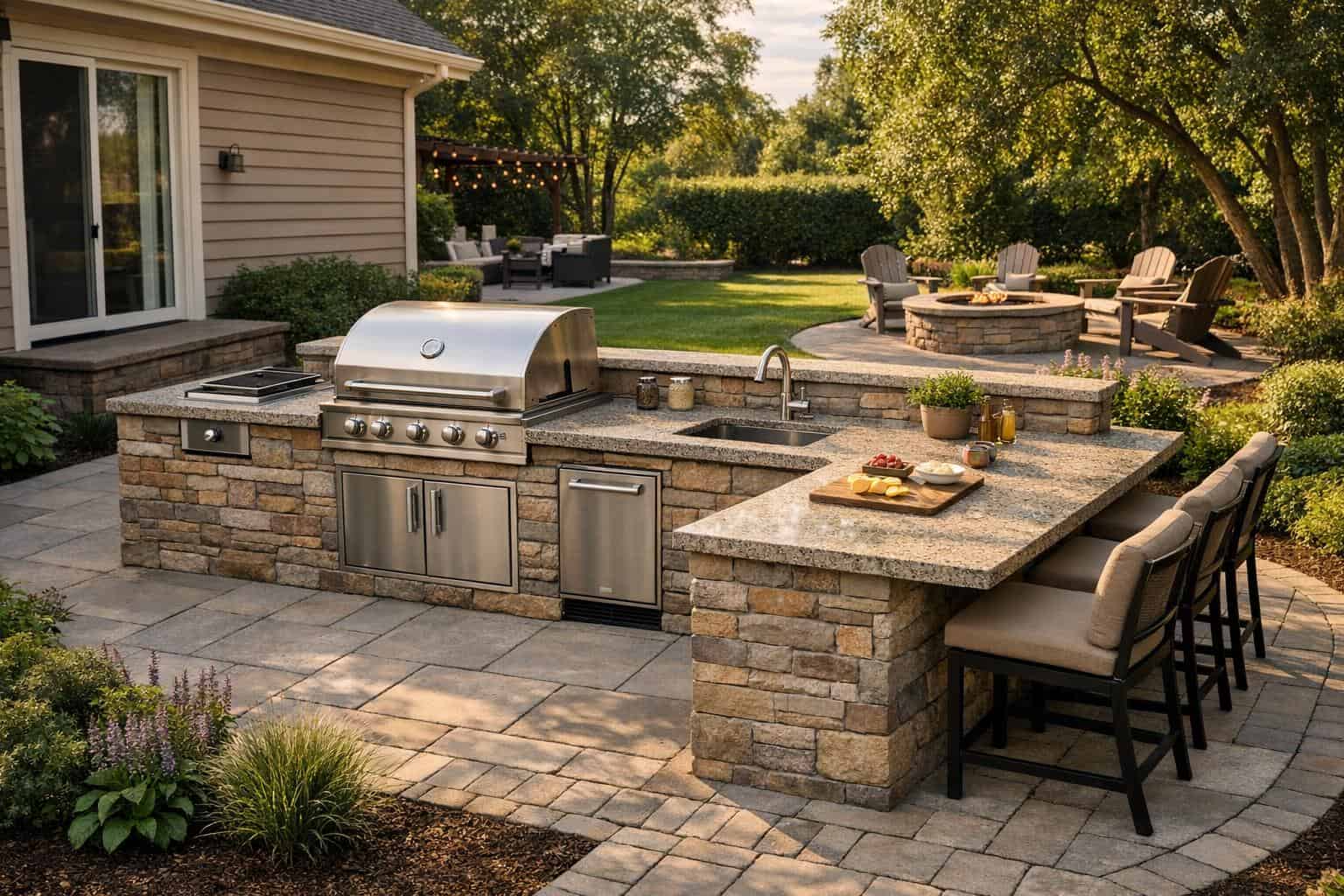
    Paver Patio vs Stamped Concrete Look and Durability Guide for Homeowners related example showing Concrete, paver, and stone outdoor surfaces showing common patio and walkway material choices for homeowners
    This patio example gives homeowners a visual reference for comparing layout, materials, and maintenance tradeoffs before starting the project.

    For the broader overview, continue with Paver Patio vs Stamped Concrete Patio Guide for Homeowners.

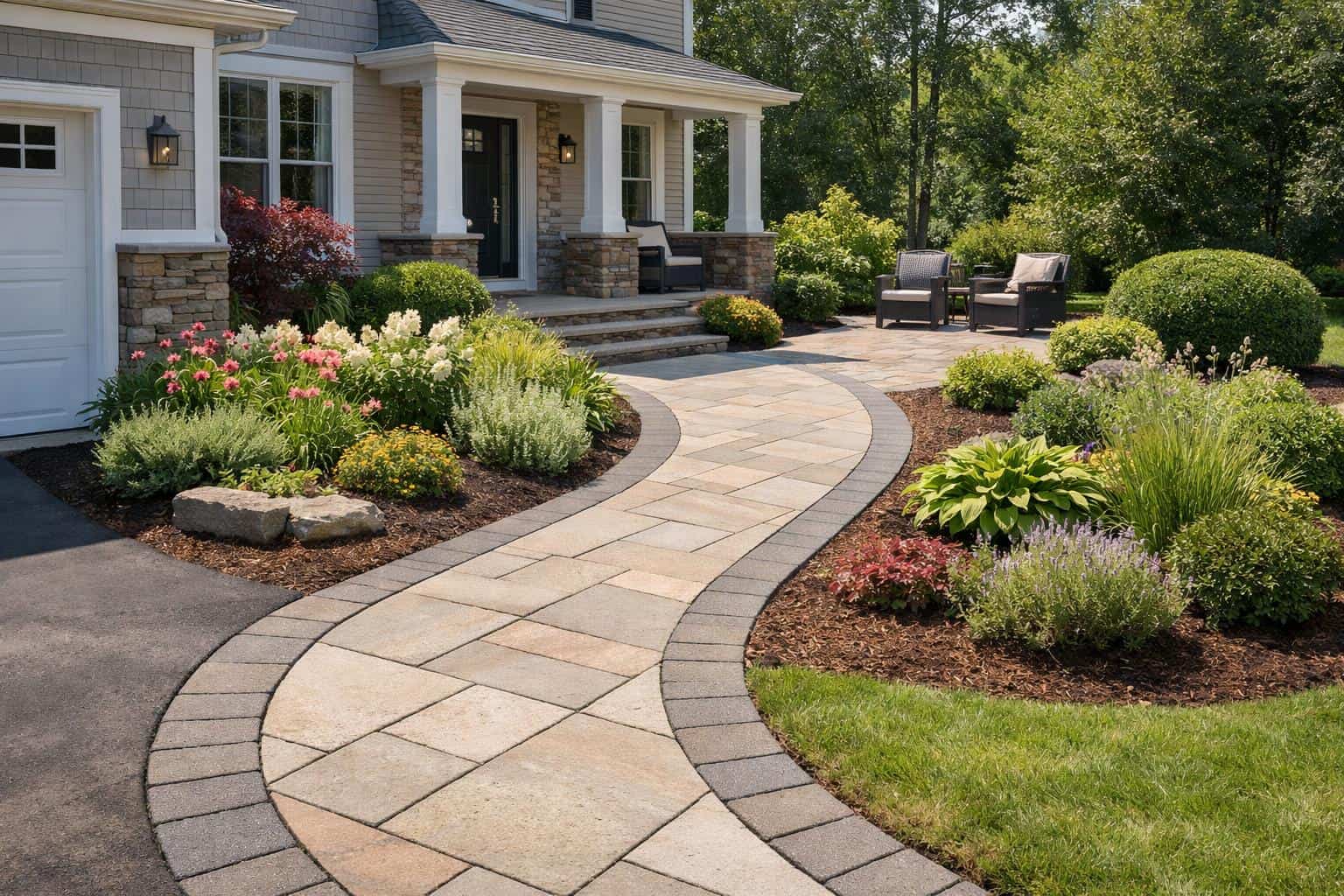
    Paver Patio vs Stamped Concrete Look and Durability Guide for Homeowners related example showing Paver patio surface with color and finish detail relevant to homeowner material-selection decisions
    This related patio detail helps show how site conditions and finish choices can change the homeowner's plan.