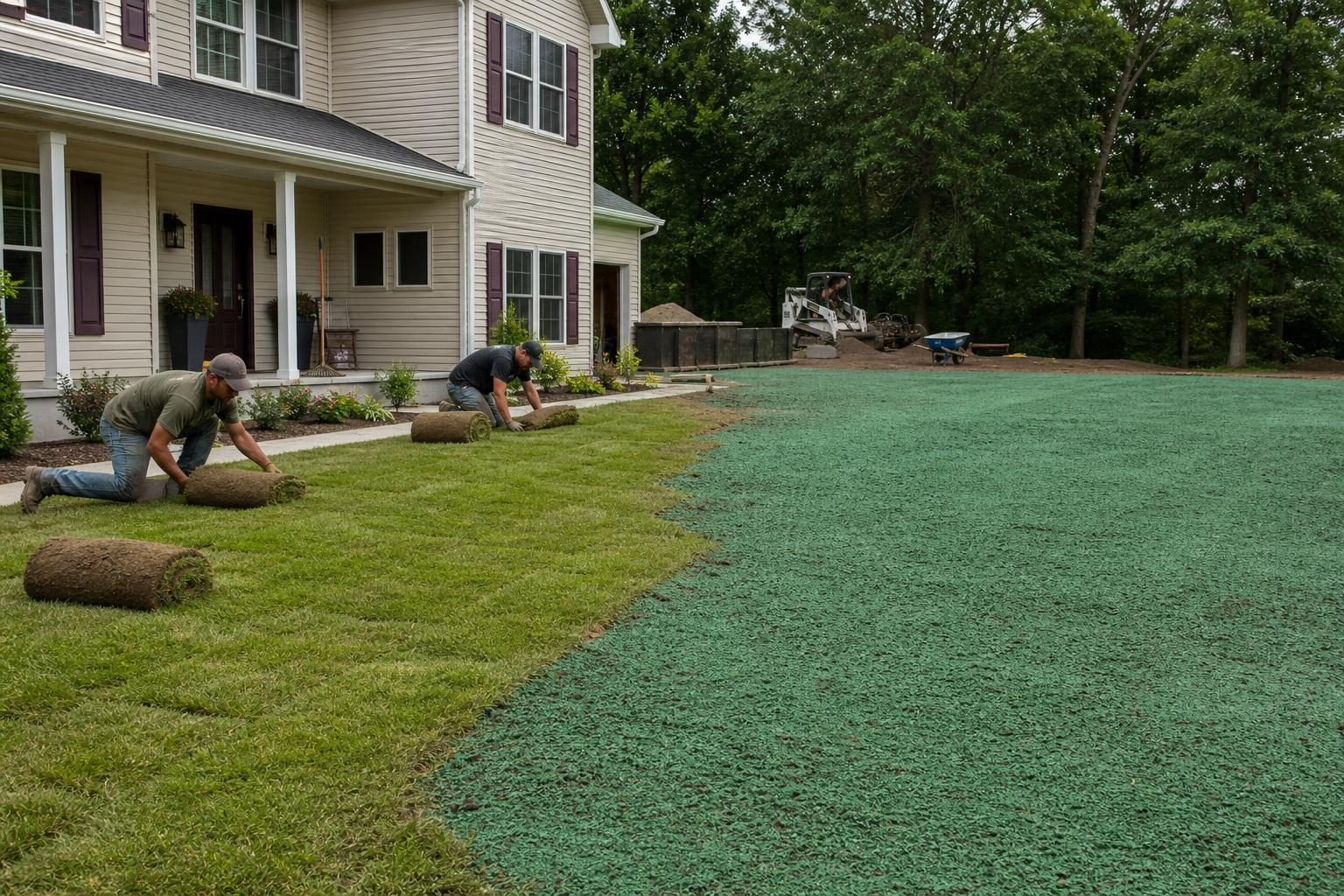
When you search for lawn installation companies near you, the first decision is which method fits your yard: sod for an instant lawn, seed for the lowest cost, hydroseed for larger areas on a moderate budget, or artificial turf for a no-mow surface with a high upfront price. The right choice depends on budget, timeline, sun and shade, how the lawn is used, and how much watering and care you can give it in the first season.
Part of our Complete Lawn Guide: seed vs sod, grass types, costs, care calendar and hiring in one place.
This guide compares the four options and explains how to vet local companies so you get quotes you can actually compare.
The four options at a glance
| Method | Rough installed cost per sq ft | Time to usable lawn | Best for |
|---|---|---|---|
| Seed | Lowest; pennies DIY, more with pro prep | Often 2 to 3 months or longer | Tight budgets, patient owners, overseeding |
| Hydroseed | Low to moderate; often well under sod | Often 1 to 2 months or longer | Larger areas, slopes, erosion control |
| Sod | Moderate; roughly $1 to $3+ | A few weeks to root | Fast results, erosion-prone spots, homes being sold |
| Artificial turf | Highest; roughly $8 to $20+ | Immediately | Shade, heavy pet use, water restrictions, no-mow goals |
Prices vary widely by region, site preparation, access, and product grade. Grading and soil work can change any of these numbers significantly. For a deeper dive on what drives price, see what affects sod and lawn installation cost.

Sod
Sod is mature grass grown on a farm, cut into rolls or slabs, and laid on prepared soil. You get a finished-looking lawn on day one, and it resists erosion right away.
- Pros: instant result, fewer weeds early, usable within a few weeks once rooted.
- Cons: higher cost, limited variety choices in some areas, needs frequent watering at first, and rolls are perishable.
- Watering: expect daily or more frequent watering for the first week or two, then tapering as roots knit into the soil.
- Watch for: sod laid over old grass or unprepared soil, and no plan for watering in the first weeks.

Seed
Seeding is the least expensive way to start a lawn and gives the widest choice of grass varieties and blends.
- Pros: low cost, many varieties, roots develop in place.
- Cons: slow, vulnerable to washout, birds, and weeds; needs consistent moisture for weeks; timing is critical.
- Timing: cool-season grasses usually do best seeded in early fall, with spring as a second choice. Warm-season grasses are usually seeded in late spring to early summer.
Our sod vs seed guide goes deeper on that tradeoff.
Hydroseed
Hydroseeding sprays a slurry of seed, mulch, fertilizer, and often a tackifier onto prepared soil. The mulch holds moisture and protects seed, which can improve germination compared with dry seeding.
- Pros: cheaper than sod on large areas, works well on slopes, even coverage.
- Cons: still needs weeks of consistent watering; small jobs may carry a minimum charge that makes it less economical; results depend heavily on soil prep.

Artificial turf
Synthetic turf is installed over a compacted aggregate base with edging and usually infill. It does not need mowing, fertilizer, or regular irrigation.
- Pros: green year-round, stands up to dogs and heavy use, no watering.
- Cons: high upfront cost, can get very hot in direct sun, needs rinsing and periodic brushing, eventually needs replacement, and offers less benefit for soil and insects.
- Watch for: thin base, poor drainage under the turf, and visible seams.
See our artificial turf vs sod guide for a full comparison.
Soil prep matters more than the method
Whichever option you choose, most lawn failures trace back to what happened before installation. Old grass and weeds should be removed, compacted soil loosened, low spots filled, and the grade sloped away from the house. A soil test helps decide whether compost, lime, or other amendments are needed. For turf, the equivalent step is a properly compacted, well-drained aggregate base. When you compare companies, ask each one to describe its prep in detail; that answer often tells you more than the price.

How to choose for your yard
- Budget is tight: seed, or hydroseed for larger areas.
- Need it green fast: sod.
- Large or sloped area: hydroseed or sod for erosion control.
- Heavy shade: shade-tolerant seed blends, or reconsider grass entirely in favor of groundcover or turf.
- Dogs and heavy wear: tough grass varieties or artificial turf with pet-friendly infill and drainage.
- Water restrictions: drought-tolerant grasses, a smaller lawn, or turf.
How to vet local lawn installation companies
Not every landscaping company does every method. Some specialize in sod, others in hydroseeding, and turf is often a separate specialty. When you call around:
- Ask which methods they install regularly and which they recommend for your yard, and why.
- Confirm they are licensed and insured where your state or city requires it.
- Ask for local references or addresses of recent lawns you can look at.
- Ask who handles watering and what happens if the lawn fails to establish.
- Check whether they assess drainage and soil before quoting, or quote from a satellite photo only.
Our guide on how to compare landscaping companies near you covers vetting in more detail.
What a lawn installation quote should list
- Square footage and method.
- Removal and disposal of existing grass and weeds.
- Grading and drainage corrections.
- Soil amendments or topsoil, with quantities.
- Grass variety or turf product, with specs for turf (pile height, infill, base depth).
- Irrigation changes, if any.
- Watering instructions and establishment warranty terms.
If two quotes are far apart, it is usually because one leaves out prep work. Ask each company to price the same scope.
Compare lawn establishment options
Use these calculators to compare sod, seed, hydroseed, and artificial turf ranges for the same area before asking companies for site-specific bids.
Sod vs Seed Cost Calculator
Compare rough installed cost ranges for sod, seed, and hydroseed on the same lawn area.
Lawn establishment comparison
- Estimated area
- –
- Seed estimate
- –
- Hydroseed estimate
- –
- Sod estimate
- –
- Fastest visible result
- –
Artificial Turf Cost Calculator
Estimate artificial turf pricing with turf grade, removal needs, access, and install complexity.
Artificial turf cost estimate
- Estimated area
- –
- Low estimate
- –
- Mid estimate
- –
- High estimate
- –
- Estimated range per sq ft
- –
Frequently asked questions
Is hydroseeding cheaper than sod?
Usually, especially on larger areas. Very small jobs may not save much because of minimum charges and setup.
Which lawn option needs the least water?
Artificial turf needs little beyond occasional rinsing. Among real grass, drought-tolerant varieties and a smaller lawn area reduce water use most.
How long before I can walk on a new lawn?
Sod is often ready for light use within a few weeks once rooted. Seed and hydroseed typically need longer, often until after a few mowings.
Do lawn installers also handle irrigation?
Some do, and some subcontract it. Ask up front, since new lawns depend on reliable watering in the first weeks.