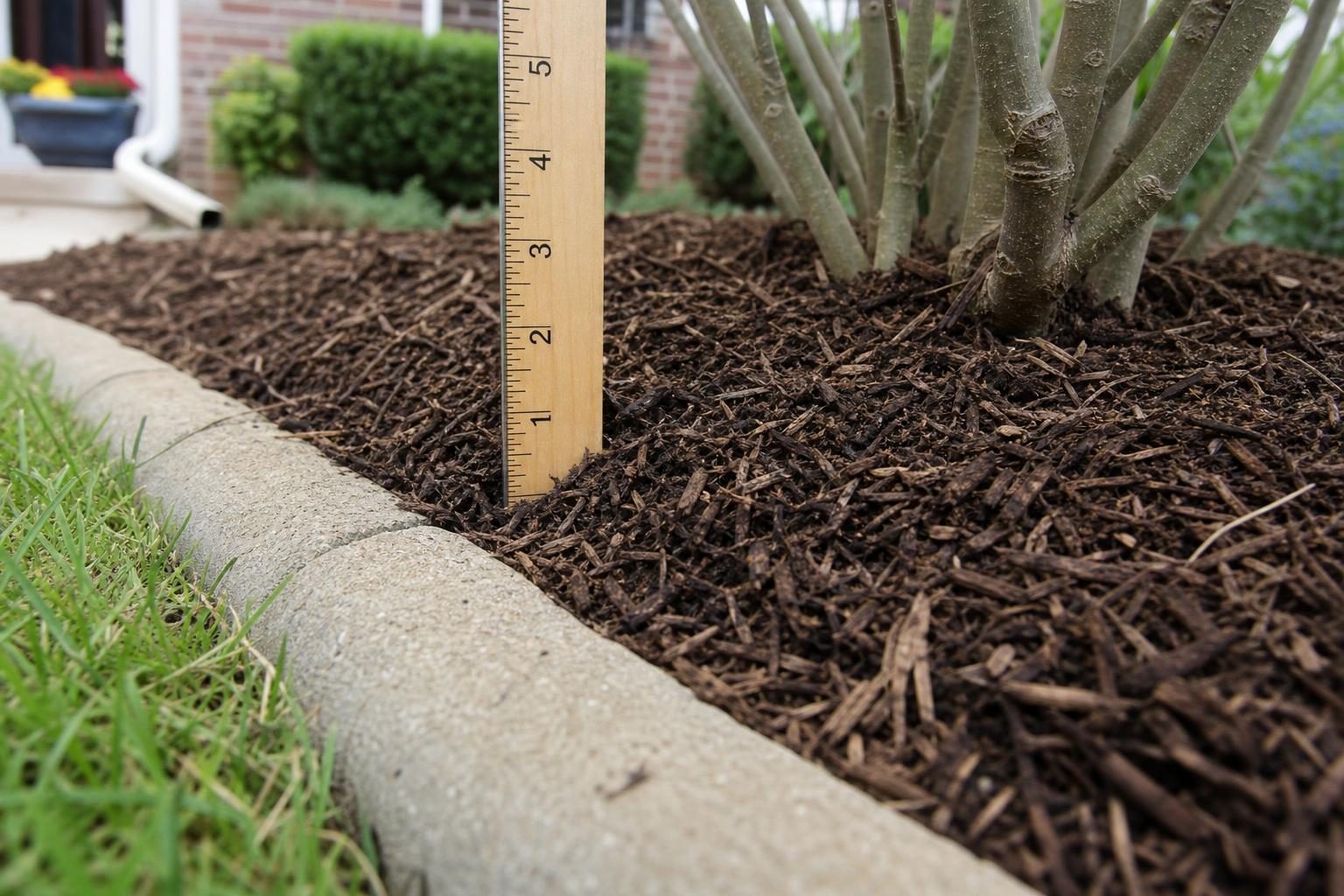
For most planting beds, mulch should be 2 to 3 inches deep after it settles. That’s deep enough to block most weed seeds and hold moisture, but shallow enough for water and air to reach the roots. Go thinner and weeds come through; go much deeper and you can smother plants, invite rot and waste money.
Part of our Complete Mulch Guide: types, how much you need, prices and care in one place.
Recommended mulch depth by material and area
Different mulches settle and break down at different rates, so the target depth shifts a little.
| Mulch type or area | Target depth after settling | Notes |
|---|---|---|
| Shredded hardwood or bark | 2 to 3 inches | Knits together, good on gentle slopes |
| Bark nuggets | 3 to 4 inches | Coarse pieces leave gaps, so slightly deeper |
| Pine straw | 3 to 4 inches when fluffed | Settles to about 2 inches |
| Wood chips (arborist chips) | 3 to 4 inches | Good for paths and around trees, away from trunks |
| Fine compost as mulch | 1 to 2 inches | Breaks down fast, feeds soil |
| Annual and vegetable beds | 1 to 2 inches | Lighter layer that’s easy to work around |
| Decorative rock or gravel | 2 to 3 inches | Use larger stones at the deeper end |

Why too little mulch doesn’t work
A thin layer of an inch or less looks fresh for a few weeks but lets light reach the soil, so weed seeds sprout through. It also dries out quickly and breaks down within a season. Homeowners who spread a thin layer every spring often end up weeding and buying mulch more than those who apply a proper depth less often.

Why too much mulch causes problems
Piling mulch too deep is one of the most common landscaping mistakes. Problems include:
- Root suffocation: roots grow up into the mulch instead of the soil, where they dry out in drought.
- Trunk and stem rot: mulch piled against bark holds moisture and invites decay, insects and rodents.
- Water shedding: very thick or matted mulch can repel light rain so it never reaches the soil.
- Wasted money: topping up every year without removing old mulch builds layers 6 inches or deeper over time.
Avoid “mulch volcanoes”
Mulch heaped in a cone against a tree trunk is a well-known problem. Keep mulch a few inches away from trunks and woody stems, spreading it in a wide, flat ring instead.
How to measure and maintain the right depth
- Check existing depth. Push a trowel or ruler into the bed in several places before ordering more.
- Rake and fluff old mulch if it’s matted. Sometimes that’s all a bed needs.
- Remove excess if you have more than about 4 inches of old material.
- Weed first, then add only enough to bring the total back to 2 to 3 inches.
- Pull mulch back from trunks, stems and the house foundation.
Organic mulch typically needs a top-up every one to two years, depending on the material and climate.

How much mulch to buy
Use this formula to estimate cubic yards:
Length (ft) × Width (ft) × Depth (inches) ÷ 324 = cubic yards
For example, a 20 by 5 foot bed at 3 inches deep: 20 × 5 × 3 ÷ 324 ≈ 0.93 cubic yards. Round up slightly for uneven ground.
One cubic yard covers about 108 square feet at 3 inches deep, or about 162 square feet at 2 inches. A standard 2-cubic-foot bag covers about 8 square feet at 3 inches deep, so it takes around 13 or 14 bags to equal one cubic yard.
Rough cost
Bulk mulch commonly runs somewhere around $30 to $70 per cubic yard before delivery, with dyed and premium mulches at the higher end. Delivery fees vary. Professional installation, including edging and cleanup, often brings the total to roughly $70 to $150+ per cubic yard. Prices vary by region and material, so check local suppliers. For a fuller comparison with rock, see our mulch vs decorative rock cost guide.
Mulch depth for a low-maintenance yard
If your goal is less weeding and watering, the right depth matters as much as the material. A few tips:
- Skip landscape fabric under organic mulch. Mulch breaks down on top of the fabric, weeds root into it, and the fabric becomes hard to remove. Fabric can work under rock.
- Plant densely. As shrubs and ground covers fill in, they shade the soil and reduce how much mulch you need.
- Add drip irrigation under the mulch to water roots directly with less evaporation.
- Edge your beds so mulch doesn’t wash into the lawn.
- Choose shredded mulch on slopes since it interlocks and resists washing away.
Our low-maintenance landscaping guide and our list of low-maintenance planning mistakes cover the bigger picture.

When to apply mulch
Spring, after soil warms, is the most common time. Mulching too early in cold climates can keep soil cold longer. Fall mulching helps protect roots over winter, especially for new plantings. Avoid spreading mulch over frozen ground or very dry soil; water first if the bed is dry.
What to check if you hire it out
- The quoted depth and how many cubic yards that equals for your beds.
- Whether weeding, edging and removing old mulch are included.
- Mulch type, color and whether it is dyed.
- That the crew will keep mulch off trunks and siding.
- Cleanup of walks and lawn edges.
Estimate mulch depth, quantity, and cost
Use these mulch calculators to translate bed size and depth into rough quantity, bag, material, delivery, and installation planning numbers.
Mulch Calculator
Estimate how much mulch your planting beds need before you order bags or bulk material.
Mulch estimate
- Area
- –
- Area (alternate unit)
- –
- Cubic feet
- –
- Cubic yards
- –
- Estimated bag count
- –
- Rounded-up bag recommendation
- –
Mulch Cost Calculator
Estimate mulch quantity plus material and installation cost ranges for planting beds.
Mulch cost estimate
- Estimated cubic yards
- –
- Material estimate
- –
- Delivery and labor estimate
- –
- Low total
- –
- High total
- –
Frequently asked questions
Can I put new mulch on top of old mulch?
Yes, if the total stays around 2 to 3 inches. Rake the old layer first, and remove some if it’s already deep.
How deep should mulch be around trees?
About 2 to 3 inches in a wide ring, kept a few inches back from the trunk. Never pile it against the bark.
Does dyed mulch hurt plants?
Dyed mulch from reputable suppliers is generally considered safe for plants. The bigger concern is the source wood, so buy from suppliers who use clean material.
How deep should decorative rock be?
About 2 to 3 inches for small gravel and deeper for larger river rock, enough to cover the ground fully so soil doesn’t show through.