Landscaping Guru

  • Low-Voltage vs Line-Voltage Landscape Lighting Guide for Homeowners

    Low-Voltage vs Line-Voltage Landscape Lighting Guide for Homeowners

    Low-voltage and line-voltage lighting can both work outdoors, but they are used differently and homeowners should understand what each system is better at before planning a build.

    Where low-voltage usually shines

    • Most residential path, accent, and ambient lighting plans.
    • Projects that need flexibility, layered fixtures, and easier scaling.
    • Yards where subtle residential lighting is the main goal.

    Where line-voltage may still matter

    • Specific high-output or specialty fixtures where the design truly calls for it.
    • Situations driven by equipment requirements rather than general landscape lighting needs.
    • Projects coordinated tightly with broader electrical work.

    How homeowners should think about the choice

    • Start with the effect you want, then confirm what power approach supports it.
    • Do not assume more voltage automatically means a better outdoor result.
    • Ask how safety, maintenance, and expandability differ between the options.

    Bottom line

    Most homeowners should choose the system that fits the lighting effect and scale of the yard rather than chasing higher-output hardware by default.

    For the broader overview, continue with Landscape Lighting Guide for Homeowners.


  • Best Landscape Lighting for Safety vs Ambiance Guide

    Best Landscape Lighting for Safety vs Ambiance Guide

    Homeowners often want lighting that feels beautiful and subtle, but some areas need straightforward safety lighting first. The best plans balance the two instead of treating them as separate projects.

    Where safety lighting matters most

    • Walkways, steps, entries, and any grade change that people use at night.
    • Transitions between patio, lawn, and access paths.
    • Dark corners that feel unsafe or hard to navigate.

    Where ambiance lighting adds the most value

    • Dining and seating zones.
    • Architectural highlights and key planting areas.
    • Layered evening atmosphere around the main outdoor-living space.

    How to balance both

    • Handle navigation and entry first, then layer in visual mood.
    • Avoid blasting every zone equally bright.
    • Use fixture placement to guide the eye instead of flooding the yard.

    Bottom line

    The strongest lighting plan makes the yard feel safer and better at night without losing warmth and atmosphere.

    For the broader overview, continue with Landscape Lighting Guide for Homeowners.


  • How to Choose the Right Privacy Landscaping Layout Guide

    How to Choose the Right Privacy Landscaping Layout Guide

    Privacy landscaping works best when the layout matches what you are trying to block and what you still want to preserve, not when plants are lined up the same way all around the yard.

    What a good layout starts with

    • Understanding the exact sightline you want to soften or block.
    • Knowing how much depth you have for planting.
    • Deciding whether the screen should feel formal, layered, or lightly filtered.

    Common layout approaches

    • Straight evergreen runs for simple boundary screening.
    • Layered mixed planting for softer privacy with more visual interest.
    • Targeted screening around patios, seating, or pool zones instead of whole-property walls.

    What to avoid

    • Planting too close to fences, property lines, or windows.
    • Creating a rigid wall where a lighter layered screen would feel better.
    • Ignoring mature width and maintenance access.

    Bottom line

    The best privacy layout screens the right views while still making the yard feel balanced and usable.

    For the broader overview, continue with Privacy Landscaping Guide for Homeowners.


  • Fast-Growing vs Low-Maintenance Privacy Landscaping Guide

    Fast-Growing vs Low-Maintenance Privacy Landscaping Guide

    Homeowners often want privacy plants that grow fast and stay easy forever, but those goals can pull in opposite directions. Faster growth often means more pruning, tighter spacing pressure, or shorter-term headaches.

    Why fast growth can be tempting

    • Quicker screening from neighbors or the street.
    • Faster sense of completion after installation.
    • Better short-term privacy in exposed yards.

    Why low maintenance can matter more later

    • Less constant trimming, cleanup, and reshaping.
    • Better long-term fit for narrow beds and property lines.
    • Lower risk of the screen becoming oversized or uneven.

    How to choose the right tradeoff

    • Be honest about how patient you can be.
    • Choose growth rate based on bed size and maintenance tolerance, not just urgency.
    • Consider mixing plant types so some provide early cover while others age better long term.

    Bottom line

    The right privacy strategy often balances early coverage with a mature screen you can actually live with.

    For the broader overview, continue with Privacy Landscaping Guide for Homeowners.


  • Privacy Landscaping Cost vs Coverage Guide for Homeowners

    Privacy Landscaping Cost vs Coverage Guide for Homeowners

    Privacy landscaping costs can vary widely because the price depends on how quickly you want coverage, how dense the screen should feel, and whether the project is built from planting alone or a layered design.

    What usually drives privacy-landscaping cost

    • Plant size and quantity.
    • Whether irrigation, grading, bed preparation, or edging are part of the build.
    • How much instant visual screening you want on day one.

    Why cheaper privacy plans can disappoint

    • Small plant material may take years to create real screening.
    • Thin spacing can leave the yard exposed longer than homeowners expected.
    • Budget-only decisions can ignore long-term health and mature spread.

    How to compare value

    • Ask how much screening the plan creates now versus later.
    • Look at plant count, size, irrigation support, and maintenance expectations together.
    • Decide whether immediate privacy or gradual fill-in matters more for your situation.

    Bottom line

    The better privacy-landscaping value is the one that matches your timeline for real screening, not just the lowest plant bill.

    For the broader overview, continue with Privacy Landscaping Guide for Homeowners.


  • Best Plants for Privacy Landscaping Guide for Homeowners

    Best Plants for Privacy Landscaping Guide for Homeowners

    The best privacy plant is not just the fastest grower. It has to fit the space, the maintenance level, the local climate, and how much screening you really need year-round.

    What makes a privacy plant actually useful

    • Growth habit that matches the screening goal without constant pruning.
    • Mature size that fits the bed depth and distance from structures.
    • Climate and water needs that the site can realistically support.

    Common privacy-plant categories homeowners compare

    • Evergreen screens for year-round coverage.
    • Layered shrub mixes for softer screening and design flexibility.
    • Tree-and-understory combinations where height and depth both matter.

    How to choose well

    • Start with the amount of width and height you truly have.
    • Think about how formal or natural you want the screen to feel.
    • Avoid plants that will become a trimming burden just to stay inside the property lines.

    Bottom line

    The best privacy planting is the one that delivers the screening you want without creating a future maintenance problem.

    For the broader overview, continue with Privacy Landscaping Guide for Homeowners.


  • How to Prioritize Backyard Zones and Budget Guide

    How to Prioritize Backyard Zones and Budget Guide

    A backyard budget goes further when homeowners decide which zone matters most right now instead of trying to fully build every idea at once.

    What usually deserves first priority

    • The zone used most often or causing the biggest frustration today.
    • Any issue tied to drainage, access, or layout dysfunction.
    • The one destination area that would make the yard feel most complete.

    How to rank backyard zones

    • List daily-use, seasonal-use, and rarely-used areas separately.
    • Look for zones that unlock the rest of the yard once fixed.
    • Spend on function first, then on secondary embellishment.

    What homeowners often do backwards

    • Spreading the budget across too many low-impact improvements.
    • Building a specialty feature before basic gathering space works well.
    • Ignoring how phase-one choices affect future zones.

    Bottom line

    The smartest backyard budget usually starts with one strong destination and the infrastructure that supports it, not a dozen partially finished ideas.

    For the broader overview, continue with Backyard Landscaping Ideas and Planning Guide for Homeowners.


  • Kid-Friendly vs Adult Gathering Backyard Guide for Homeowners

    Kid-Friendly vs Adult Gathering Backyard Guide for Homeowners

    Some backyards lean toward play, others toward entertaining, and many households need a yard that supports both. The key is zoning, not trying to make every corner do everything.

    What kid-focused backyards usually need

    • Open movement, durable surfaces, clear supervision lines, and safe circulation.
    • Shade, flexible play areas, and fewer delicate finish choices in high-use zones.
    • Less clutter competing with movement and safety.

    What adult-gathering backyards usually need

    • Seating comfort, lighting, dining or lounge space, and stronger visual structure.
    • Defined arrival and circulation into the entertaining area.
    • Materials and planting that support ambiance and lower cleanup around seating.

    How to make one yard serve both

    • Create zones instead of forcing overlap everywhere.
    • Let the main gathering area keep adult comfort while nearby space supports play.
    • Choose materials that tolerate real-life use from both groups.

    Bottom line

    The most successful family backyards usually feel balanced because they separate uses intelligently rather than picking one group to design for exclusively.

    For the broader overview, continue with Backyard Landscaping Ideas and Planning Guide for Homeowners.


  • Backyard Lawn vs Patio Space Guide for Homeowners

    Backyard Lawn vs Patio Space Guide for Homeowners

    One of the biggest backyard decisions is how much room should stay lawn and how much should shift to patio or other hardscape. The right split depends on how the yard gets used, not on habit alone.

    When more lawn makes sense

    • Open play, pets, cooling effect, and a softer backyard feel matter most.
    • You have the time and conditions to maintain healthy grass.
    • The household uses the open space regularly enough to justify it.

    When more patio space makes sense

    • Dining, seating, entertaining, and lower mow area are higher priorities.
    • The existing lawn struggles or feels underused.
    • The backyard needs a stronger destination space to function better.

    How to decide the split

    • Watch how the yard is actually used now.
    • Keep enough open space for what the household truly values.
    • Avoid leaving lawn just because it has always been there.

    Bottom line

    The better backyard balance is the one that gives each square foot a clear job instead of spreading space thinly across too many half-used zones.

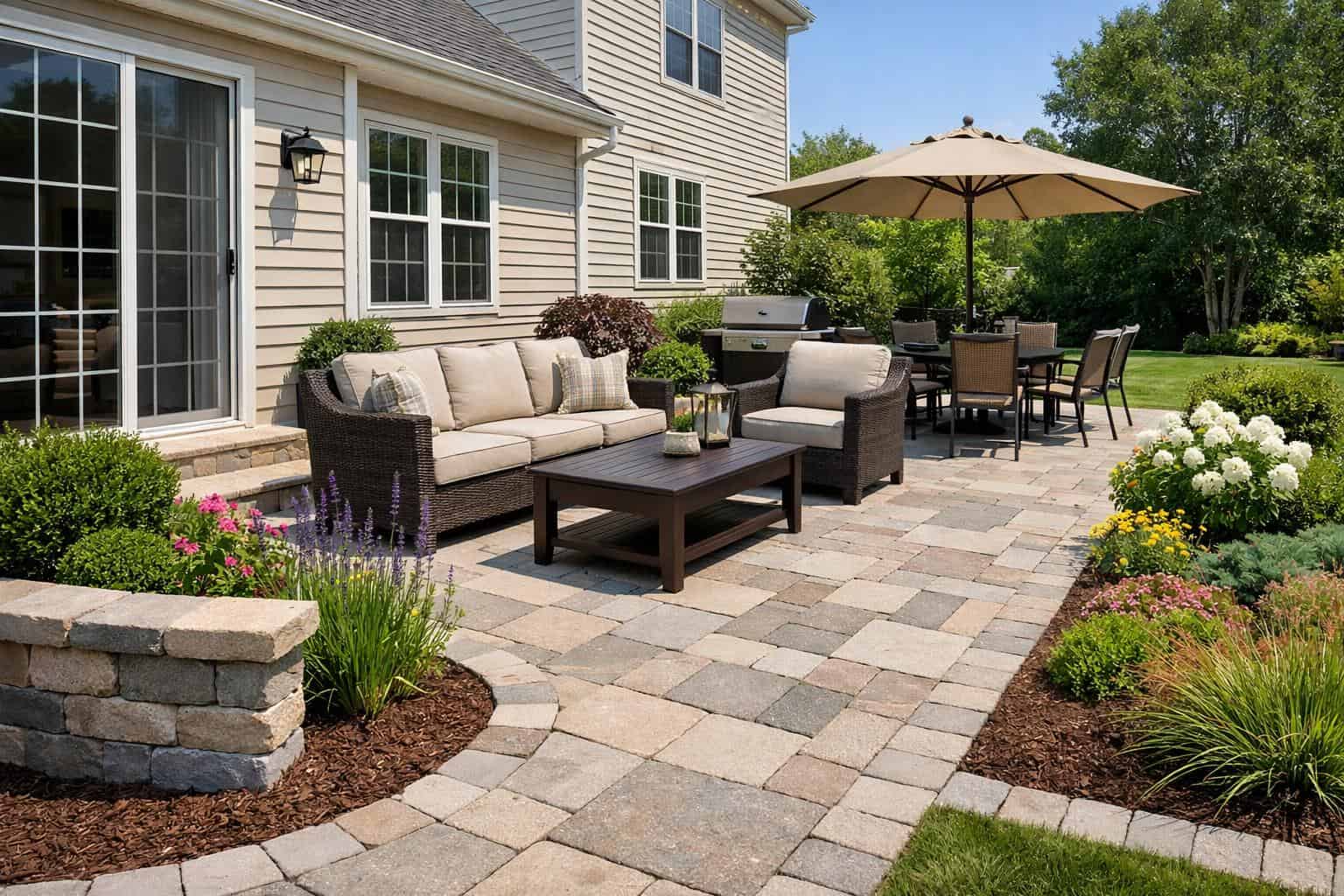
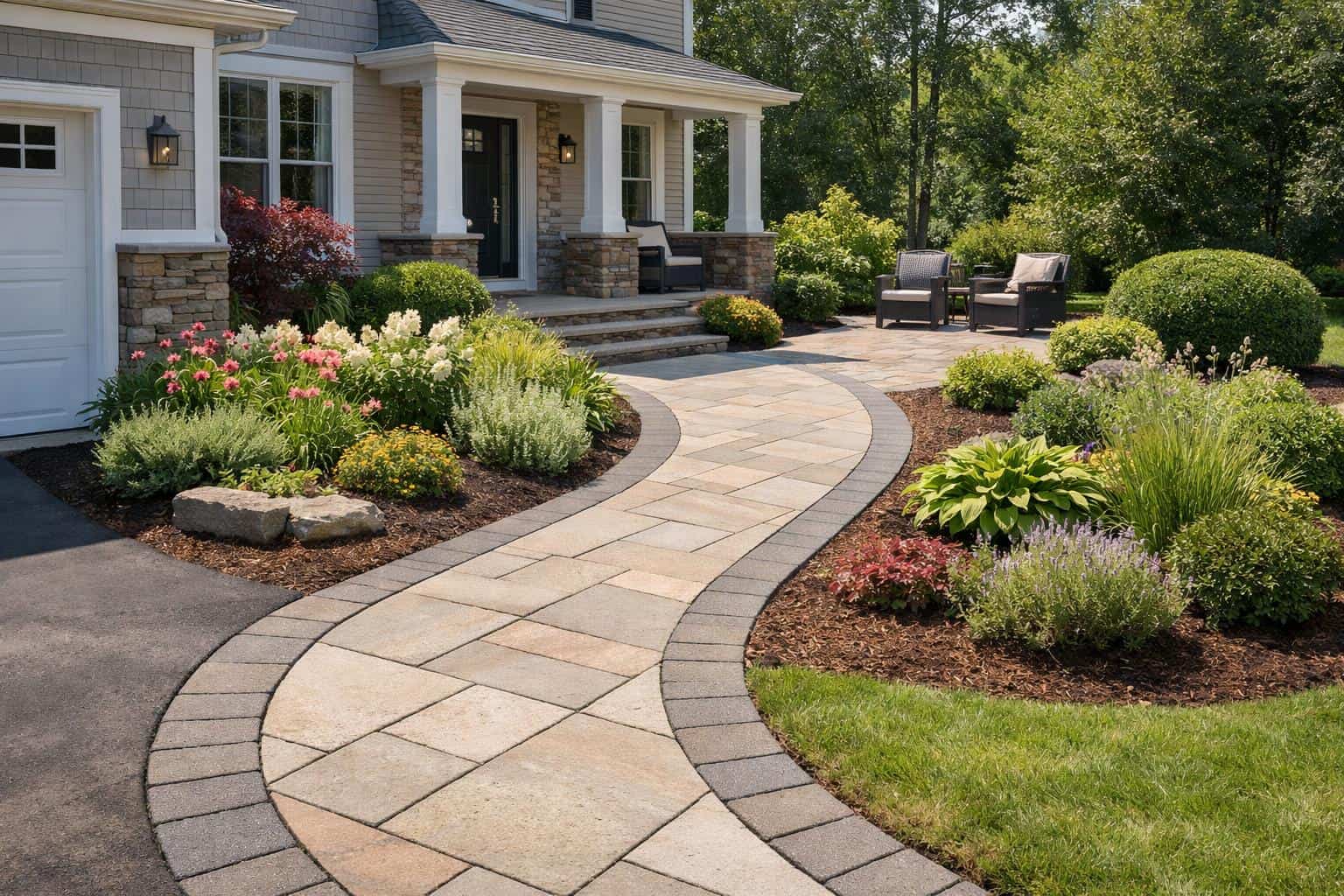
    Backyard Lawn vs Patio Space Guide for Homeowners related example showing Concrete, paver, and stone outdoor surfaces showing common patio and walkway material choices for homeowners
    This patio example gives homeowners a visual reference for comparing layout, materials, and maintenance tradeoffs before starting the project.

    For the broader overview, continue with Backyard Landscaping Ideas and Planning Guide for Homeowners.

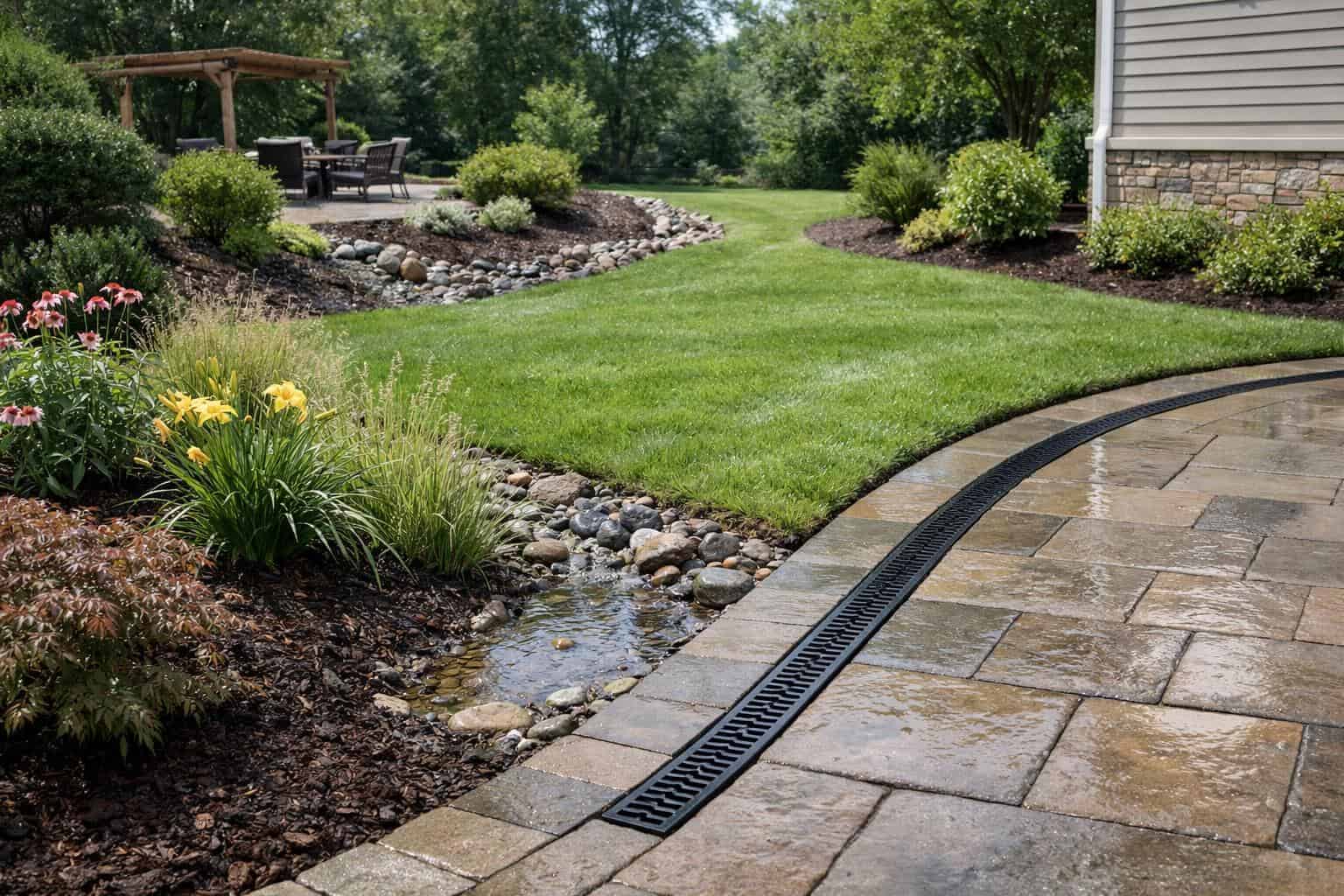
    Backyard Lawn vs Patio Space Guide for Homeowners related example showing Backyard patio comparison showing paver surface and stamped concrete surface
    This related patio detail helps show how site conditions and finish choices can change the homeowner's plan.

  • Backyard Entertaining vs Low Maintenance Guide for Homeowners

    Backyard Entertaining vs Low Maintenance Guide for Homeowners

    Many backyards try to be both entertainment-focused and low-maintenance, but the best results come from deciding which areas need to work hardest and which areas should stay simple.

    What entertainment-focused yards usually need

    • Defined seating, circulation, lighting, and durable surfaces for gathering.
    • Stronger integration between patio, grilling, shade, and views.
    • More thoughtful transitions between active and quiet zones.

    What low-maintenance yards usually need

    • Simpler zoning, fewer fussy transitions, and easier-care planting.
    • Materials and layouts that still look stable between cleanups.
    • Reduced lawn stress and less repetitive repair work.

    How to balance both

    • Put effort where people actually gather most.
    • Simplify the supporting zones so the entertainment area can shine.
    • Do not overbuild the whole backyard when one strong destination area may be enough.

    Bottom line

    The best backyard plan gives social spaces the detail they need while keeping the rest of the yard easy to live with.

    For the broader overview, continue with Backyard Landscaping Ideas and Planning Guide for Homeowners.